Pad Thai with Shrimp
Sweet, sour and salty rice noodles from a hot pan
- Serves
- 4
- Hands-on
- Total
- Level
- Some skill
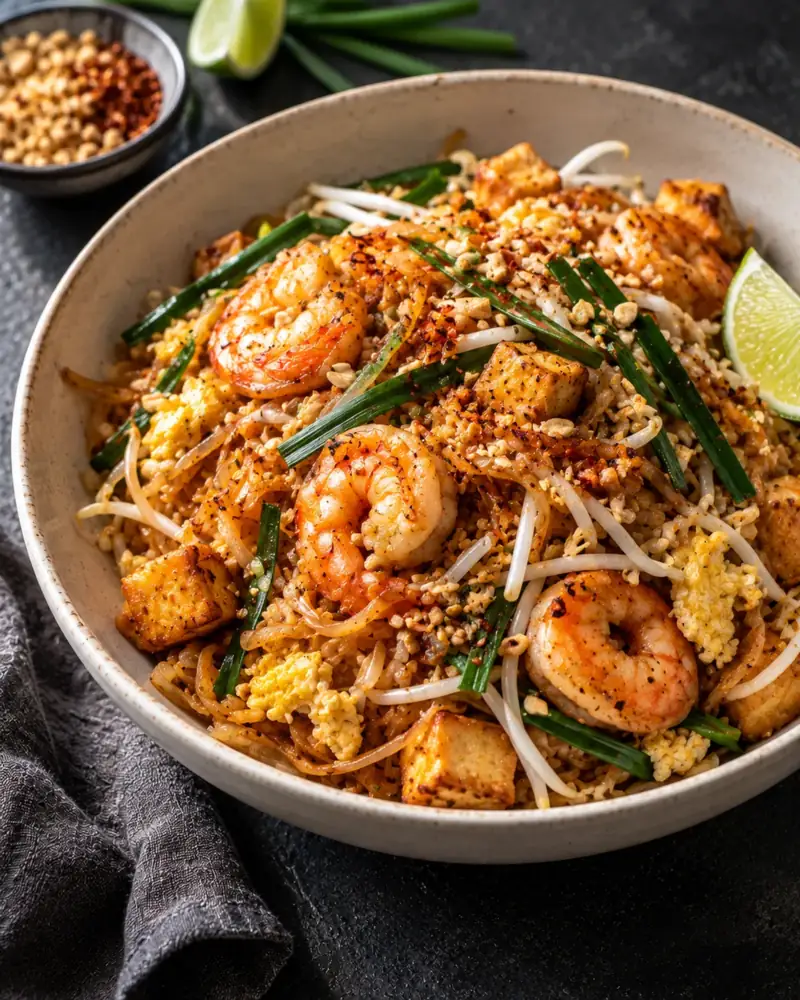
Pad Thai balances tamarind sourness, palm sugar sweetness and fish sauce saltiness around chewy rice noodles. Soaking the noodles instead of boiling them and cooking two portions at a time are the two moves that keep them springy rather than clumped.
Ingredients
Sauce
- 4 tbsptamarind concentratethe thick paste; or 3 tbsp lime juice
- 4 tbspfish sauce
- 50 gpalm sugar or light brown sugar (¼ cup)chopped if palm sugar
Noodles
- 250 gflat rice noodles (9 oz)about 5 mm (¼ in) wide
- 5 tbspneutral oildivided
- 300 graw shrimp (10½ oz)peeled and deveined
- 150 gfirm tofu (5 oz)cut in 1 cm (½ in) cubes and patted dry
- 3 clovesgarlicfinely chopped
- 2shallotsthinly sliced
- 3eggslarge
- 150 gbean sprouts (1½ cups)
- 6scallions or garlic chivescut in 4 cm (1½ in) lengths
To serve
- 60 groasted peanuts (½ cup)coarsely chopped
- 1limein wedges
- dried chili flakesto taste
- Diet
- Gluten-free, Dairy-free, Pescatarian
- Allergens
- crustaceans, fish, egg, peanuts, soy
- Origin
- Thailand
Method
- Soak the noodles in a large bowl of room-temperature water until pliable and opaque but still firm when bent, 30–45 minutes. Drain well.
- Warm the tamarind, fish sauce and sugar in a small pan, stirring, until the sugar dissolves. Taste: it should be strongly sour, salty and sweet in roughly equal measure. Adjust.
- Have everything chopped and beside the stove; it moves fast. Cook in two batches, using half of each ingredient per batch.
- Heat a wok or large frying pan over high heat until smoking. Add 1 tbsp oil and the tofu and fry until golden on a few sides, 2–3 minutes. Add the shrimp and cook until just pink, 1–2 minutes. Lift both out.
- Add another 1 tbsp oil, the garlic and shallots and stir for 20 seconds. Add the drained noodles and toss for 1 minute.
- Pour in half the sauce and toss until absorbed and the noodles are soft and chewy, 2–3 minutes. If they are still firm, add 2 tbsp water and keep tossing.
- Push the noodles aside, add a little oil and crack in half the eggs. Scramble until nearly set, then fold through the noodles.
- Return half the shrimp and tofu with half the bean sprouts and scallions. Toss for 30 seconds, just to warm the sprouts.
- Serve with peanuts, lime wedges and chili flakes. Repeat for the second batch.
Why it works
Rice noodles soaked rather than boiled stay firm enough to finish in the pan, where they absorb the sauce instead of water. Cooking in small batches keeps the pan hot so the noodles toss and sear instead of stewing into a sticky mass. Tamarind's sourness is fruity and rounder than lime, which is why it is the backbone of the sauce.
Common mistakes
- Over-soaking or boiling the noodles: they break up in the pan.
- Cooking four portions at once: the pan cools and everything steams.
- Ketchup instead of tamarind: it is a sweet, tomato-flavored stand-in, not the same dish.
Variations
- Chicken
- Use 300 g thinly sliced chicken thigh instead of shrimp; cook until no pink remains, 3–4 minutes.
- Vegetarian
- Skip the shrimp, double the tofu and use soy sauce plus a pinch of salt in place of fish sauce.
Make ahead and storage
The sauce keeps 2 weeks in the fridge. The dish is best eaten fresh.
Notes
Tamarind concentrate varies a lot in strength; taste and adjust. Check that your tamarind and fish sauce are gluten-free if needed. Peanut only from the peanut topping.