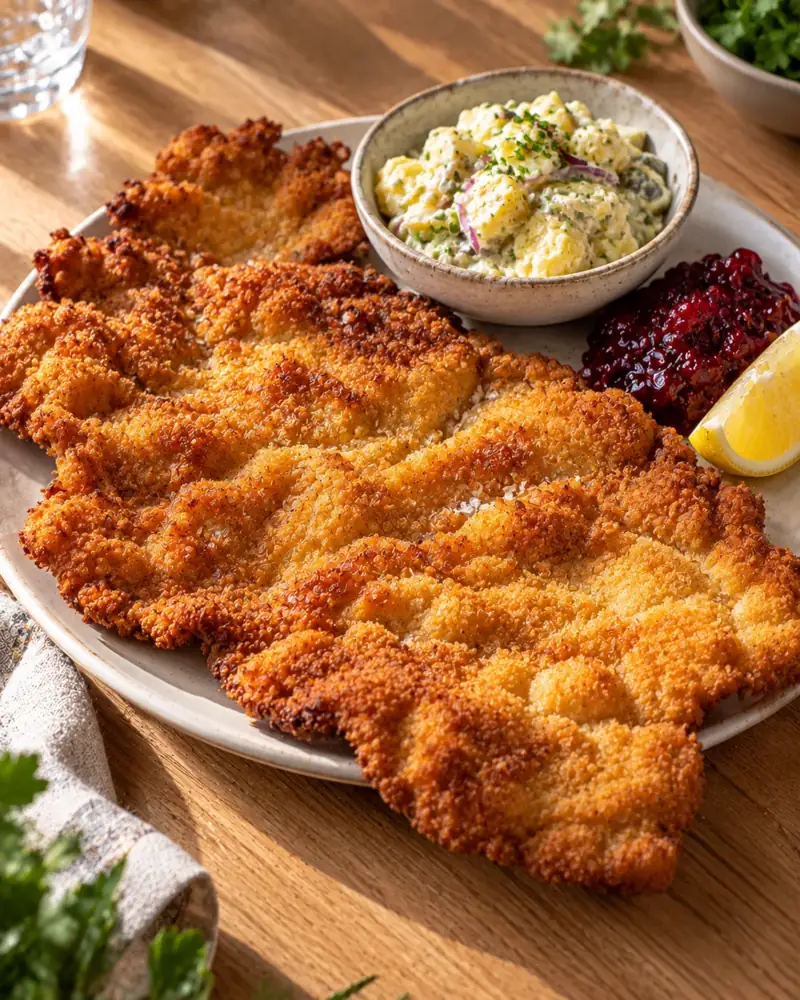
Chicken Schnitzel
Pounded thin, crumbed and shallow-fried until the coating puffs
- Serves
- 4
- Hands-on
- Total
- Level
- Easy
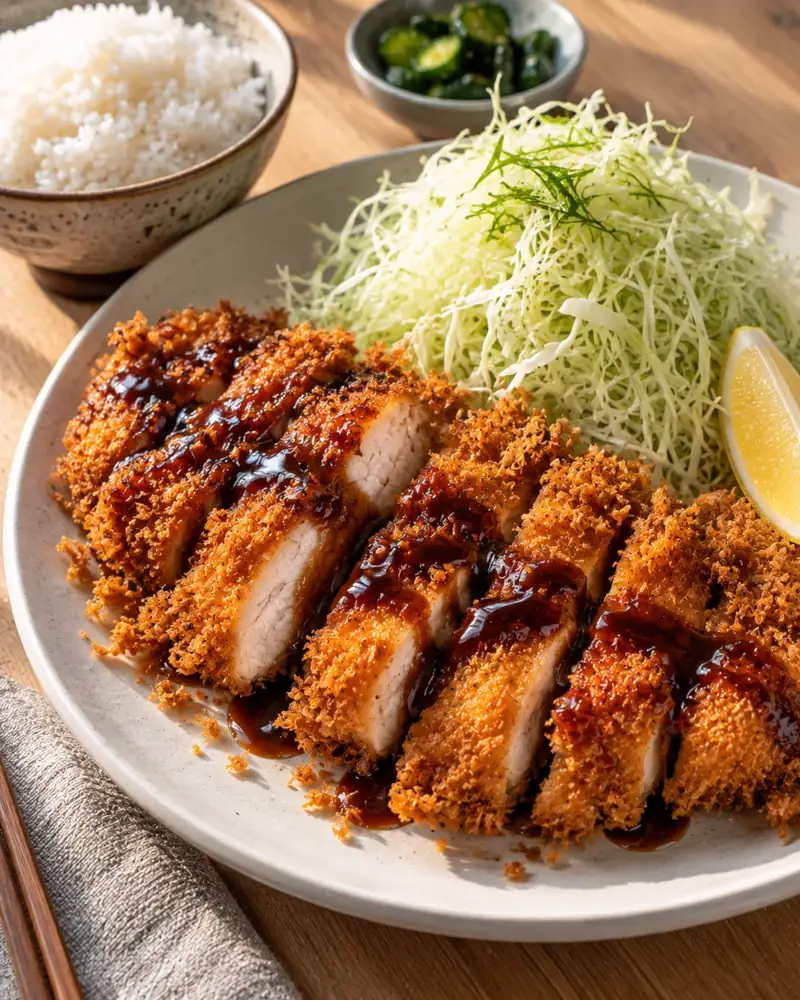
The chicken version of the Viennese classic is the weeknight dinner of half of Europe. Pounding the breast thin means it cooks in the time the crumbs take to brown, and keeping the pan moving with plenty of oil makes the coating puff away from the meat in golden waves. It is the thinnest and quickest of the book's cutlets, with fine crumbs; for the veal original see Wiener Schnitzel, for thick panko-crusted cutlets Chicken Katsu with Tonkatsu Sauce, and for a sauce-and-cheese finish Chicken Parmigiana.
Ingredients
- 2large skinless chicken breasts (about 1¼ lb)about 550 g
- 6 gfine sea salt (1 tsp)
- freshly ground black pepper
- 60 gall-purpose flour (½ cup)
- 2eggs
- 1 tbspmilk
- 100 gfine dry breadcrumbs or panko (1⅓ cups)
- 300 mlneutral oil (1¼ cups)for shallow frying
- 30 gunsalted butter (2 tbsp)
- 1lemonwedges
- Allergens
- gluten, egg, milk
- Origin
- Central Europe
Method
- Cut each breast horizontally into 2 thin escalopes. Place each between two sheets of plastic wrap and pound with a rolling pin or the base of a pan to an even 5 mm thickness.
- Season both sides with salt and pepper. Set up three shallow dishes: flour; eggs beaten with the milk; breadcrumbs.
- Dredge each escalope in flour and shake off the excess, dip in egg and let the excess drip off, then lay in the crumbs and press lightly. Don't press hard — a loose coat puffs better.
- Heat the oil and butter in a large frying pan over medium-high heat until a crumb sizzles immediately, about 170°C (340°F). The fat should be about 5 mm deep.
- Fry 2 escalopes at a time, gently shaking the pan so hot fat washes over the top, until deep golden and puffed, 2–3 minutes a side. They're done at 74°C (165°F) — with meat this thin, golden crumbs mean it's cooked, but check the first one.
- Drain on a rack or paper towel and keep warm in a low oven while you fry the rest. Serve at once with lemon, and potato salad (Potato Salad) or a green salad.
Why it works
Pounding the breast to an even thinness means the meat cooks through in exactly the time the crumbs need to brown, so neither overcooks. Moving hot fat over the top sets the egg layer fast, and the steam escaping from the meat lifts the loose coating into a puffed, crisp shell — the effect Austrians call souffliert.
Common mistakes
- Uneven pounding leaves thick spots that stay underdone.
- Too little oil: the coating sticks and burns in patches. The schnitzel should float slightly.
- Coating too early. Crumb right before frying, or the coating goes soggy.
Variations
- Cotoletta alla milanese
- Use breadcrumbs mixed with 30 g grated Parmesan and fry in butter.
- Schnitzel sandwich
- Put a hot schnitzel in a soft roll with mayonnaise, lettuce and pickled cucumber.
Make ahead and storage
Pound and season the meat up to a day ahead. Fried schnitzel is best fresh; leftovers reheat on a rack in a 200°C (400°F) oven for 8 minutes.
Notes
Use gluten-free flour and crumbs for a gluten-free version.