Roast Chicken
Dry-salted overnight, roasted hot, with crackling skin and juicy breast
- Serves
- 4
- Hands-on
- Total
- Level
- Easy
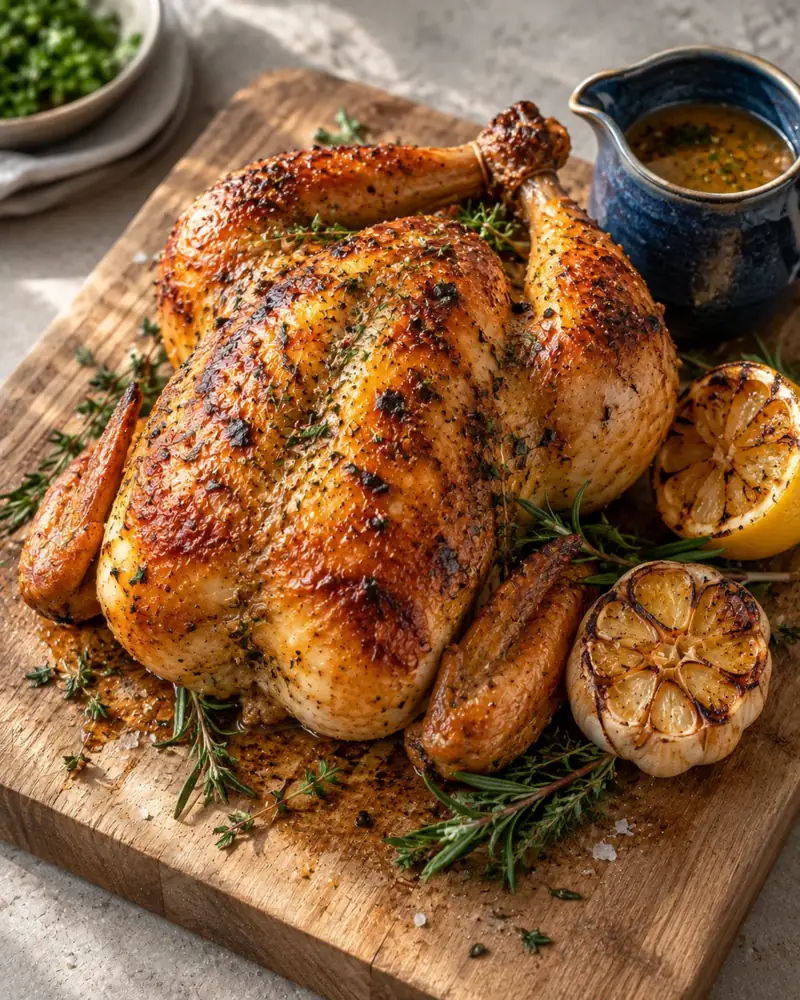
If you learn one recipe from this book, make it this one. Salting the bird a day ahead seasons it to the bone and dries the skin, and a hot oven with the legs facing the back gives crisp, deep-golden skin, juicy breast and fully cooked thighs at the same moment. The pan juices become a quick gravy.
Ingredients
- 1whole chicken (3½–4 lb)1.6–1.8 kg, giblets removed
- 18 gfine sea salt (1 tbsp)about 1% of the bird's weight
- 1lemonhalved
- 1head of garlichalved crosswise
- 4 sprigsthymeor 2 sprigs rosemary
- 20 gunsalted butter (1½ tbsp)soft
- 2onionsthickly sliced, to sit the bird on
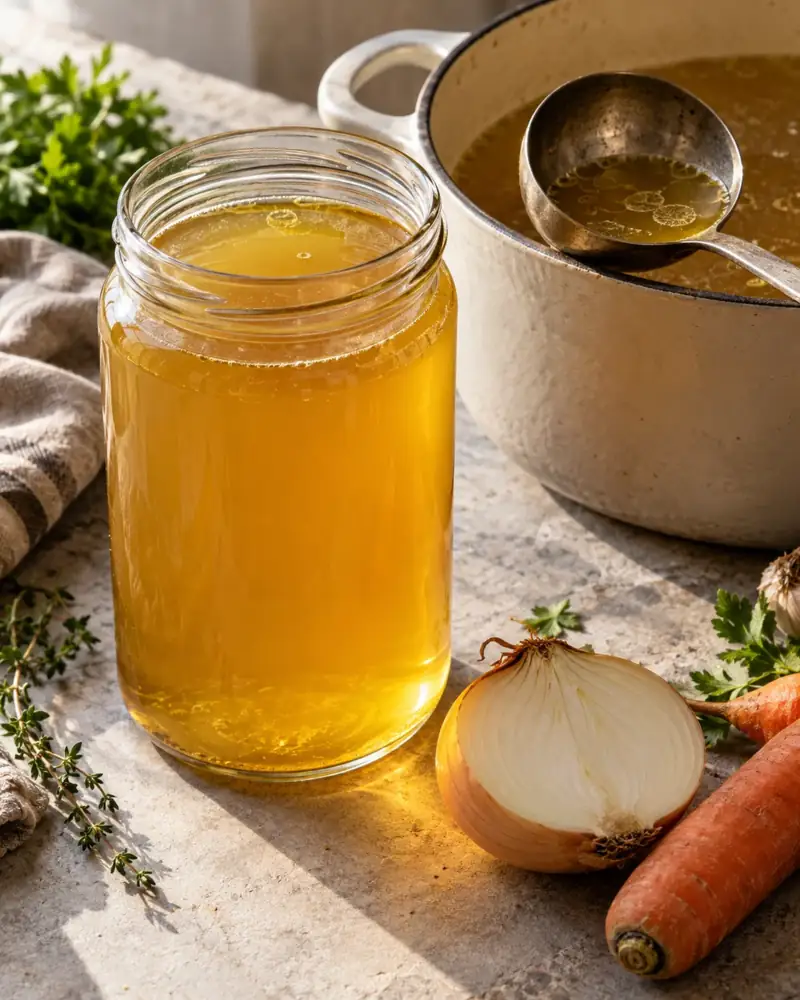
- 250 mlchicken stock or water (1 cup)Chicken Stock, for the pan juices
- freshly ground black pepper
- Diet
- Gluten-free
- Allergens
- celery, milk
Method
- The day before (or at least 4 hours ahead), pat the chicken dry. Season it all over and inside the cavity with the salt. Set it on a rack or plate, uncovered, in the fridge.
- Take the chicken out 45 minutes before cooking. Heat the oven to 220°C (425°F).
- Stuff the cavity with the lemon, garlic and thyme. Pat the skin dry once more, rub with the soft butter and grind over pepper. Tie the legs together loosely with string if you like.
- Spread the onions in a roasting pan or ovenproof frying pan and set the chicken on them, breast up. Put it in the oven with the legs pointing to the back (the hottest part).
- Roast for 50–70 minutes (about 40 minutes per kg). The skin should be deep golden and crackling, and the juices from the thigh run clear when pierced.
- Check with a thermometer: the thickest part of the thigh, not touching bone, must read 74°C (165°F); the breast should be at least 65°C (149°F): it climbs to about 70°C (158°F) as it rests and stays above 65°C for several minutes, which is as safe as reaching 74°C instantly. If the thigh is behind, give it 5–10 minutes more.
- Tip the bird so the juices from the cavity run into the pan, then lift it onto a board. Rest uncovered for 15 minutes.
- Meanwhile, spoon off most of the fat from the pan. Set the pan over medium heat, add the stock and scrape up the browned bits, mashing the onions. Simmer 3–4 minutes, strain, and season. (For a thicker sauce, see Gravy.)
- Carve: cut off the legs and separate thighs from drumsticks, then slice the breasts off the bone. Serve with the pan juices.
Why it works
Salt draws moisture to the surface, dissolves in it and is reabsorbed, seasoning deep into the meat and helping it hold onto juice; meanwhile the cold, dry air of the fridge dehydrates the skin so it browns and crisps instead of steaming. Breast is done at a lower temperature than thigh, so pointing the legs toward the hot back of the oven lets both finish together. Resting lets the juices settle and carryover heat finish the breast.
Common mistakes
- Roasting a wet bird. Dry skin is crisp skin; pat it dry and give it time uncovered in the fridge.
- Judging by time alone. Ovens and birds vary; check the thigh at 74°C (165°F).
- Carving straight away: the juices run onto the board. Rest 15 minutes.
Variations
- Lemon-herb butter under the skin
- Mash the butter with lemon zest, chopped herbs and garlic and push it under the breast skin before roasting.
- With roast vegetables
- Toss chunks of potato, carrot and onion in oil and salt and roast around the bird for the full time, turning once.
Make ahead and storage
Dry-salt up to 2 days ahead. Leftover meat keeps 3 days chilled; use the carcass for Chicken Stock.
Notes
For a fan oven, use 200°C (400°F). No rack? The onion slices do the same job, lifting the bird so the underside doesn't stew.