Fårikål (Norwegian Lamb and Cabbage Stew)
Norway's national dish: lamb, cabbage, salt and whole black pepper, nothing more
- Serves
- 4
- Hands-on
- Total
- Level
- Easy
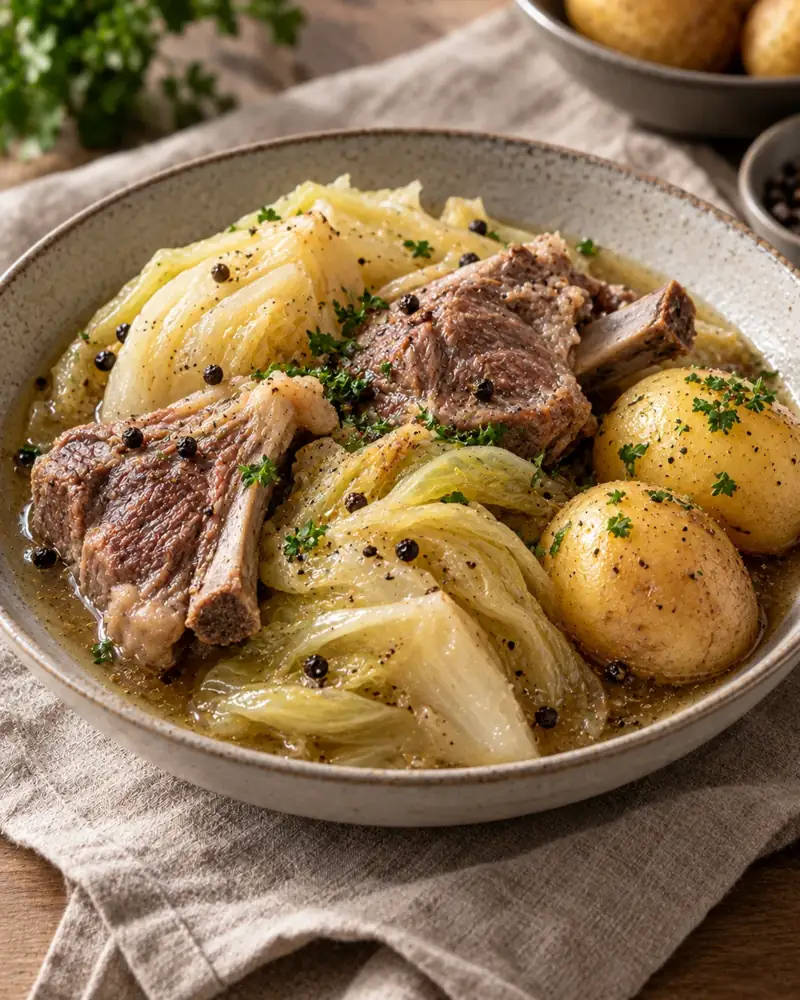
Fårikål — literally "sheep in cabbage" — is Norway's national dish, eaten every autumn when the lambs come down from the mountain pastures. Bone-in lamb and wedges of white cabbage are layered with salt and whole peppercorns and simmered slowly until the meat falls from the bone and the cabbage is meltingly sweet. It sounds plain, but it tastes deep, peppery and comforting.
Ingredients
- 1½ kgbone-in lamb or mutton (3¼ lb)neck, shoulder or breast, in 5–6 cm pieces (ask the butcher for 'fårikålkjøtt')
- 1½ kgwhite cabbage (3¼ lb)1 medium head, in thick wedges with the core left on
- 30 gfine sea salt (5 tsp)about 1% of the meat and cabbage together; taste the broth at the end
- 2 tbspwhole black peppercornsabout 15 g
- 400 mlwater (1⅔ cups)
- 1 tbspall-purpose flouroptional, traditional in some families
- 1 kgpotatoes (2¼ lb)boiled in their skins, to serve
- 1 bunchparsleychopped, optional
- Diet
- Dairy-free
- Allergens
- gluten
- Origin
- Norway
- Season
- Autumn
Method
- Put the peppercorns in a small square of cheesecloth or a tea infuser if you'd rather not bite into them (most Norwegians leave them loose).
- In a large heavy pot (at least 6 L), layer meat and cabbage: start with a layer of the fattiest meat pieces, bone side down, then a layer of cabbage wedges. Sprinkle each layer with salt, peppercorns and, if using, a little flour. Repeat, finishing with cabbage.
- Pour the water down the side of the pot. It will look like too little — the cabbage releases plenty of liquid.
- Bring to a boil, cover with a tight lid, then lower the heat to a gentle simmer. Cook without stirring for 2½–3 hours, shaking the pot occasionally, until the meat falls off the bone and the cabbage is soft and pale amber.
- The lamb is long past safe (above 90°C, 195°F) — tenderness is the test: a piece should come away from the bone when nudged with a fork. Taste the broth and add more salt if needed.
- Serve in deep plates with plenty of broth, the cabbage and meat, and boiled potatoes. Lingonberry jam and flatbread are common at the Norwegian table.
Why it works
With so few ingredients, technique carries the flavor. Bone-in, fatty cuts release gelatin, fat and marrow into the broth over hours, and the cabbage softens and releases its sugars, sweetening the broth. Whole peppercorns give a gentle, aromatic heat that builds as they simmer — ground pepper would be harsh and muddy. Little added water means the broth is mostly cabbage juice and meat stock, intense and savory.
Common mistakes
- Using lean, boneless lamb. The bones and fat are the flavor; choose neck, breast or shoulder.
- Adding too much water, which makes a thin, bland broth.
- Stirring — it breaks up the cabbage. Shake the pot instead.
Variations
- Mutton
- Older sheep (mutton) is traditional and has more flavor; allow 3–3½ hours.
- Without flour
- Leave out the flour for a clear broth and a gluten-free dish (most modern recipes do).
Make ahead and storage
Fårikål is famously better reheated on the second and third day. It keeps 4 days in the fridge and freezes for 3 months.
Notes
Frozen pre-cut 'fårikålkjøtt' is sold in Norwegian supermarkets in autumn. Outside Norway, ask for lamb neck and shoulder cut through the bone. Gluten only if you use the flour. Norway marks Fårikål Day on the last Thursday of September.