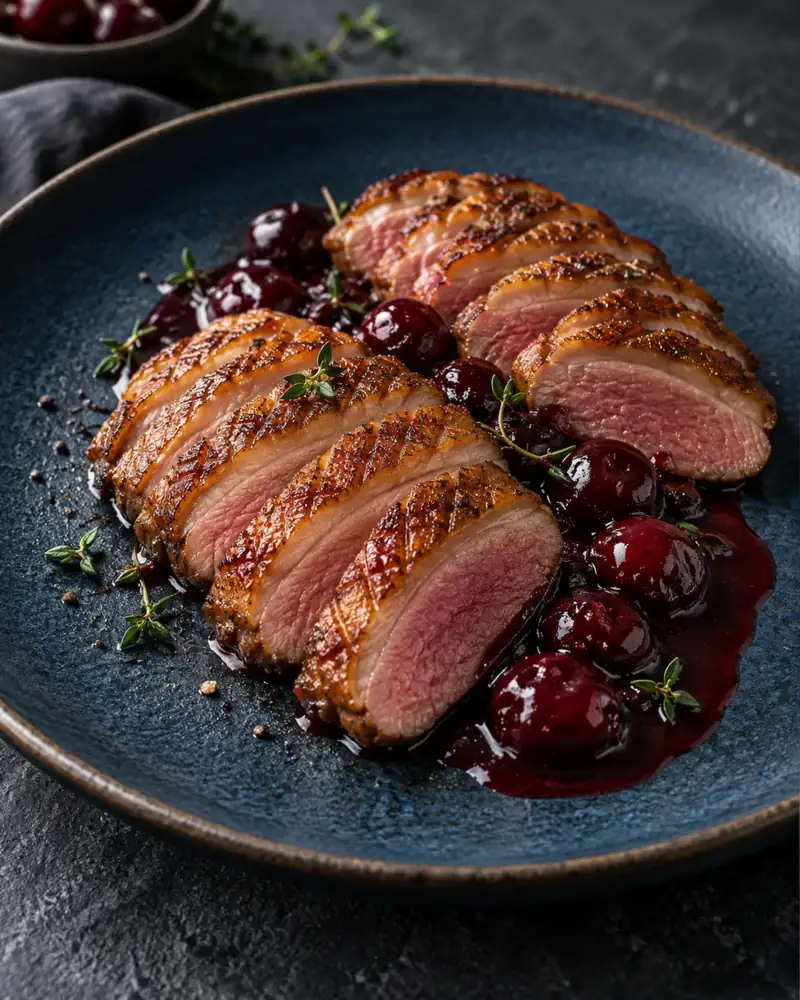
Pan-Roasted Duck Breast with Cherry Sauce
Fat rendered slowly from a cold pan, rosy meat, quick fruit pan sauce
- Serves
- 4
- Hands-on
- Total
- Level
- Some skill
Duck breast is cooked more like a steak than like chicken: served pink, its rich red meat has a deep, almost gamey flavor. Everything depends on the thick fat layer — scored and rendered slowly from a cold pan until the skin is thin and crisp. A tart cherry and red wine sauce in the same pan cuts the richness.
Ingredients
Duck
- 2duck breasts (magrets), skin on (about 12 oz each)about 350 g each, or 4 smaller breasts of 200 g
- 6 gfine sea salt (1 tsp)
- freshly ground black pepper
Cherry sauce
- 1shallotfinely chopped
- 100 mlred wine or port (scant ½ cup)
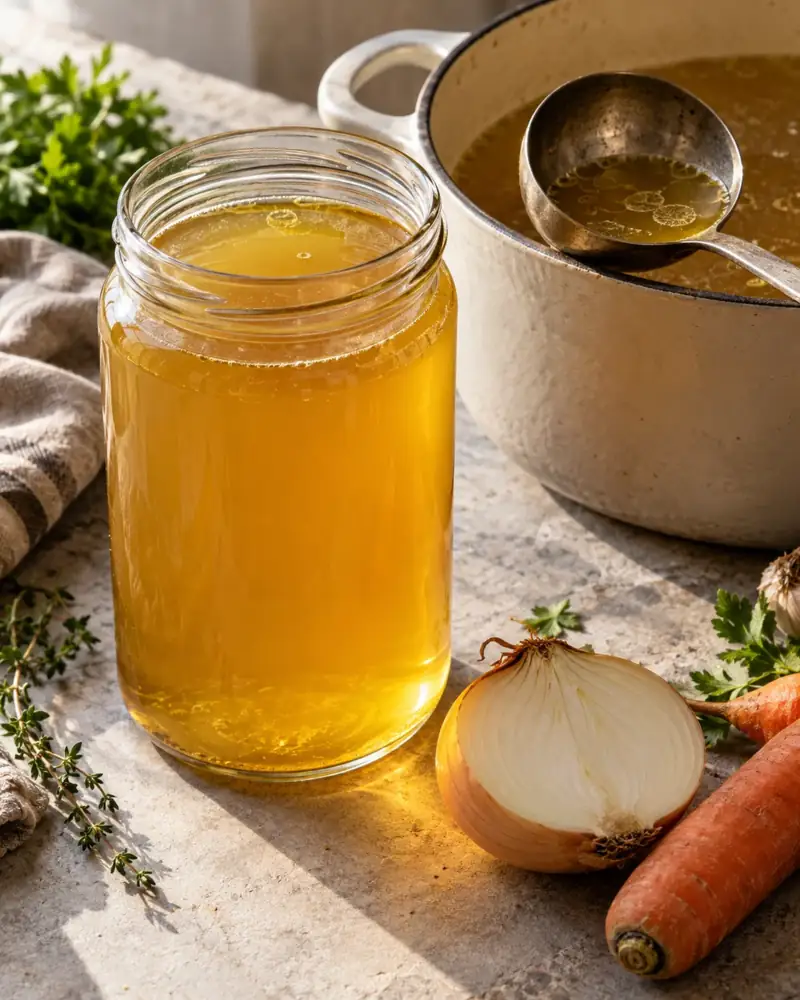
- 200 mlchicken stock (¾ cup)Chicken Stock or store-bought
- 150 gpitted cherries (1 cup)fresh or frozen
- 1 tbspbalsamic or red wine vinegar
- 1 tsphoneyif the cherries are tart
- 1 sprigthyme
- 20 gcold butter (1½ tbsp)
- Diet
- Gluten-free
- Allergens
- milk, sulphites, celery
- Origin
- France
- Season
- Summer, Autumn
Method
- Pat the duck dry. With a sharp knife, score the skin in a tight crosshatch, 1 cm apart, cutting through the fat but not into the meat. Season both sides with the salt and pepper.
- Lay the breasts skin side down in a cold, dry frying pan. Set over medium-low heat.
- Cook gently, pouring off the rendered fat every few minutes into a heatproof bowl (save it for potatoes), until the fat layer has shrunk to a thin, crisp, deep-golden skin, 12–15 minutes for magrets (8–10 for smaller breasts). Turn the heat up a little at the end if it's pale.
- Turn the breasts over and cook the meat side for 2–3 minutes. Check with a thermometer: 54–57°C (129–135°F) for pink, medium-rare — duck breast is red meat and is served this way in France. For medium, 60°C (140°F). If you prefer it well done, 70°C (158°F).
- Rest on a board, skin side up, for 8 minutes; the temperature rises 2–3°C.
- Meanwhile, pour off all but 1 tbsp fat. Cook the shallot over medium heat for 1 minute. Add the wine and boil until reduced by half. Add the stock, cherries, vinegar, honey and thyme and boil until syrupy and reduced by about two-thirds, 5–6 minutes.
- Off the heat, discard the thyme and swirl in the butter until glossy (Five-Minute Pan Sauce). Taste and adjust with salt or honey.
- Slice the duck on a slight diagonal into 1 cm slices, add any resting juices to the sauce and serve with the sauce spooned beside.
Why it works
Duck breast carries a thick layer of fat that insulates the meat. Starting in a cold pan and rendering slowly melts most of it away before the skin firms, leaving a thin, crisp crust while the meat beneath barely cooks. Duck meat is dense in myoglobin and best pink; overcooked, it turns liver-like. The tart sauce, deglazing the browned bits, balances the fat.
Common mistakes
- Starting in a hot pan: the skin burns before the fat renders, leaving a thick, chewy layer.
- Cutting into the meat when scoring; juices leak out.
- Slicing without resting. The juice floods the board.
Variations
- Orange sauce
- Replace the cherries with the juice of 2 oranges and a strip of zest, and the vinegar with 1 tbsp sherry vinegar.
- Five-spice duck
- Rub the meat side with ½ tsp five-spice powder and serve with a soy-honey glaze and rice.
Make ahead and storage
Score and season the breasts up to a day ahead and refrigerate uncovered. Keep the duck fat in the fridge for months.
Notes
Duck is a red meat in culinary terms; it is generally served pink, and the risk from whole-muscle duck breast is similar to that of beef steak. If serving young children, pregnant guests or anyone vulnerable, cook to 70°C (158°F).