Chicken Stock
The quiet workhorse: clear, golden and rich with body
- Makes
- about 2.5 l (10 cups)
- Hands-on
- Total
- Level
- Easy
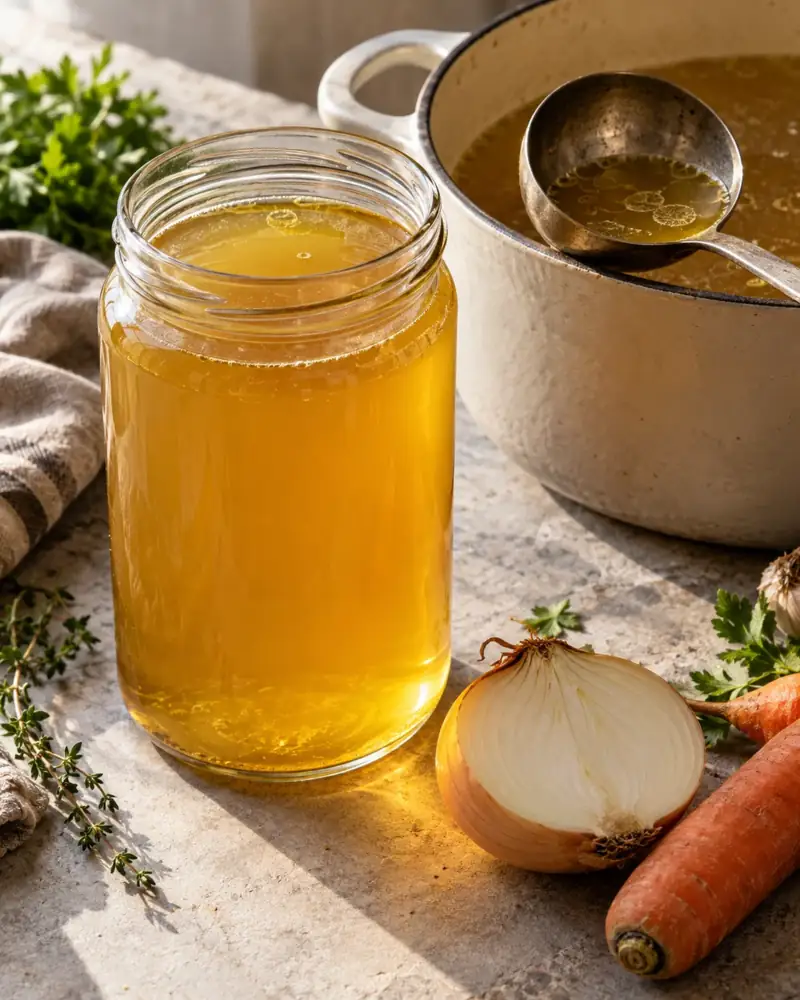
A good chicken stock is the single ingredient that most improves soups, risottos and sauces. This version uses wings and backs for gelatin, a slow, barely moving simmer for clarity, and no salt, so you can season whatever it ends up in.
Ingredients
- 2 kgchicken wings, backs and necks (4½ lb)raw; or the carcass of 2 roast chickens plus 500 g wings
- 3½ lcold water (15 cups)
- 1large onionhalved, skin on
- 2carrotscut in 4 cm chunks
- 2celery stalkscut in 4 cm chunks
- 1leek, green part onlywashed; optional
- 6 sprigsparsley stems
- 2bay leaves
- 1 tspblack peppercornswhole
- Diet
- Gluten-free, Dairy-free
- Allergens
- celery
Method
- Put the chicken pieces (unrinsed; rinsing raw chicken only splashes bacteria around the sink) in a large pot (at least 6 l). Add the cold water; it should cover the chicken by about 3 cm.
- Bring slowly to a simmer over medium heat, 25–30 minutes. As gray foam rises, skim it off with a ladle or large spoon.
- Once the foam has mostly stopped, add the onion, carrots, celery, leek, parsley stems, bay leaves and peppercorns.
- Turn the heat down so the surface only trembles, with a bubble breaking every second or two. Simmer uncovered for 3–4 hours, topping up with a little hot water if the bones poke out.
- Lift out the big pieces with tongs, then pour the stock through a fine sieve into a large bowl. Do not press the solids; that clouds the stock.
- Cool quickly: set the bowl in a sink of cold water and ice, stirring now and then, until below 20°C (68°F), then refrigerate.
- Once chilled, lift off the layer of fat from the top. Keep it for roasting potatoes, or discard.
Why it works
Collagen in the wings and backs dissolves into gelatin during a long simmer, which gives the stock body and makes it set to a soft jelly when cold. A hard boil emulsifies fat and fine protein particles into the liquid, turning it cloudy and greasy-tasting; a gentle simmer leaves them to float up and be skimmed. Vegetables go in after the skimming so you are not fishing foam out from between them.
Common mistakes
- Boiling hard: the stock turns cloudy and tastes flat. Keep it at a tremble.
- Salting the stock: it will be reduced later in sauces and become too salty. Season the final dish instead.
- Leaving a big pot to cool on the counter overnight: it sits in the danger zone for hours. Use an ice bath and refrigerate within 2 hours.
Variations
- Roast-chicken stock
- Use the picked carcasses of two roast chickens plus 500 g raw wings for body; the flavor is deeper and slightly toasty.
- Asian-style stock
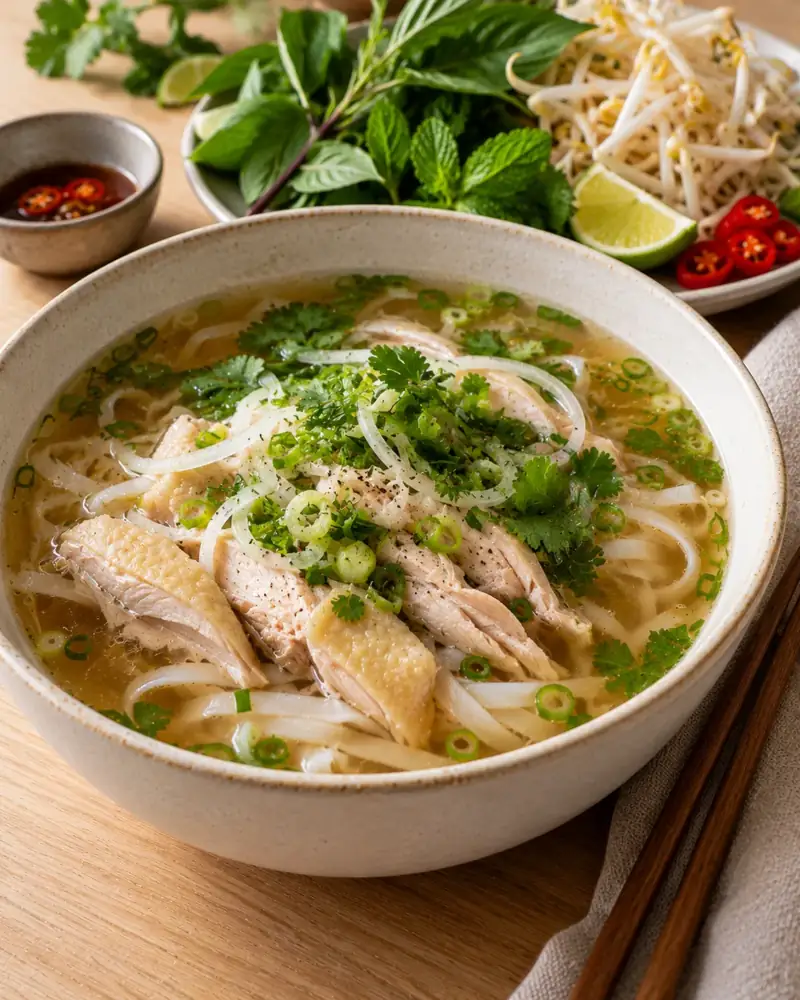
- Replace carrot, celery and herbs with 40 g sliced ginger, 6 scallions and 2 garlic cloves; good for Chicken Pho (Phở Gà) or Congee.
Make ahead and storage
Keeps 4 days in the fridge and 6 months frozen. Freeze some in 500 ml tubs and some in ice-cube trays for pan sauces.
Notes
A pressure cooker makes good stock in 90 minutes at high pressure; let the pressure drop naturally so it stays clear. Store-bought low-sodium stock works anywhere this is called for.