Pesto Genovese
Basil, pine nuts, garlic and two cheeses, bright green and fragrant
- Makes
- about 250 ml (1 cup), enough for 500 g pasta
- Hands-on
- Total
- Level
- Easy
Pesto is a sauce of raw basil pounded with garlic, pine nuts, hard cheese and olive oil. Making it cool and fast keeps the basil bright green and sweet rather than dark and bitter.
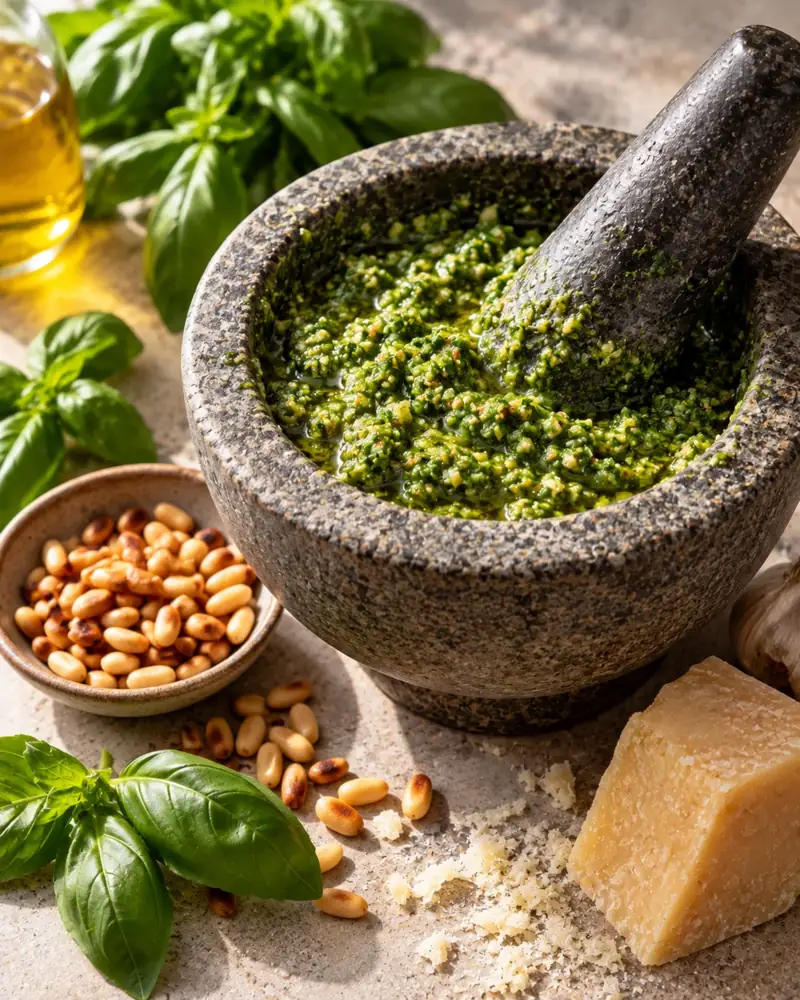
Ingredients
- 30 gpine nuts (¼ cup)
- 1 clovegarlicsmall
- 2 gcoarse or fine sea salt (⅓ tsp)
- 70 gfresh basil leaves (about 3 cups loosely packed)from 2–3 large bunches
- 40 gParmigiano Reggiano (1½ oz)finely grated; or a vegetarian hard cheese (traditional Parmesan uses animal rennet)
- 20 gPecorino Romano or Fiore Sardo (¾ oz)finely grated; or a vegetarian hard cheese (traditional Pecorino uses animal rennet)
- 100 mlextra-virgin olive oil (⅓ cup + 1 tbsp)mild, fruity
- Diet
- Vegetarian, Gluten-free
- Allergens
- milk, tree nuts
- Origin
- Italy (Liguria)
- Season
- Summer
Method
- Toast the pine nuts in a dry pan over medium-low heat, shaking often, until barely golden, 3–4 minutes. Let them cool completely.
- Mortar method: pound the garlic and salt to a paste. Add the pine nuts and pound until coarse. Add the basil a handful at a time, grinding with a circular motion, until it is a coarse green paste.
- Food-processor method: chill the bowl and blade for 10 minutes. Pulse the garlic, salt and pine nuts until coarse. Add the basil and half the oil and pulse in short bursts, scraping down, until finely chopped but not smooth.
- Stir in the grated cheeses.
- Stir in the remaining oil (all of it if you used a mortar) until the pesto is loose and glossy. Taste for salt.
- To serve with pasta, loosen the pesto with 2–3 tbsp hot pasta water in a warm bowl, then toss with drained pasta off the heat. Never heat pesto in a pan.
Why it works
Basil darkens and turns bitter when its cells are bruised and heated, because damaged cells release enzymes that brown the leaves. A mortar crushes rather than chops, releasing aromatic oils without much heat, and a chilled processor bowl used in short pulses comes close. Cooked pesto loses the fresh, volatile aroma that makes it worth making.
Common mistakes
- Running the processor continuously: the friction warms the basil and turns it dark and bitter.
- Over-toasting the pine nuts: they dominate. Barely golden is enough.
- Adding the pesto to a hot pan: it turns gray and the cheese clumps.
Variations
- Walnut and arugula
- Use walnuts instead of pine nuts and half arugula, half basil; punchier and cheaper.
- Pesto with potatoes and beans
- The Ligurian way to serve it is Trofie al Pesto with Potatoes and Green Beans.
Make ahead and storage
Keeps 3 days in the fridge under a thin layer of oil. Freezes for 3 months; for best color freeze it without the cheese and stir that in after thawing.
Notes
Supermarket basil plants are fine; use the leaves only.