Baked Vanilla Cheesecake
Creamy, dense and crack-free, baked low and cooled slowly
- Makes
- 1 cheesecake (23 cm / 9 in springform)
- Hands-on
- Total
- Level
- Some skill
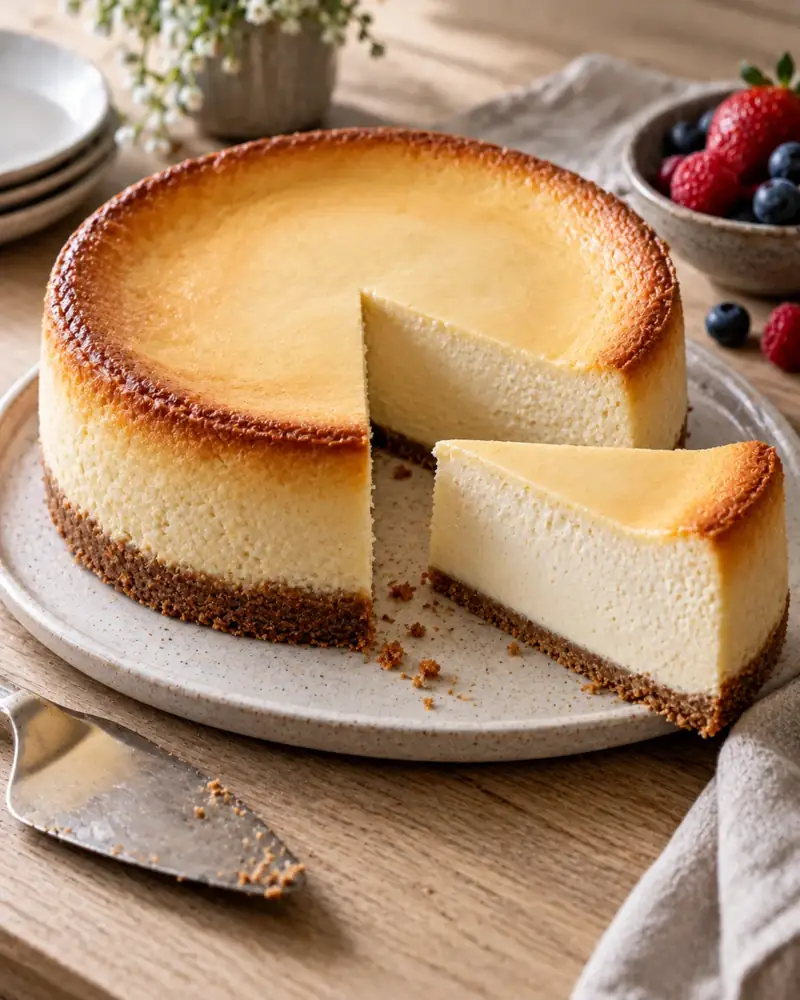
A classic baked cheesecake: buttery biscuit base, a filling that is rich, smooth and just tangy, and a pale top without cracks. The method is about gentle heat and patience, not a water bath, so it is simpler than most and needs a full night in the fridge.
Ingredients
Base
- 200 gdigestive biscuits or graham crackers (7 oz)
- 80 gunsalted butter, melted (5½ tbsp)
- 15 gsugar (1 tbsp)
Filling
- 900 gfull-fat cream cheese, at room temperature (2 lb)block-style, not spreadable tubs if you can find it
- 200 gsugar (1 cup)
- 20 gcornstarch (2½ tbsp)
- 1 pinchfine sea salt
- 150 gsour cream, at room temperature (⅔ cup)
- 10 mlvanilla extract (2 tsp)or seeds of 1 vanilla pod
- 5 mllemon juice (1 tsp)
- 4large eggs (about 200 g without shells)at room temperature
- Diet
- Vegetarian
- Allergens
- gluten, egg, milk
- Origin
- United States (New York style)
Method
- Heat the oven to 180°C (350°F). Line the base of a 23 cm (9 in) springform pan with baking paper, clip the ring on and butter the sides.
- Crush the biscuits to fine crumbs in a food processor or in a bag with a rolling pin. Mix with the melted butter and sugar until like wet sand, then press firmly and evenly into the base with the bottom of a glass. Bake 10 minutes and cool while you make the filling. Lower the oven to 150°C (300°F).
- With an electric mixer on low or a sturdy spatula, beat the cream cheese until smooth, scraping the bowl. Mix in the sugar, cornstarch and salt, then the sour cream, vanilla and lemon juice, mixing just until smooth.
- Add the eggs one at a time on the lowest speed, mixing only until each one disappears. Scrape the bowl well. Aim for as little air as possible.
- Pour the filling over the base and tap the pan on the counter a few times to burst bubbles. Set the pan on a baking sheet.
- Bake 60–70 minutes, until the edges are set and slightly puffed but the center 8 cm (3 in) still wobbles like jelly when nudged. The center should read about 65°C (150°F). It must stay pale; if it starts to color, lower the heat.
- Turn the oven off, prop the door open a few centimeters with a wooden spoon and leave the cheesecake inside for 1 hour. Then run a thin knife round the edge (to stop cracks as it shrinks) and cool to room temperature, about 1 hour.
- Chill, uncovered at first then covered, for at least 6 hours or overnight. Unclip and slice with a hot, wiped knife.
Why it works
A cheesecake is a baked custard, and egg proteins set smoothly only when heated gently; high heat makes them tighten, curdle and crack the top. Low temperature, pulling it out while the middle still wobbles, and cooling slowly let it finish setting from residual heat without shrinking fast. Cornstarch buffers the eggs, making the filling more forgiving.
Common mistakes
- Cold cream cheese, which leaves lumps you can't beat out without adding air. Leave everything out for 2 hours.
- Whipping air into the filling. Bubbles rise, then collapse into cracks.
- Baking until firm in the middle. It will be dry and cracked once cold.
Variations
- Berry topping
- Simmer 300 g mixed berries with 50 g sugar and 1 tsp lemon juice for 5 minutes, cool and spoon over before serving.
- Burnt Basque-style
- Skip the base, line the pan with crumpled baking paper and bake at 220°C (425°F) for 30–35 minutes until very dark on top and wobbly inside.
Make ahead and storage
Best made the day before. Keeps 4–5 days in the fridge, covered; don't leave it out at room temperature for more than 2 hours, and freezes well (whole or in slices) for 2 months; thaw overnight in the fridge.
Notes
Fan oven: 160°C (320°F) for the base, 130°C (265°F) for the filling. Gluten-free: use gluten-free biscuits for the base. For the most even, crack-proof result you can also bake it in a water bath: wrap the outside of the pan tightly in two layers of foil, stand it in a roasting pan and pour in hot water to come 2–3 cm up the sides; allow 10–15 minutes longer.