Pavlova
Crisp shell, marshmallow heart, soft cream and sharp fruit
- Makes
- 1 pavlova (about 23 cm / 9 in)
- Hands-on
- Total
- Level
- Some skill
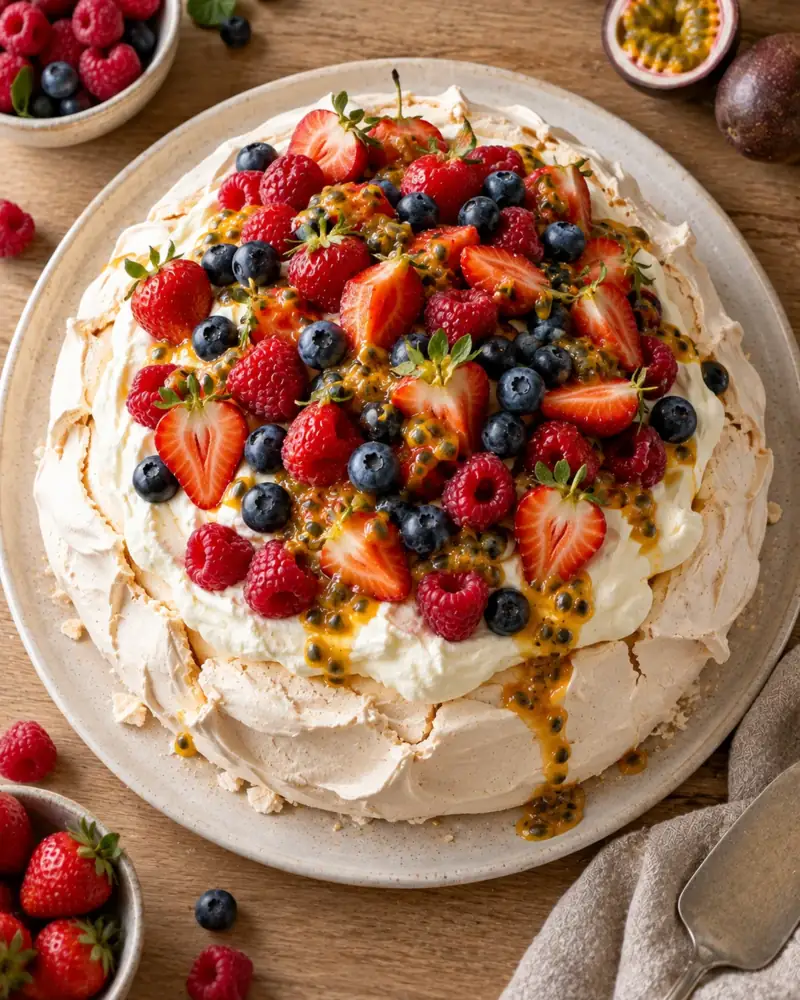
A big meringue that is crisp outside and soft and chewy inside, piled with whipped cream and tart fruit. Because it bakes slowly and cools in the oven, it is ideal for making the day before a party; only the topping goes on at the last minute.
Ingredients
Meringue
- 4large egg whites (about 140 g)at room temperature, with no trace of yolk
- 250 gsuperfine (caster) sugar (1¼ cups)
- 10 gcornstarch (1 tbsp)
- 5 mlwhite wine vinegar or lemon juice (1 tsp)
- 5 mlvanilla extract (1 tsp)
- 1 pinchfine sea salt
Topping
- 400 mlheavy (double) cream (1⅔ cups)
- 15 gpowdered (icing) sugar (2 tbsp)
- 500 gmixed fruit: berries, passion fruit pulp, kiwi or mango (1 lb 2 oz)something sharp is essential
- Diet
- Vegetarian, Gluten-free
- Allergens
- egg, milk, sulphites
- Origin
- Australia / New Zealand
- Season
- Summer
Method
- Heat the oven to 150°C (300°F). Draw a 22 cm (8½ in) circle on a sheet of baking paper, flip it over (ink side down) on a baking sheet.
- In a spotlessly clean, grease-free bowl, whisk the egg whites and salt with an electric mixer on medium until they form soft peaks, about 2 minutes. By hand with a balloon whisk, allow 6–8 minutes.
- Increase to high and add the superfine sugar a spoonful at a time, about every 15 seconds. Then keep whisking 5–8 minutes more, until the meringue is very thick, glossy and stands in stiff peaks (the tips stand straight up when you lift the whisk), and a little rubbed between your fingers feels smooth, not gritty. (By hand, this takes 15–20 minutes; take turns.)
- Sprinkle over the cornstarch, vinegar and vanilla and fold in with a spatula in 3–4 strokes.
- Pile the meringue into the circle, spreading it to the edges and making the sides higher than the center so it forms a shallow crater. Swirl the sides upwards with a spoon.
- Put it in the oven and immediately turn down to 120°C (250°F). Bake 1 hour 15 minutes, until crisp, dry to the touch and very pale cream (not brown).
- Turn the oven off and leave the pavlova inside, door closed, until completely cold, at least 3 hours or overnight. Cracks are normal.
- Just before serving, whip the cream with the powdered sugar to soft peaks. Peel off the paper, set the meringue on a plate, pile on the cream and top with the fruit.
Why it works
Whisking unfolds egg-white proteins, which link up around air bubbles; adding sugar slowly lets it dissolve and stabilize that foam so it can hold its shape in the oven. Cornstarch and acid keep the center soft and marshmallowy by interfering with the proteins setting too firmly. Low heat dries the shell without browning it, and cooling in the oven prevents the sudden temperature change that makes meringues collapse.
Common mistakes
- Any fat in the whites, from a speck of yolk or a greasy bowl, stops them whipping properly. Wipe the bowl with a little lemon juice first.
- Adding the sugar too fast; it won't dissolve and will weep syrup in the oven.
- Topping too early. Cream softens the meringue within an hour.
Variations
- Mini pavlovas
- Make 8 nests about 9 cm wide and bake at 120°C (250°F) for 50 minutes, then cool in the oven.
- Chocolate pavlova
- Fold 20 g sifted cocoa and 40 g finely chopped dark chocolate in with the cornstarch.
Make ahead and storage
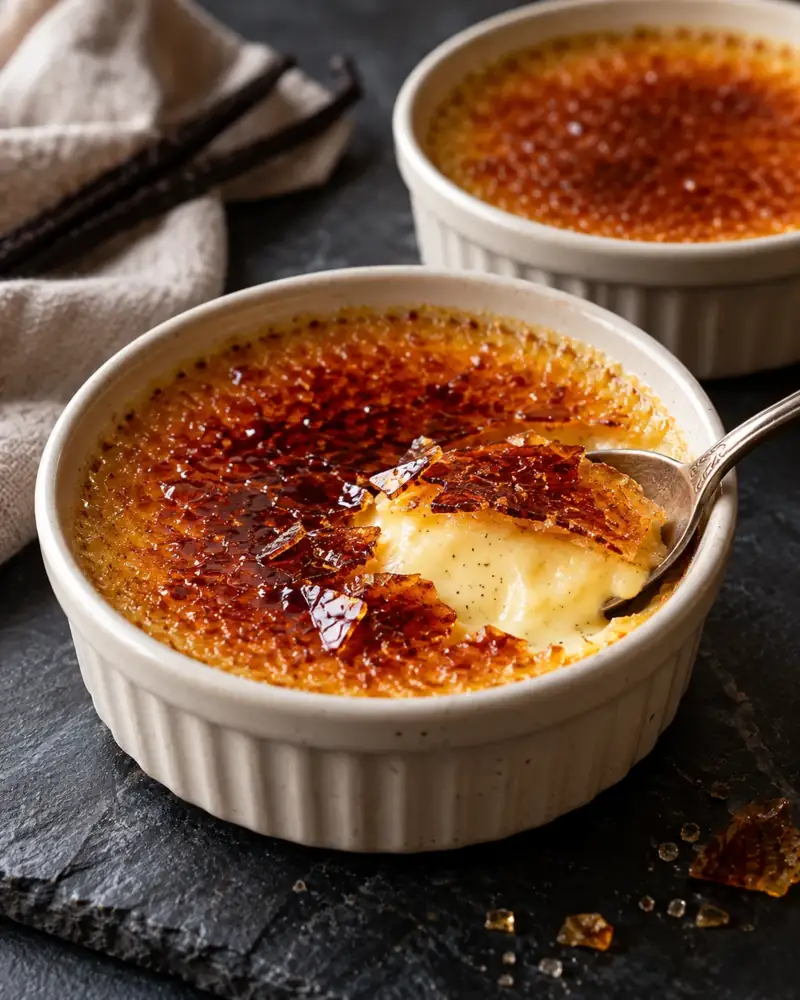
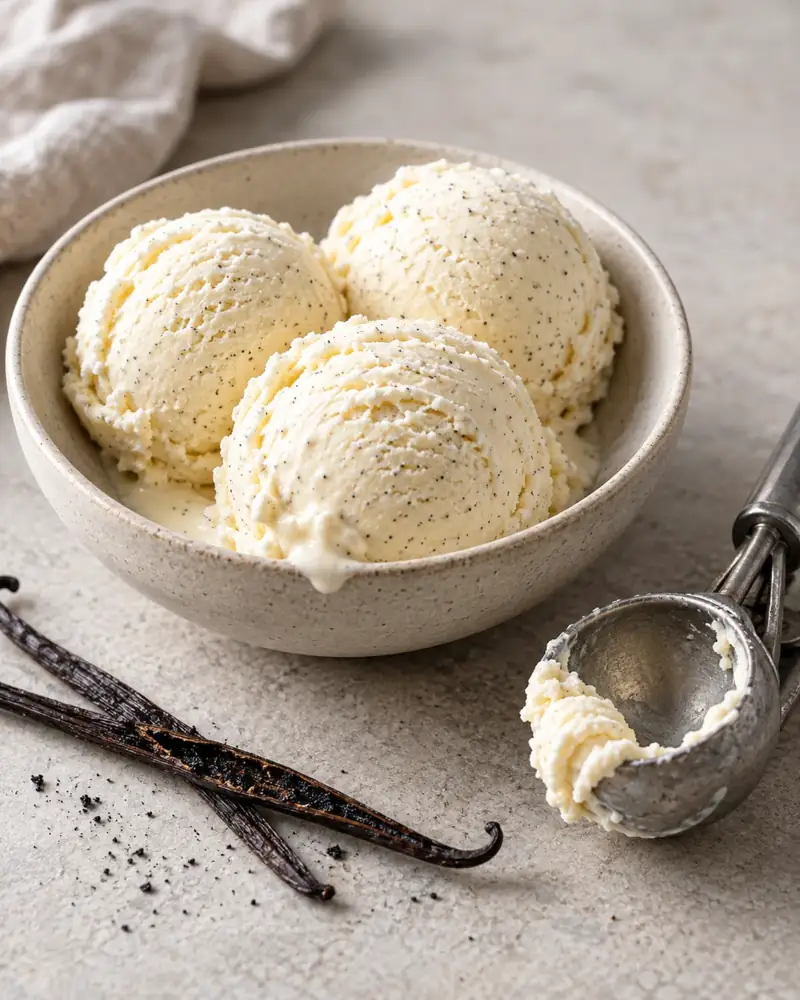
The baked meringue keeps 2 days in an airtight container in a cool, dry place (not the fridge). Leftover yolks go into Crème Brûlée or Vanilla Ice Cream. Broken meringue makes Eton Mess.
Notes
Fan oven: 130°C (265°F), then 100°C (210°F). Humid days make meringue sticky; it is best made on a dry day. Sulphites only if you use vinegar rather than lemon juice.