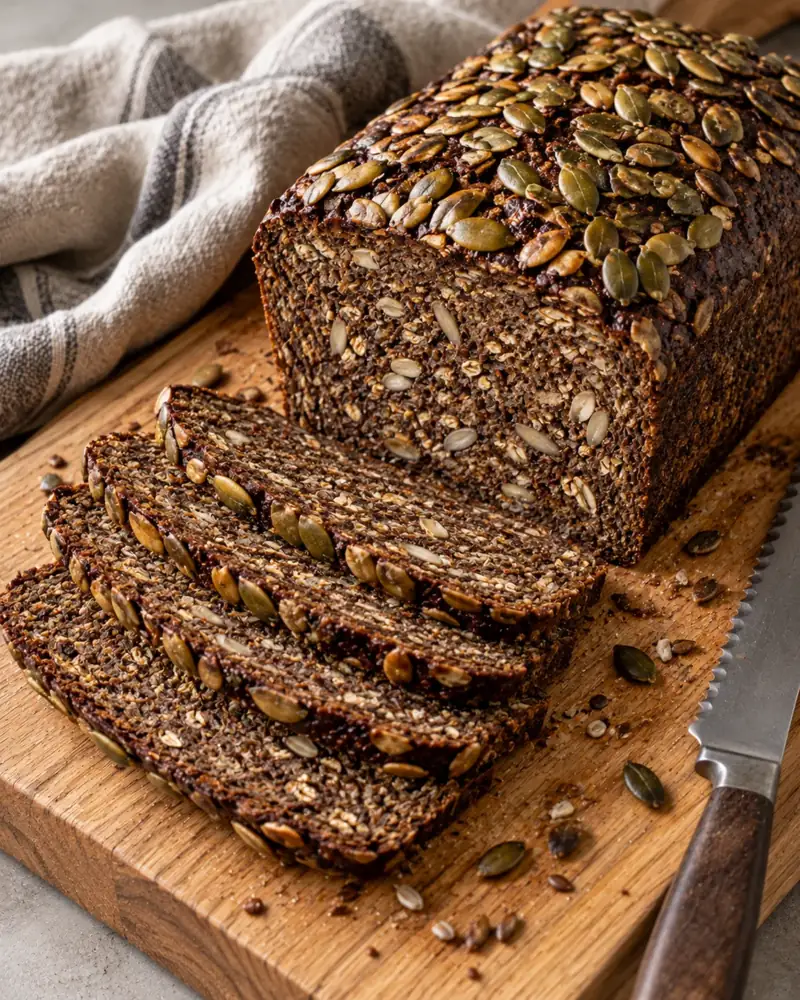
Brioche Loaf
Buttery, golden and feather-soft, with an overnight chill for easy shaping
- Makes
- 1 loaf (900 g / 2 lb tin)
- Hands-on
- Total
- Level
- Project
Brioche is bread enriched almost to the point of cake: eggs, a little sugar and a lot of butter, worked into a strong dough. The result is a tender, shreddable crumb for French toast, burger buns and very good morning toast.
Ingredients
Dough
- 400 gbread flour (3¼ cups)
- 6 ginstant yeast (2 tsp)
- 40 gsugar (3 tbsp)
- 8 gfine sea salt (1¼ tsp)
- 4large eggs, cold (about 200 g without shells)
- 60 gwhole milk, cold (¼ cup)
- 200 gunsalted butter, soft but cool, in cubes (14 tbsp)it should bend without breaking, about 16°C (60°F)
Glaze
- 1egg yolk (about 18 g)
- 15 mlmilk (1 tbsp)
- Diet
- Vegetarian
- Allergens
- gluten, egg, milk
- Origin
- France
Method
- Stand mixer (recommended): Put the flour, yeast, sugar, salt, eggs and milk in the bowl and knead with the dough hook on low for 4 minutes, then medium for 6–8 minutes, until the dough pulls away from the sides and is smooth and elastic.
- With the mixer on medium, add the butter a few cubes at a time, waiting until each addition disappears before adding more, about 8 minutes in all. Keep kneading 3–5 minutes more until the dough is glossy, slaps the sides of the bowl and passes the windowpane test (a small piece stretches thin enough to see light through).
- By hand: Mix the same ingredients except the butter into a sticky dough in a bowl, then knead on an unfloured counter using a slap-and-fold motion (lift the dough, slap it down, fold it over itself) for 12–15 minutes until smooth.
- Squash the butter in a quarter at a time, smearing and folding until absorbed. It will look broken and greasy, then come together. Expect 25–30 minutes; use a bench scraper and resist adding flour.
- Transfer to a lightly buttered bowl, cover and leave at room temperature 1 hour, until puffy. Press it down, cover tightly and refrigerate 8–16 hours. The chilled butter makes the dough firm enough to shape.
- Butter a 900 g (2 lb) loaf pan. Divide the cold dough into 6 equal pieces (about 150 g) and roll each into a tight ball. Place them in two rows of three in the pan.
- Cover and let rise at warm room temperature (24–26°C, 75–79°F) for 2½–3 hours, until the dough has risen just above the rim and wobbles when nudged. Don't put it anywhere hot or the butter will leak.
- Heat the oven to 180°C (350°F). Whisk the yolk with the milk and brush gently over the top.
- Bake 35–40 minutes, until deep, glossy brown and the center reads 90°C (195°F). Cover loosely with a sheet of foil after 20 minutes if it browns fast.
- Cool 10 minutes in the pan, then turn out onto a rack and cool at least 1 hour before slicing.
Why it works
Gluten is developed first, before the butter goes in, because fat coats proteins and stops them bonding; adding butter to an already-strong dough gives both structure and richness. Keeping everything cool stops the butter melting out of the dough. The overnight chill both firms the butter for shaping and slows fermentation for deeper flavor.
Common mistakes
- Adding the butter too early or too fast, which leaves a slack, greasy dough that never strengthens.
- A warm kitchen. If the dough feels oily, chill it for 15 minutes and continue.
- Underbaking. Brioche browns early because of the sugar and eggs; trust the thermometer.
Variations
- Burger buns
- Divide into 10 pieces of 90 g, roll into balls, flatten slightly on a lined tray, proof 1½–2 hours, glaze, sprinkle with sesame seeds and bake 15–18 minutes at 190°C (375°F).
- Chocolate brioche
- Before shaping, knead in 100 g chopped dark chocolate.
Make ahead and storage
The dough keeps in the fridge up to 36 hours. Baked brioche keeps 3 days wrapped and freezes well for 3 months; day-old slices are ideal for French Toast.
Notes
Hydration 65% counting egg and milk liquid (about 260 g); butter is 50% of the flour weight. Fan oven: 160°C (320°F).