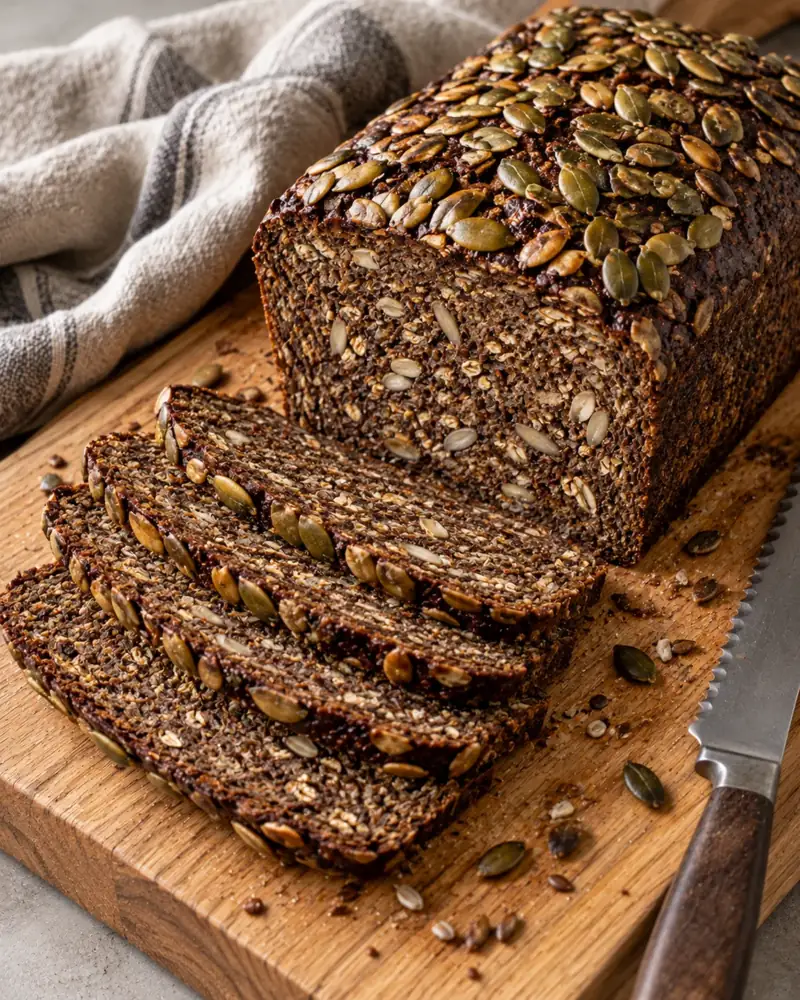
Dark Nordic Rye Bread
Dense, seeded, keeps for a week and slices thin for open sandwiches
- Makes
- 1 loaf (900 g / 2 lb tin), about 20 thin slices
- Hands-on
- Total
- Level
- Some skill
This is the dark, moist, seed-packed rye that sits under every good open sandwich in Scandinavia. It is a batter more than a dough, so there is no kneading or shaping, and it slices best after a full day's rest. This version uses a little yeast alongside buttermilk so you don't need a rye sourdough to make it.
Ingredients
Soaker (night before)
- 150 gcracked rye or rye flakes (1¼ cups)or rolled oats
- 75 gsunflower seeds (½ cup)
- 50 gflaxseeds (⅓ cup)
- 300 gboiling water (1¼ cups)
Batter
- 300 gwholegrain rye flour (2¾ cups)
- 100 gwhole-wheat flour (¾ cup + 1 tbsp)
- 12 gfine sea salt (2 tsp)
- 5 ginstant yeast (1½ tsp)
- 400 gbuttermilk, at room temperature (1⅔ cups)or plain yogurt thinned with water 50/50
- 60 gdark syrup, molasses or treacle (3 tbsp)
- 30 gpumpkin seeds (¼ cup)for the top
- butter or oilfor the pan
- Diet
- Vegetarian
- Allergens
- gluten, milk
- Origin
- Denmark / Nordic countries
Method
- The night before: In a bowl, pour the boiling water over the cracked rye, sunflower seeds and flaxseeds. Stir, cover and leave at room temperature 8–12 hours. The grains swell and the flax turns jelly-like.
- Next day, whisk the rye flour, whole-wheat flour, salt and yeast in a large bowl. Add the soaked grains, buttermilk and syrup and stir hard with a sturdy spoon for 2 minutes until evenly mixed. It will be a heavy, sticky paste like wet concrete.
- Butter a 900 g (2 lb) loaf pan and line it with a sling of baking paper. Scrape in the batter and smooth the top with a wet spatula. Scatter the pumpkin seeds over and press them in lightly.
- Cover and leave in a warm place for 2–3 hours, until the batter has risen by about a third and small cracks and holes appear on the surface.
- Heat the oven to 180°C (350°F). Bake for 70–80 minutes, until the top is firm and dark and the center reads 98°C (208°F). Rye needs this extra heat to set; underbaked rye is gummy.
- Lift out using the paper and cool completely on a rack. Wrap in a clean towel and leave at least 12 hours, ideally 24, before slicing thinly with a serrated knife.
Why it works
Rye has little gluten; its structure comes instead from pentosans, gummy fibers that hold water and form a thick paste. That is why rye is mixed, not kneaded, and why it needs a long, thorough bake and a long rest for the starches to set before it can be cut cleanly. The acidity of buttermilk stops rye's enzymes from breaking down that starch too much, which would make the crumb sticky.
Common mistakes
- Slicing the same day. The crumb is still setting and will smear; wait a day.
- Underbaking. Rye looks done long before it is; use a thermometer or give it the full time.
- Adding more flour because the batter is sticky. It is meant to be a paste.
Variations
- Sourdough rye
- Replace the yeast and 100 g of the buttermilk with 200 g active rye sourdough starter (see Country Sourdough) and let it rise 4–6 hours.
- Rye with dried fruit
- Add 100 g chopped dried figs or apricots to the batter and a little extra syrup for a sweeter loaf to eat with cheese.
Make ahead and storage
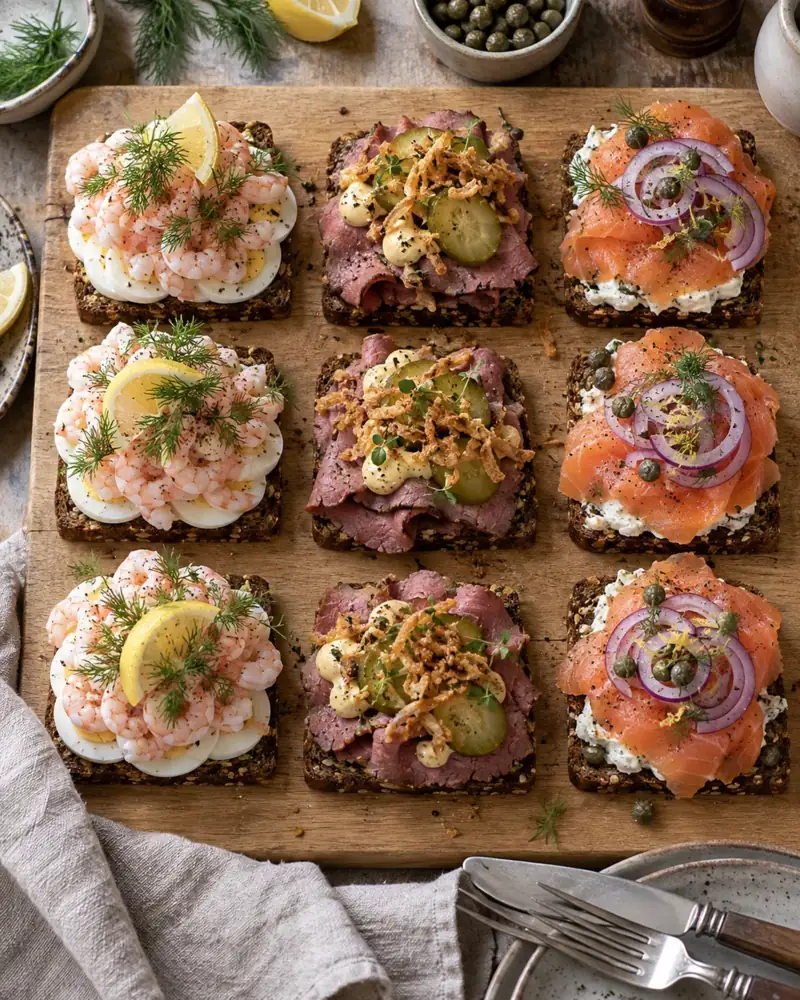
Keeps 7–10 days wrapped in a towel or a bread bag. Freezes well in slices for 3 months. Use it for Smørbrød: Three Open Sandwiches.
Notes
Hydration about 125%: 700 g buttermilk and soaker water against 550 g flour and cracked rye, with the seeds soaking up much of it. It is a batter, so treat the figure as a guide only. Fan oven: 160°C (320°F). Vegan: use water with 15 ml cider vinegar in place of buttermilk.