Skillet Yogurt Flatbreads
Soft, blistered breads in a dry pan, ready in under an hour
- Makes
- 8 flatbreads (about 20 cm / 8 in)
- Hands-on
- Total
- Level
- Easy
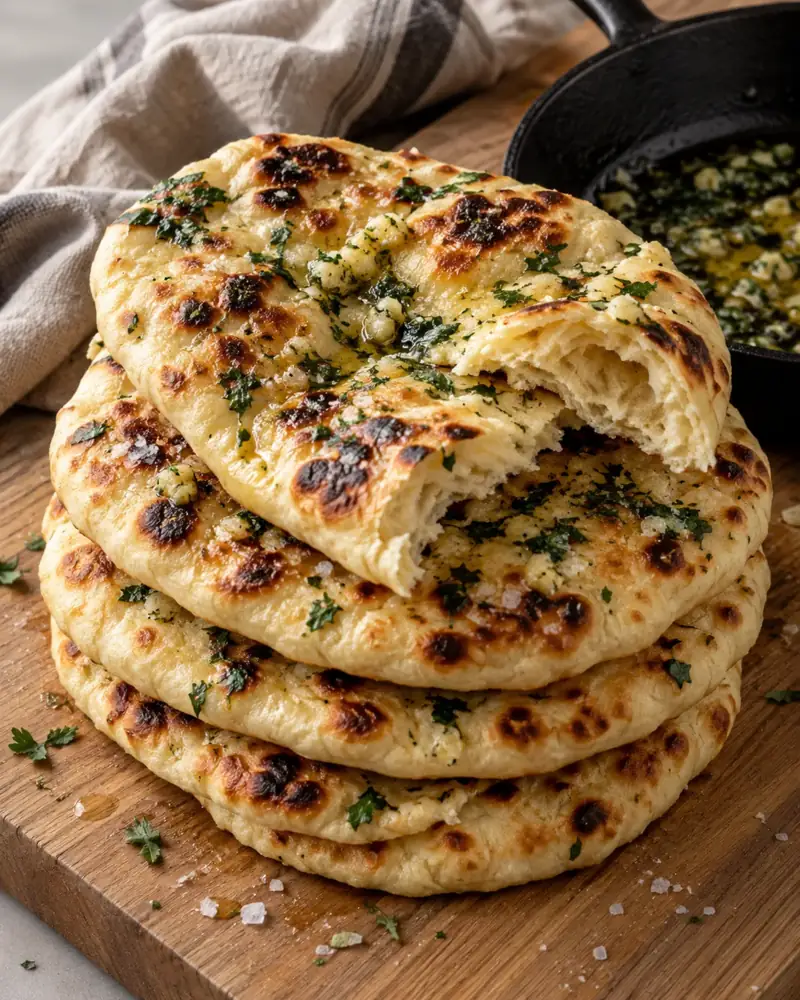
A soft yeasted dough enriched with yogurt, rolled thin and cooked in a very hot dry pan until it puffs and blisters. Brush with garlic butter and serve with curries, grilled meat, dips or anything with a sauce worth mopping up.
Ingredients
Dough
- 400 gall-purpose flour (3¼ cups)plus extra for rolling
- 5 ginstant yeast (1½ tsp)
- 8 gfine sea salt (1¼ tsp)
- 5 gsugar (1 tsp)
- 150 gplain whole-milk yogurt (⅔ cup)
- 140 glukewarm water (½ cup + 1½ tbsp)
- 15 mlolive oil (1 tbsp)
Garlic butter
- 40 gbutter (3 tbsp)
- 2 clovesgarlic, finely grated
- 1 tbspchopped parsley or cilantrooptional
- flaky sea saltto finish
- Diet
- Vegetarian
- Allergens
- gluten, milk
Method
- Whisk the flour, yeast, salt and sugar in a bowl. Add the yogurt, water and olive oil and mix into a soft dough. Knead on the counter for 5 minutes until smooth; it should feel soft and slightly tacky.
- Return to the bowl, cover and let rise in a warm place until doubled, about 1 hour.
- Meanwhile, melt the butter with the garlic over low heat for 1 minute, until fragrant but not browned. Stir in the herbs and set aside.
- Divide the dough into 8 pieces (about 90 g each) and roll each into a ball. On a lightly floured counter, roll each ball into a round or oval about 3 mm (⅛ in) thick.
- Heat a heavy dry frying pan or cast-iron skillet over medium-high heat for 3–4 minutes until very hot. Lay in one flatbread. Cook 1–1½ minutes, until big bubbles rise and the underside has dark brown spots.
- Flip and cook 1 minute more, until spotted on the second side and puffed. Brush with garlic butter, sprinkle with flaky salt, and stack in a clean towel to keep soft and warm while you cook the rest.
Why it works
The acidity and fat in yogurt tenderize gluten, so the breads stay soft and pliable instead of chewy. A very hot pan turns the water in the thin dough to steam instantly, puffing it into pockets, while direct contact browns the surface in seconds. Stacking them in a towel traps that steam so they don't dry out.
Common mistakes
- A pan that isn't hot enough. The bread dries before it browns and turns cracker-stiff.
- Rolling too thick. Over about 5 mm the center stays doughy by the time the outside is charred.
- Using oil in the pan. Dry heat gives the blistered spots; oil makes them greasy.
Variations
- No-yeast version
- Replace the yeast with 8 g (2 tsp) baking powder, rest the dough 20 minutes instead of rising, and cook the same way. Slightly denser but ready in 30 minutes.
- Stuffed
- Roll two thin rounds, scatter grated cheese and chopped scallions between them, press the edges and cook a little longer over medium heat.
Make ahead and storage
The dough can rise in the fridge overnight. Cooked breads keep 2 days wrapped and reheat in a dry pan for 20 seconds a side; they freeze for 2 months with baking paper between them.
Notes
Hydration about 67% counting the yogurt's water (140 g water plus roughly 125 g water in the yogurt, to 400 g flour). Dairy-free: replace yogurt with 120 g water and 15 ml extra oil, and brush with olive oil instead of butter.