Kerala Fish Curry
Firm fish simmered in coconut milk with tamarind, curry leaves and chili
- Serves
- 4
- Hands-on
- Total
- Level
- Some skill
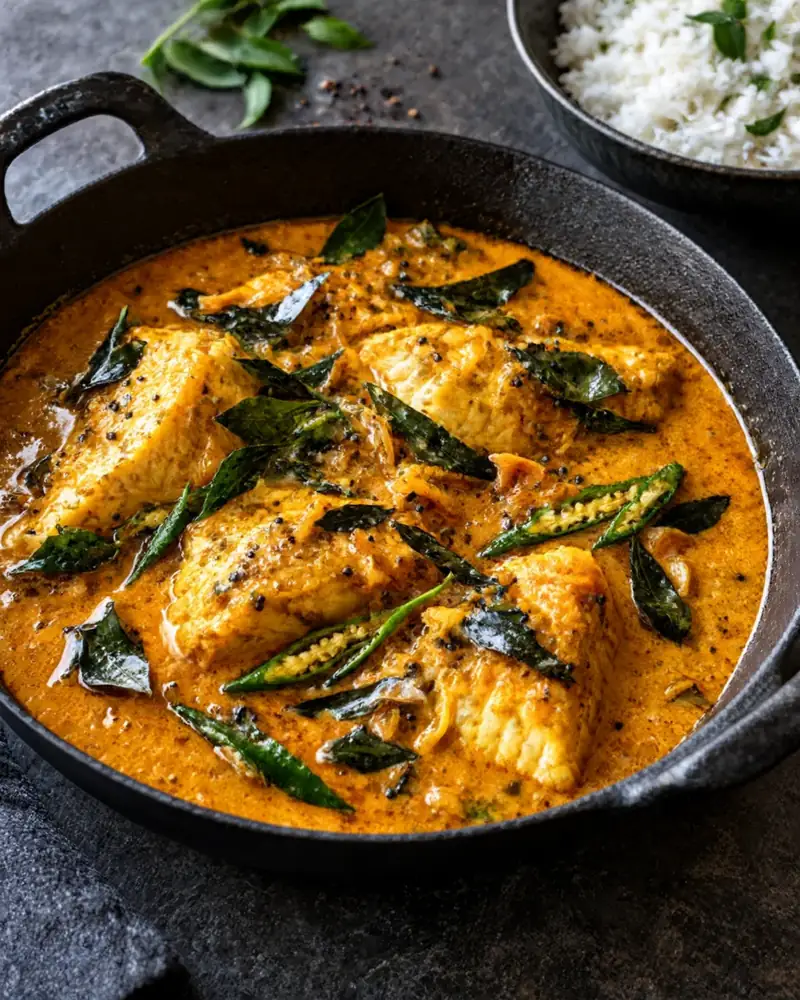
On India's southwest coast, fish curry is everyday food: sour, hot and gently rich with coconut milk. This version follows the Keralan home style, with mustard seeds and curry leaves sizzled in oil, a paste of onion, ginger and spices, and tamarind for the sour note. The fish goes in at the very end and simmers for minutes.
Ingredients
- 700 gfirm white fish fillets (1½ lb)kingfish, cod, monkfish, halibut or snapper, in 5 cm chunks
- ½ tspground turmericdivided
- 8 gfine sea salt (1⅓ tsp)divided
- 3 tbspcoconut oil or neutral oil
- 1 tspblack mustard seeds
- ¼ tspfenugreek seedsoptional
- 20fresh curry leavesabout 2 sprigs
- 2onionsabout 300 g, thinly sliced
- 3 cmfresh gingerfinely chopped
- 4 clovesgarlicfinely chopped
- 2green chiliesslit lengthwise
- 1 tspKashmiri chili powderor ½ tsp cayenne plus 1 tsp paprika
- 2 tspground coriander
- 2ripe tomatoeschopped
- 1½ tbsptamarind pasteor 2 tbsp lime juice added at the end
- 1 cancoconut milk (14 oz)400 ml, full fat
- 150 mlwater (⅔ cup)
- Diet
- Gluten-free, Dairy-free, Pescatarian
- Allergens
- fish, mustard
- Origin
- India (Kerala)
Method
- Toss the fish with ¼ tsp turmeric and 3 g (½ tsp) salt. Set aside while you make the sauce.
- Heat the oil in a wide pan over medium-high heat. Add the mustard seeds and fenugreek; when the mustard seeds start popping, after about 30 seconds, add the curry leaves (stand back — they spit).
- Add the onions and cook, stirring, until soft and golden at the edges, 10–12 minutes. Add the ginger, garlic and green chilies and cook 2 minutes more.
- Lower the heat. Stir in the chili powder, coriander and remaining turmeric and cook 30 seconds, until fragrant. Add the tomatoes and cook until they collapse into a thick paste, 5 minutes.
- Stir in the tamarind, coconut milk, water and remaining 5 g salt. Bring to a gentle simmer and cook 5 minutes so the flavors meld.
- Slide in the fish in a single layer, spooning sauce over it. Cover and simmer very gently, shaking the pan rather than stirring, until the fish is opaque and flakes when pressed, 6–8 minutes. It is done at 55–60°C (131–140°F) in the center.
- Rest 5 minutes off the heat; the flavor deepens. Taste for salt and sourness. Serve with rice (Perfect Rice).
Why it works
Blooming whole spices and curry leaves in hot oil releases fat-soluble aromas the whole curry carries. Tamarind's sour tartness balances the sweet richness of coconut and is traditional in Kerala, where a dried fruit called kudampuli is used the same way. Fish needs only minutes in barely simmering liquid; shaking the pan rather than stirring keeps the chunks whole.
Common mistakes
- Boiling hard after the coconut milk goes in: it can split and turn greasy. Keep it at a gentle simmer.
- Stirring the fish breaks it up. Shake the pan.
- Using thin, delicate fillets like sole, which fall apart. Choose firm, meaty fish.
Variations
- Prawn curry
- Use 600 g raw peeled prawns, simmered 3–4 minutes until just curled. Swap fish for crustaceans in the allergens.
- Milder
- Leave out the green chilies and use only ½ tsp Kashmiri chili powder.
Make ahead and storage
Make the sauce up to 2 days ahead and refrigerate; bring to a simmer and add the fish just before serving. Cooked curry keeps 2 days.
Notes
Fresh curry leaves are sold in Indian grocers and freeze well; there's no true substitute, but the curry is still good without. Allergens are fish and mustard (the seeds); there is no gluten if your spices are pure.