Focaccia
Bubbly, olive-oil-soaked and crisp-bottomed, with almost no kneading
- Makes
- 1 sheet (33 × 23 cm / 13 × 9 in)
- Hands-on
- Total
- Level
- Easy
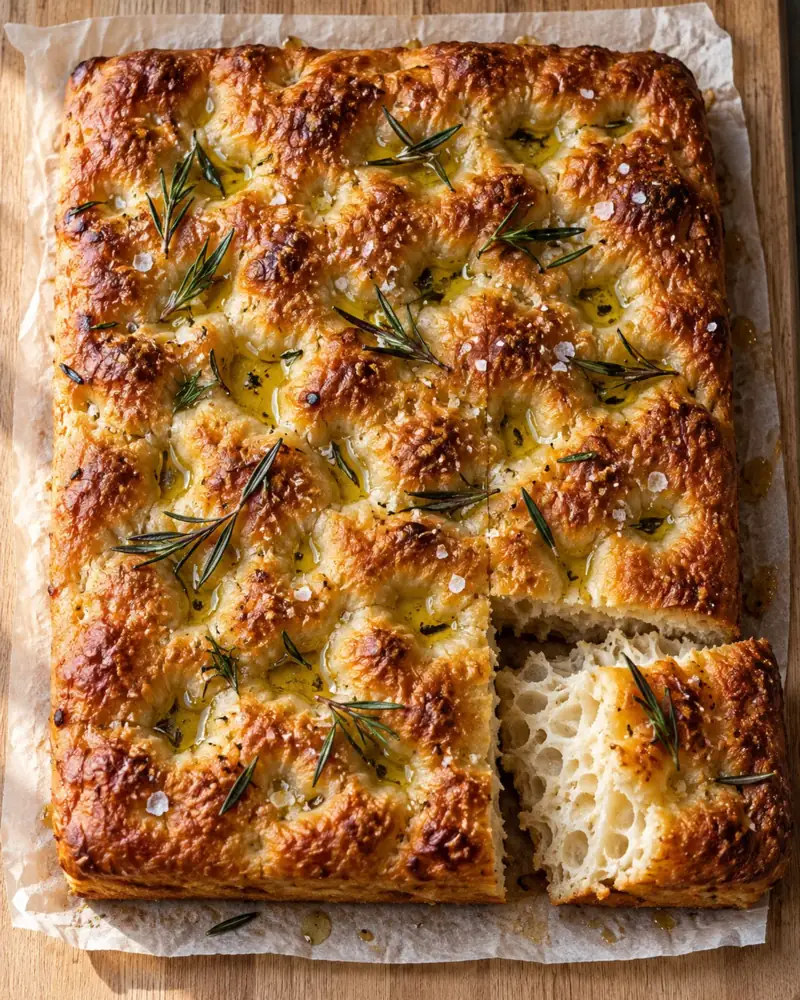
A wet, airy dough baked in a pan of good olive oil: crisp and golden underneath, tender and full of holes inside, salty and dimpled on top. Folds replace kneading, so this is as easy as bread gets, and it is at its best warm on the day.
Ingredients
Dough
- 500 gbread flour (4 cups)
- 4 ginstant yeast (1¼ tsp)
- 10 gfine sea salt (1¾ tsp)
- 400 glukewarm water (about 30°C, 86°F) (1⅔ cups)
- 15 mlextra-virgin olive oil (1 tbsp)for the dough
Pan and topping
- 60 mlextra-virgin olive oil (¼ cup)half for the pan, half for the top
- 30 mlwater (2 tbsp)for the brine
- 2 sprigsrosemary, leaves picked
- 4 gflaky sea salt (1 tsp)
- Diet
- Vegetarian, Vegan, Dairy-free
- Allergens
- gluten
- Origin
- Italy (Liguria)
Method
- In a large bowl, whisk the flour, yeast and fine salt. Add the lukewarm water and 15 ml olive oil and stir with a spatula until there is no dry flour. The dough will be very wet. Cover and rest 15 minutes.
- With a wet hand, do a set of folds: lift one side of the dough, stretch it up and fold it over, turn the bowl a quarter and repeat 4 times. Cover. Repeat this set 3 more times, every 20 minutes. By the last set the dough will be smooth, stretchy and holding its shape.
- Cover and let rise at room temperature until doubled and full of bubbles, 1–1½ hours.
- Pour 30 ml olive oil into a 33 × 23 cm (13 × 9 in) metal pan and spread it over the base and sides. Tip the dough in, turn it once to coat with oil, and gently stretch it toward the corners. If it springs back, wait 10 minutes and try again.
- Cover and let rise until puffy and nearly doubled, 45–60 minutes. Meanwhile heat the oven to 230°C (450°F) with a rack in the lower third.
- Whisk the remaining 30 ml olive oil with the 30 ml water. Pour it over the dough, then oil your fingertips and press straight down to the bottom of the pan all over, making deep dimples. Scatter the rosemary and flaky salt over the top.
- Bake 22–25 minutes, until the top is deep golden and the underside is crisp and brown when you lift a corner with a spatula.
- Slide it out of the pan onto a rack straight away so the base stays crisp. Cool for at least 15 minutes before cutting.
Why it works
High hydration makes a loose dough where gas bubbles can grow large, giving focaccia its open crumb. Folding builds gluten strength gently without kneading. The oil in the pan essentially shallow-fries the base, and the water-and-oil brine poured into the dimples keeps the top from drying out while it browns.
Common mistakes
- Stingy oil in the pan. Without enough oil the base sticks and steams instead of crisping.
- Shallow dimples. Press all the way to the pan; shallow ones disappear as the dough rises in the oven.
- Leaving it in the pan to cool, which turns the crisp bottom soggy.
Variations
- Cherry tomato and olive
- Instead of rosemary, push 200 g halved cherry tomatoes and 60 g pitted black olives into the dimples.
- Overnight focaccia
- Use 2 g yeast; after the folds, refrigerate the covered dough 12–24 hours. It develops deeper flavor and bigger bubbles; give it 2–3 hours in the pan to warm and rise.
Make ahead and storage
Best on the day. Leftovers keep 2 days wrapped; reheat in a hot oven for 5 minutes. It freezes well in pieces for 2 months.
Notes
Hydration 80% (400 g water to 500 g flour). Fan oven: 210°C (410°F). A glass or ceramic dish works but browns the base less; add 5 minutes.