Brown Stock
Roasted bones, slow time, and the backbone of every great gravy
- Makes
- about 2.5 l (10 cups)
- Hands-on
- Total
- Level
- Some skill
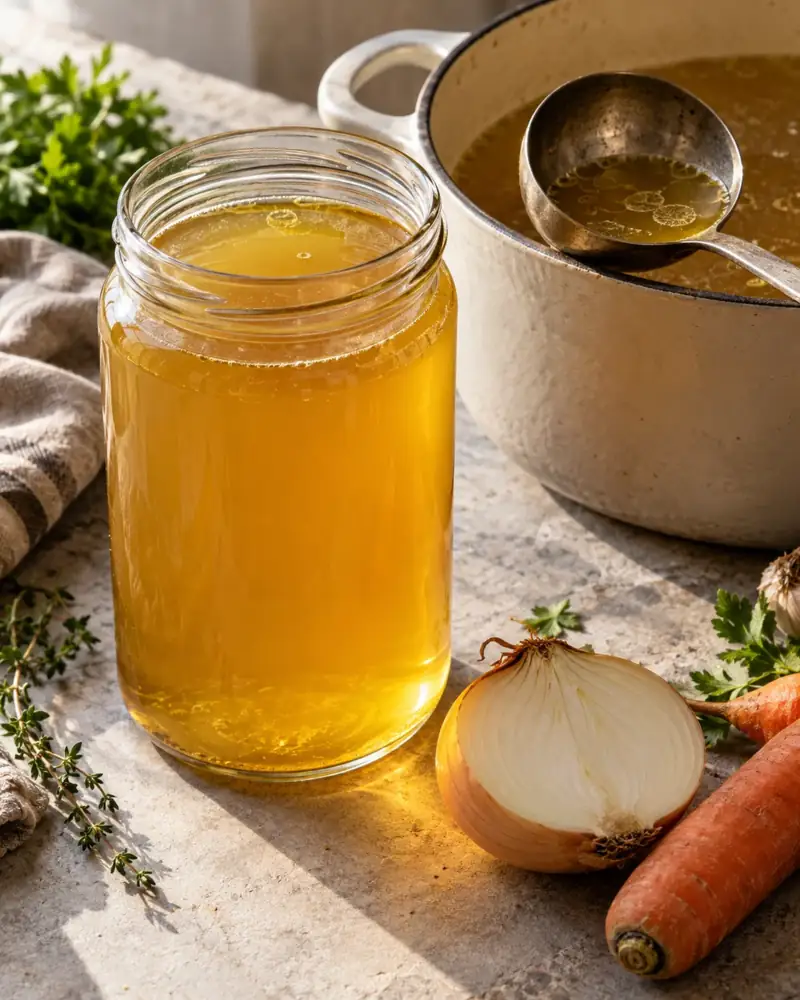
Brown stock is beef or veal bones roasted until deeply colored, then simmered for most of a day. It is the difference between a gravy that tastes of something and one that tastes of flour.
Ingredients
- 2½ kgbeef or veal bones (5½ lb)knuckle, neck and marrow bones, cut by the butcher into 8–10 cm pieces
- 500 gbeef shin or oxtail (1 lb)optional, for extra flavor and body
- 2onionshalved, skin on
- 2carrotscut in 5 cm chunks
- 2celery stalkscut in 5 cm chunks
- 2 tbsptomato paste
- 1 tbspneutral oil
- 4½ lcold water (19 cups)plus 250 ml to deglaze the tray
- 4 sprigsthyme
- 2bay leaves
- 1 tspblack peppercorns
- Diet
- Gluten-free, Dairy-free
- Allergens
- celery
- Season
- Autumn, Winter
Method
- Heat the oven to 220°C (425°F). Spread the bones and shin in a single layer in a large roasting pan and roast for 30 minutes.
- Turn the bones, scatter the onions, carrots and celery around them, toss the vegetables in the oil and roast for another 25–30 minutes, until the bones are deep brown and the vegetables have dark edges but are not black.
- Brush the tomato paste over the bones and return to the oven for 5 minutes, until it darkens to brick red.
- Transfer everything to a large stockpot (8 l). Pour off the fat from the pan, add 250 ml water, and scrape up the browned bits over medium heat. Pour this into the pot.
- Add the cold water to cover by 3 cm and bring slowly to a simmer over medium heat, skimming off foam and fat as it rises, about 40 minutes.
- Add the thyme, bay and peppercorns. Simmer at the barest tremble, uncovered, for 6 hours, skimming occasionally and topping up with hot water to keep the bones covered.
- Strain through a fine sieve without pressing. Cool in an ice bath, refrigerate, then lift off the solid fat.
- For a richer stock to use in sauces, reduce the strained stock by half at a steady simmer; it will set firmly when cold.
Why it works
Roasting triggers the Maillard reaction on the bone surfaces and vegetables, creating hundreds of savory, roasted flavor compounds that boiling alone never produces. The tomato paste adds glutamates and a little acid that sharpen the meatiness. Veal and young beef knuckles are rich in collagen, which becomes gelatin over a long simmer and gives sauces their glossy, lip-sticking body.
Common mistakes
- Burning the bones or vegetables: black bits make the whole pot bitter. Pull them when deep brown.
- Forgetting to deglaze the pan: the browned crust stuck there is the best flavor in the recipe.
- Boiling instead of simmering: the stock turns greasy and murky.
Variations
- Lamb stock
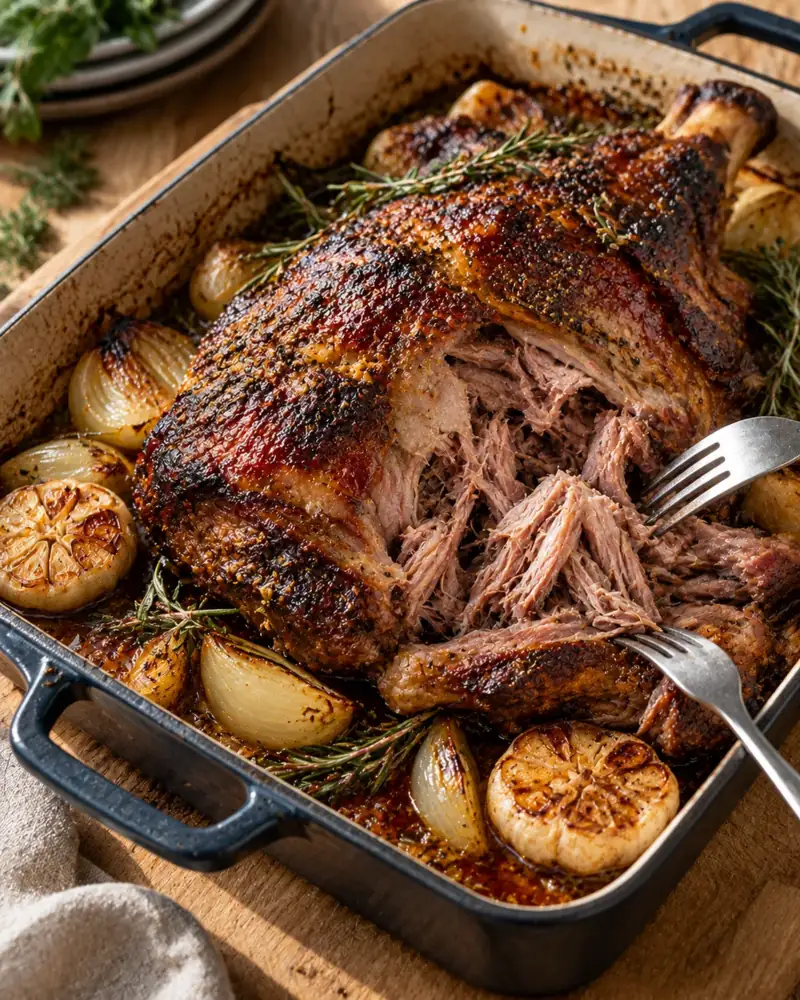
- Use lamb neck and shoulder bones and add 2 garlic cloves and a rosemary sprig; use for Slow-Roast Lamb Shoulder with Garlic and Rosemary gravy.
Make ahead and storage
Keeps 4 days chilled, 6 months frozen. Reduced stock freezes well in ice-cube trays; two cubes enrich a pan sauce.
Notes
Ask the butcher for veal knuckles if you can get them; they give the most gelatin. A good store-bought beef stock or a fresh stock from the chiller cabinet can be used instead in any recipe.