Crème Brûlée
Silky vanilla custard under a glass-thin sheet of caramel
- Makes
- 6 ramekins (150 ml each)
- Hands-on
- Total
- Level
- Some skill
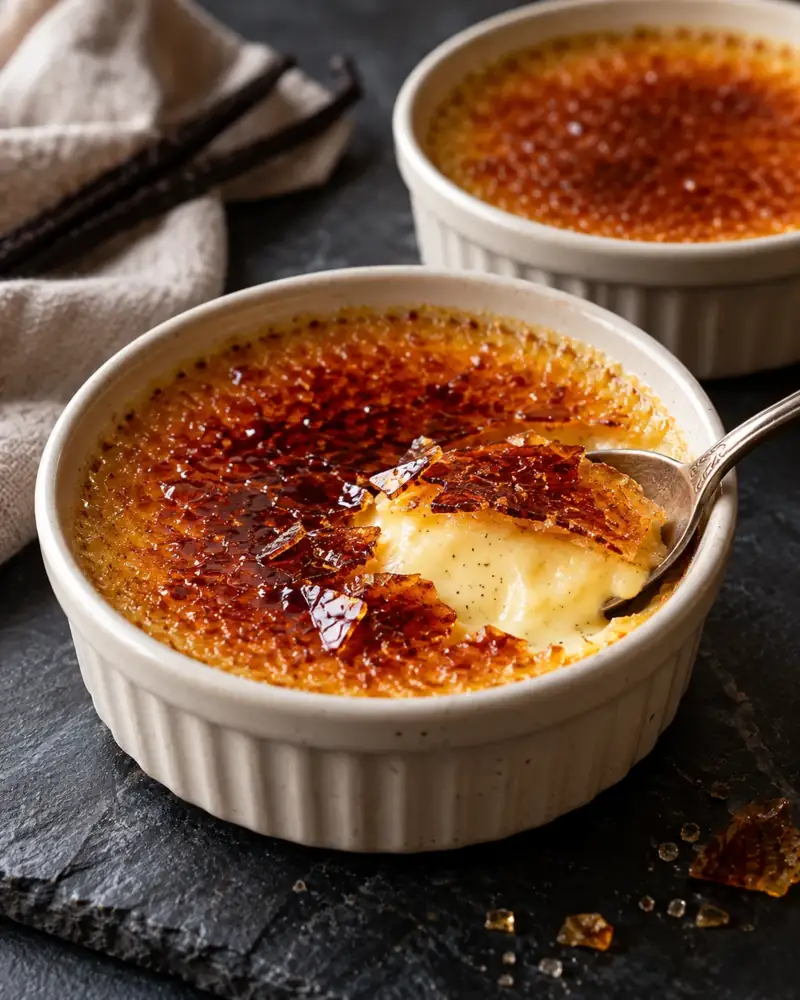
Rich vanilla custard, baked gently in a water bath until it barely sets, chilled, then topped with sugar caramelized to a crackling crust. The contrast between cold cream and warm, brittle caramel is the whole pleasure, so torch it just before serving.
Ingredients
- 600 mlheavy (double) cream (2½ cups)
- 1vanilla pod, split and seeds scrapedor 10 ml (2 tsp) vanilla bean paste
- 6large egg yolks (about 110 g)
- 75 gsuperfine (caster) sugar (⅓ cup + 2 tsp)
- 1 pinchfine sea salt
- 45 ggranulated or demerara sugar (3 tbsp)for the tops
- boiling waterfor the water bath
- Diet
- Vegetarian, Gluten-free
- Allergens
- egg, milk
- Origin
- France
Method
- Heat the oven to 150°C (300°F). Set six 150 ml ramekins in a deep roasting pan lined with a folded kitchen towel (to stop them sliding).
- Heat the cream with the vanilla pod and seeds until steaming and small bubbles form at the edge, then take it off the heat, cover and infuse 15 minutes.
- Whisk the yolks, superfine sugar and salt in a bowl just until smooth; don't beat in air. Remove the vanilla pod and pour the warm cream into the yolks in a slow stream, stirring constantly.
- Strain through a fine sieve into a jug and skim off any foam. Divide among the ramekins.
- Pull out the oven rack, set the pan on it and pour boiling water into the pan to come halfway up the ramekins. Slide in carefully.
- Bake 30–40 minutes, until the custards are set at the edges but the centers wobble like jelly when you nudge the pan, and read 77–80°C (170–176°F) in the center.
- Lift the ramekins out of the water, cool to room temperature, about 45 minutes, then chill uncovered for at least 3 hours.
- Just before serving, blot any moisture from the tops with paper towel. Sprinkle each with 1½ teaspoons of sugar in an even layer and tilt to coat. Caramelize with a kitchen torch, moving it steadily, until the sugar melts and turns deep amber. Rest 2 minutes for the caramel to harden.
Why it works
Egg yolk proteins thicken cream as they set between about 70 and 82°C; beyond about 85°C they tighten and curdle. The water bath can't get hotter than boiling, so it surrounds the custards with gentle, even heat and stops the outsides from overcooking before the centers set. Chilling firms the custard further, and a thin, even layer of sugar caramelizes quickly before the heat can warm the cream below.
Common mistakes
- Too hot an oven or no water bath, which gives a grainy, bubbly custard.
- Baking until firm. It sets more as it chills; pull it with a wobble.
- A thick sugar layer, which burns on top while staying gritty beneath. Keep it thin.
Variations
- Under the grill
- No torch? Put the sugared ramekins on a tray very close under a preheated grill (broiler) for 1–3 minutes, watching constantly. The custard warms a little more.
- Orange and cardamom
- Infuse the cream with the zest of 1 orange and 4 crushed cardamom pods instead of vanilla.
Make ahead and storage
The custards keep 3 days in the fridge, covered once cold. Caramelize just before serving. Spare egg whites go into Pavlova.
Notes
Fan oven: 130°C (265°F).