No-Knead Crusty Loaf
Time does the kneading; a lidded pot does the bakery oven
- Makes
- 1 round loaf (about 850 g)
- Hands-on
- Total
- Level
- Easy
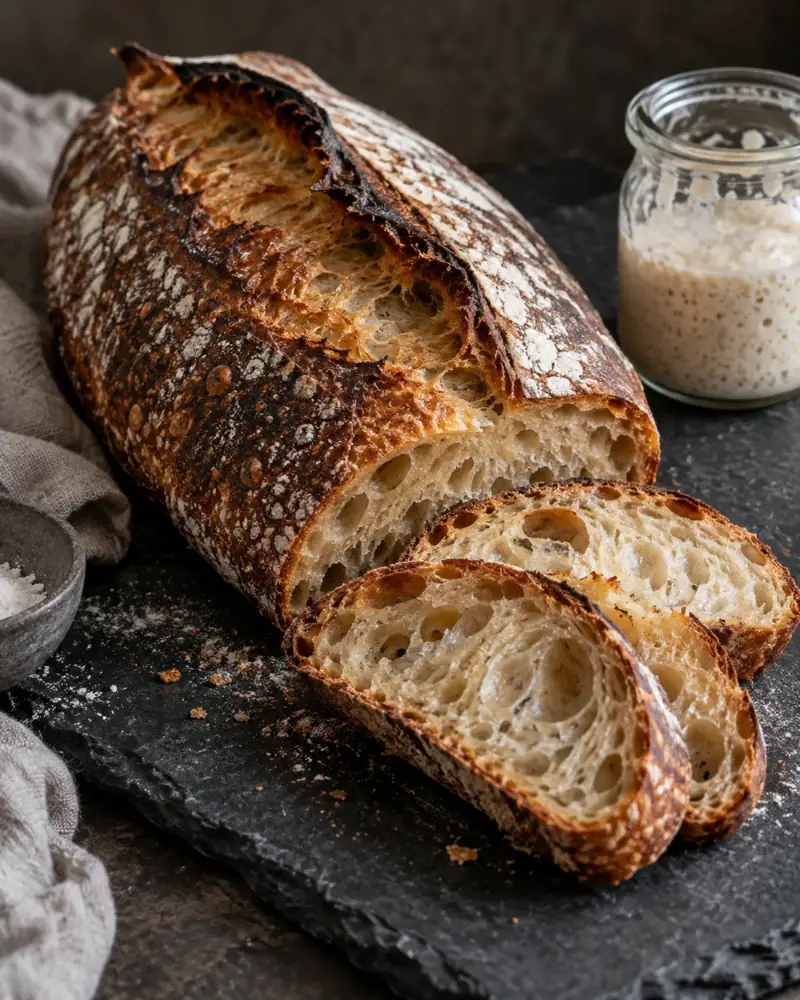
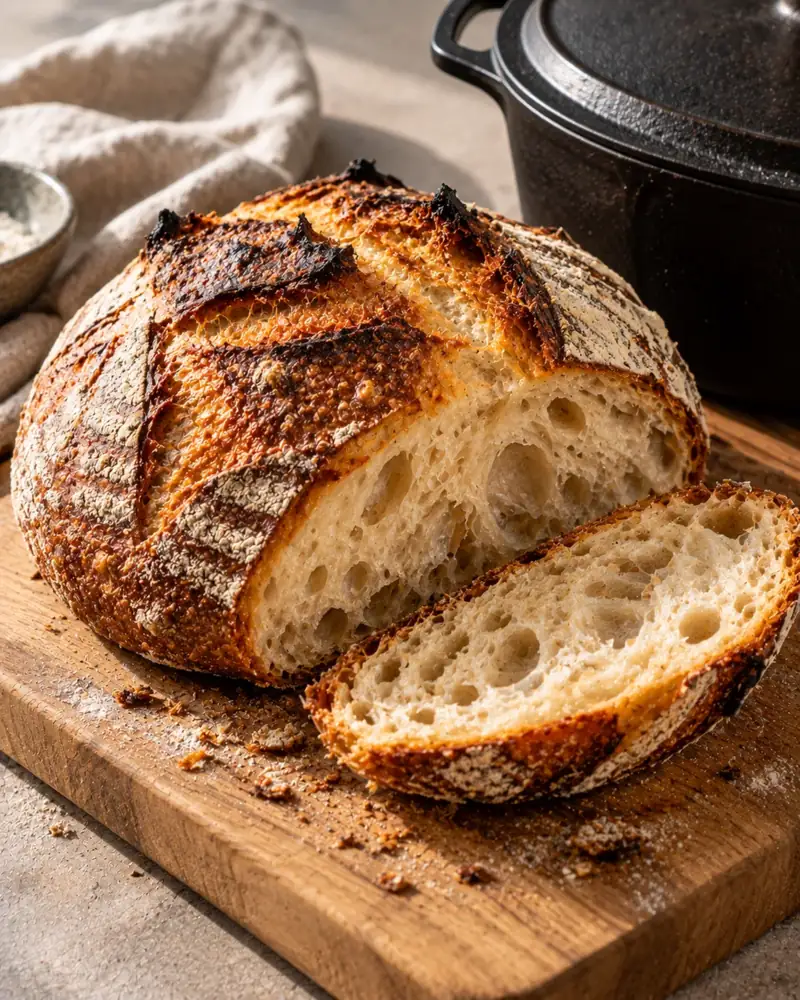
Four ingredients, five minutes of work and a long, slow rise give you a loaf with a crackling crust and an open, chewy crumb. Baking it inside a preheated lidded pot traps the steam that a home oven can't make, which is what turns an ordinary dough into a bakery-style boule.
Ingredients
- 500 gbread flour (4 cups)or all-purpose flour; plus extra for dusting
- 10 gfine sea salt (1¾ tsp)
- 1½ ginstant yeast (½ tsp)
- 375 gcool water (about 20°C, 68°F) (1½ cups + 1 tbsp)weigh it: 375 g = 375 ml
- coarse semolina, cornmeal or rice flouroptional, for the base
- Diet
- Vegetarian, Vegan, Dairy-free
- Allergens
- gluten
Method
- In a large bowl, whisk together the flour, salt and yeast. Pour in the water and stir with a spatula or your hand until no dry flour remains, about 1 minute. The dough will be shaggy and sticky; that is right.
- Cover the bowl and leave it at room temperature (18–22°C, 65–72°F) for 12–18 hours, until the dough has more than doubled, the surface is dotted with bubbles and it wobbles when you shake the bowl.
- Dust the counter with flour and scrape the dough out. With floured hands, fold the edges into the middle like an envelope, four or five times, then flip it seam-side down and drag it toward you a few times to tighten it into a ball.
- Set the ball seam-side up on a well-floured linen towel inside a bowl (or on baking paper dusted with semolina). Cover and let it rise for 1–1½ hours, until puffy and a floured finger leaves a dent that springs back slowly.
- About 45 minutes before baking, put a 4–6 L heavy lidded pot (cast iron or enameled) with its lid in the oven and heat to 250°C (480°F).
- Take out the hot pot. Turn the dough onto a sheet of baking paper, seam-side down, and use the paper as a sling to lower it into the pot. Cover with the lid.
- Bake for 30 minutes with the lid on. Remove the lid, lower the oven to 230°C (450°F) and bake 15–20 minutes more, until the crust is deep chestnut brown and the loaf sounds hollow when tapped underneath (96°C, 205°F inside).
- Cool on a rack for at least 1 hour before slicing; the crumb is still setting and will turn gummy if cut hot. Listen for the crust crackling as it cools.
Why it works
A wet dough and a long, slow rise let the flour's proteins line up into gluten on their own, and enzymes break down starch into sugars that brown into a deep crust. The tiny dose of yeast is deliberate: it keeps the rise slow enough for flavor to develop. Inside a preheated lidded pot, the dough's own steam keeps the surface soft for the first half hour so the loaf can expand fully before the crust sets.
Common mistakes
- Cutting the rise short. Judge by the bubbles and the wobble, not the clock; in a cool kitchen it can take the full 18 hours.
- Too little flour on the towel. Wet dough sticks to linen; use plenty, or switch to baking paper and semolina.
- Pulling the loaf when it is golden rather than deep brown. A dark crust is where the flavor is.
Variations
- Seeded
- Stir 60 g (½ cup) mixed seeds such as sunflower, pumpkin and flax into the dry ingredients and add 15 g (1 tbsp) more water.
- Part whole wheat
- Swap 150 g of the bread flour for whole-wheat flour and add 15 g extra water.
Make ahead and storage
After the first rise you can refrigerate the dough, covered, for up to 2 days; shape it cold and give it 2 hours for the second rise. The baked loaf keeps 2–3 days cut-side down on a board, or freeze slices for up to 3 months.
Notes
Hydration 75% (375 g water to 500 g flour). Fan oven: 230°C (445°F) to start, then 210°C (410°F) with the lid off. If the knob on your pot lid isn't oven-safe to 250°C (480°F), unscrew it and plug the hole with foil.