Minestrone
A thick vegetable soup with beans, pasta and a Parmesan rind for depth
- Serves
- 6
- Hands-on
- Total
- Level
- Easy
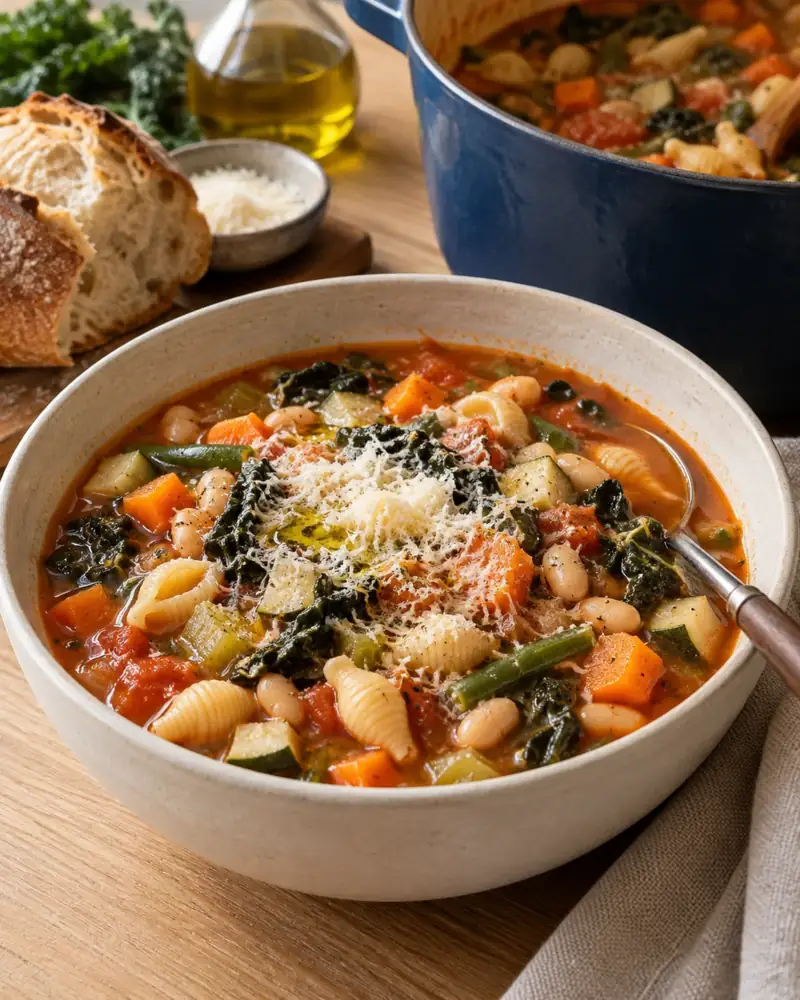
Minestrone is less a fixed recipe than a habit: whatever vegetables are good, cooked down with beans and a little pasta. This version builds a proper soffritto, simmers a Parmesan rind in the broth for savoriness, and adds vegetables in order of how long they need, so everything finishes tender but distinct.
Ingredients
- 3 tbspextra-virgin olive oilplus more to serve
- 1yellow oniondiced
- 2carrotsdiced 1 cm
- 2celery stalksdiced 1 cm
- 3 clovesgarlicchopped
- 2 tbsptomato paste
- 1 canchopped tomatoes (14 oz)400 g
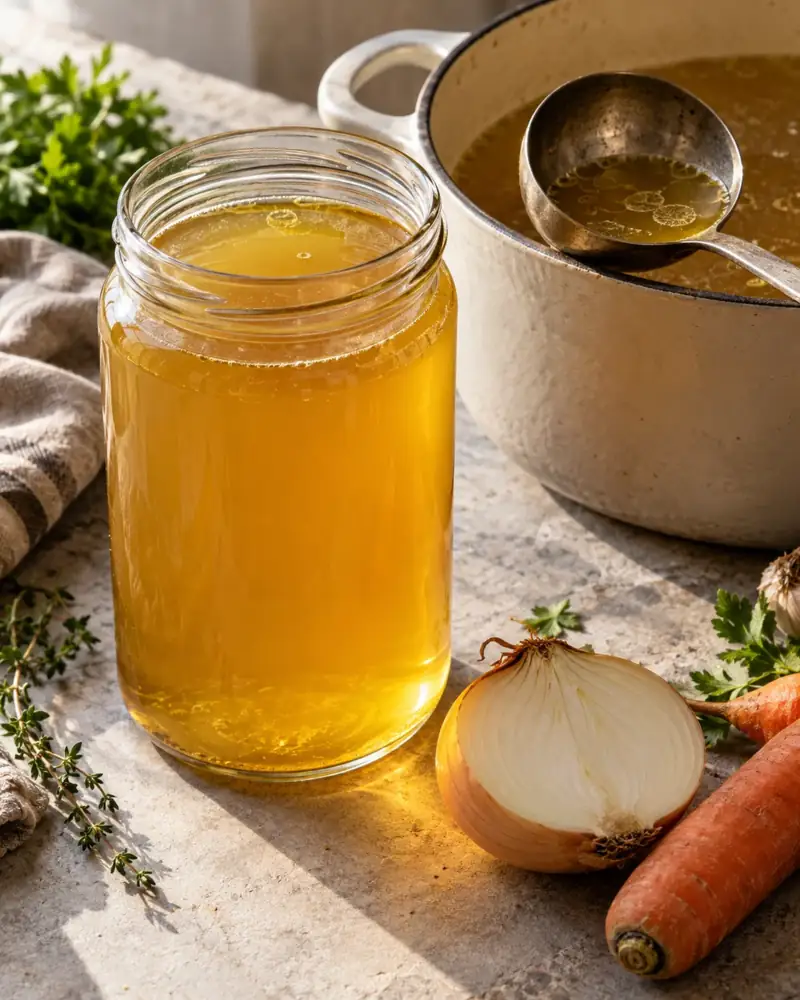
- 1½ lvegetable or chicken stock (6 cups)Vegetable Stock, Chicken Stock or store-bought
- 1Parmesan rindabout 5 × 5 cm, optional
- 2 sprigsrosemary or thyme
- 1medium potatoabout 200 g, diced 1 cm
- 1zucchiniabout 200 g, diced 1 cm
- 100 ggreen beans (3½ oz)cut into 2 cm lengths
- 1 cancannellini or borlotti beans (15 oz)400 g, drained and rinsed
- 100 gsmall pasta (ditalini or small shells) (3½ oz)
- 150 gSavoy cabbage, cavolo nero or chard (5 oz)shredded
- fine sea salt and black pepperabout 9 g (1½ tsp) salt in total
- 40 gParmesan (⅓ cup grated)finely grated, to serve
- Allergens
- gluten, milk, celery
- Origin
- Italy
Method
- Warm the oil in a heavy pot over medium heat. Add the onion, carrot, celery and a good pinch of salt. Cook, stirring often, until soft and just starting to color, 10–12 minutes.
- Add the garlic and tomato paste and stir until the paste darkens to brick red, 2 minutes.
- Add the canned tomatoes, stock, Parmesan rind, herb sprigs and 6 g (1 tsp) salt. Bring to a simmer.
- Add the potato and simmer 10 minutes.
- Add the zucchini, green beans and drained beans. Simmer 10 minutes.
- Add the pasta and greens and simmer, stirring now and then so the pasta doesn't stick, until the pasta is tender, 9–11 minutes. Add a splash of water if it gets too thick — it should be a soup, not a stew.
- Remove the rind and herb stems. Taste and season with salt and pepper.
- Serve in bowls with a thread of olive oil and grated Parmesan on top.
Why it works
Staggering the vegetables lets each reach tenderness at the same moment instead of the zucchini dissolving while the potato is still hard. The Parmesan rind slowly releases glutamates, the compounds behind savory taste, giving a meatless broth real depth. Cooking the pasta in the soup lets its starch lightly thicken the broth, which is exactly the body this soup should have.
Common mistakes
- Adding all the vegetables at once: some go mushy, some stay raw. Follow the order.
- Too much pasta: it soaks up the broth and you get stew. 100 g is plenty for six.
- Skipping the final olive oil: raw oil adds a fresh, peppery top note the cooked oil has lost.
Variations
- Pesto minestrone
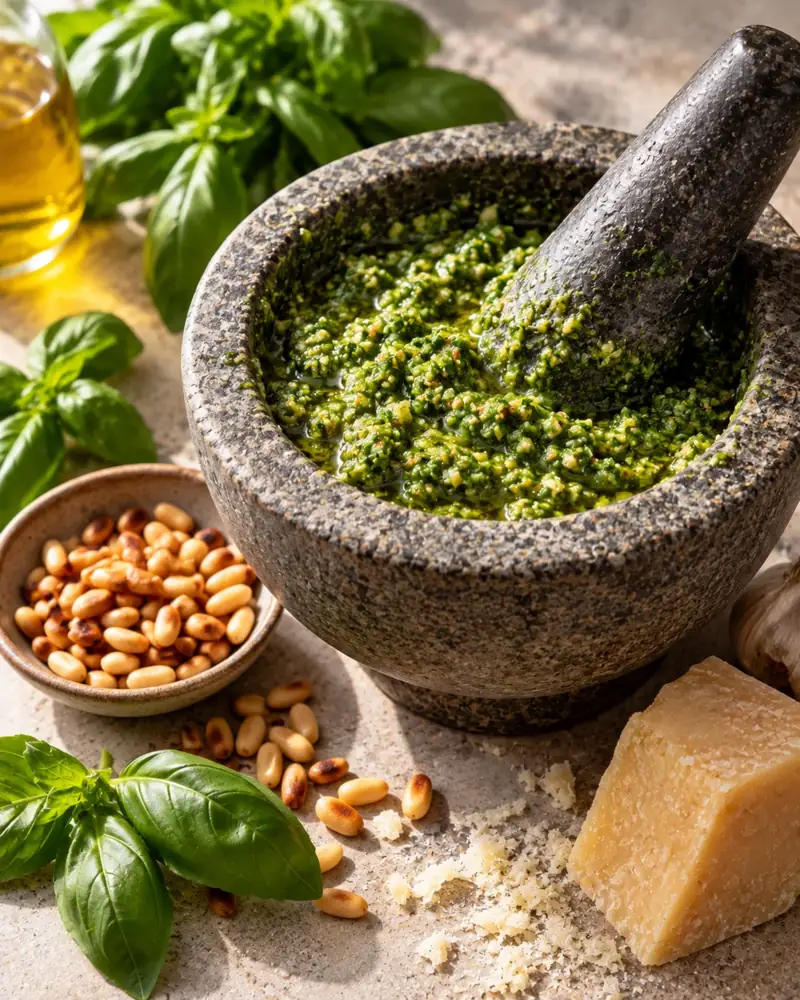
- Swirl 1 tbsp Pesto Genovese into each bowl instead of the Parmesan, Genoa-style.
- Summer minestrone
- Skip the potato and cabbage; use peas, fava beans and extra zucchini, and finish with torn basil.
Make ahead and storage
Keeps 4 days in the fridge; the pasta softens and the soup thickens, so loosen with water when reheating. To freeze (3 months), leave out the pasta and add it when reheating.
Notes
For a vegetarian version, use vegetable stock and check your Parmesan — traditional Parmesan uses animal rennet; vegetarian hard cheeses exist.