Pan-Seared Steak with Butter Baste
A deep crust, an even rosy center and a five-minute rest
- Serves
- 4
- Hands-on
- Total
- Level
- Easy
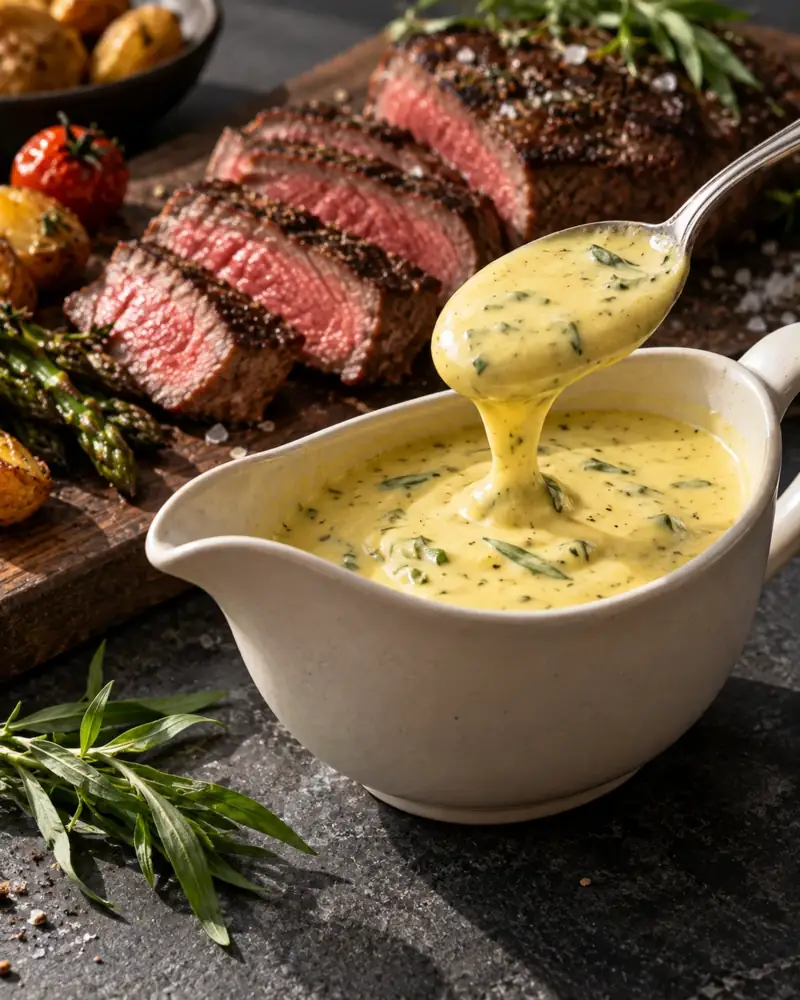
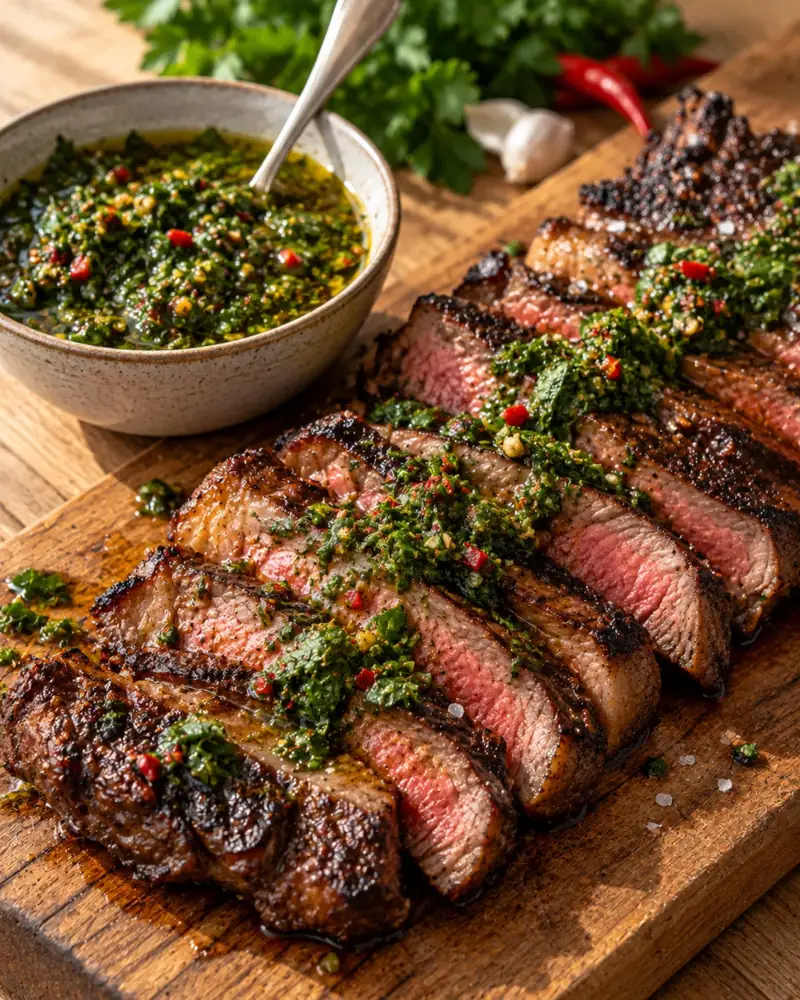
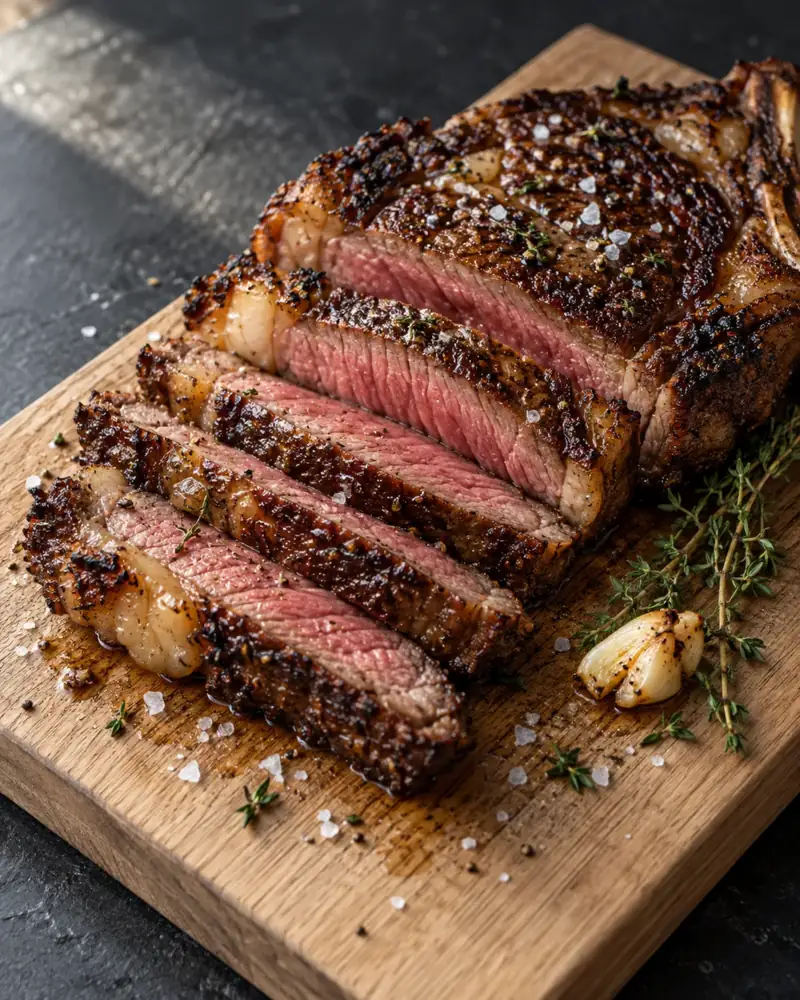
A great steak at home needs a thick cut, salt well ahead, a very hot heavy pan and a thermometer. Flipping often gives a more even interior than the old turn-once rule, and a butter baste at the end adds a nutty finish. Serve it with Béarnaise, Chimichurri or just the pan butter.
Ingredients
- 2boneless steaks, 3–4 cm thick (about 1 lb each)about 450 g each: rib-eye, sirloin (strip) or rump; serves 4
- 9 gfine sea salt (1½ tsp)about 1% of the meat
- freshly ground black pepper
- 1 tbspneutral oilhigh smoke point
- 40 gunsalted butter (3 tbsp)
- 2 clovesgarliclightly crushed
- 3 sprigsthyme or rosemary
- flaky saltto finish
- Diet
- Gluten-free
- Allergens
- milk
Method
- At least 45 minutes ahead (or up to 2 days, uncovered in the fridge), pat the steaks dry and season all over with the fine salt. Leave at room temperature for the last 30–45 minutes.
- Pat the steaks dry again. Heat a heavy cast-iron or carbon-steel pan over high heat for 3–4 minutes, until very hot. Add the oil; it should shimmer and smoke lightly at once.
- Lay in the steaks. Cook, turning every 1 minute with tongs, until both sides are deeply browned, 6–8 minutes for 3.5 cm steaks. Hold them on their fat edge for 1 minute to render it (melt and crisp the fat).
- Lower the heat to medium. Add the butter, garlic and herbs. When the butter foams, tilt the pan and spoon the butter over the steaks continuously for 1–2 minutes.
- Check the center with a thermometer and pull the steaks 3–5°C below your target, because they keep rising as they rest: rare 50°C (122°F) → pull at 46°C (115°F); medium-rare 55°C (131°F) → pull at 51°C (124°F); medium 60°C (140°F) → pull at 56°C (133°F); medium-well 65°C (149°F) → pull at 61°C (142°F).
- By touch, medium-rare feels like the soft base of your thumb when touching thumb to middle finger.
- Rest on a board or rack for 5–8 minutes. Spoon the pan butter over.
- Slice against the grain into 1 cm slices, sprinkle with flaky salt and pepper, and serve.
Why it works
Salting early lets the salt dissolve into the surface and be drawn back in, seasoning deeper and leaving a drier exterior that browns faster. Frequent turning means each side alternates between heating and cooling, so heat penetrates more evenly, giving a thinner gray band under the crust. Pulling the steak early and resting lets carryover heat even out the center and the juices thicken slightly so less spills when you slice.
Common mistakes
- A pan that isn't hot enough, which gives gray, steamed meat. Preheat properly and don't crowd.
- Cooking straight from fridge-wet. Dry steak browns; wet steak boils.
- Slicing with the grain; the meat chews like rope. Cut across the lines of the fibers.
Variations
- Reverse sear for very thick steaks
- For steaks 5 cm or thicker, bake on a rack at 120°C (250°F) until 8°C (15°F) below target, 40–60 minutes, then sear hard 1 minute a side.
- Steak frites
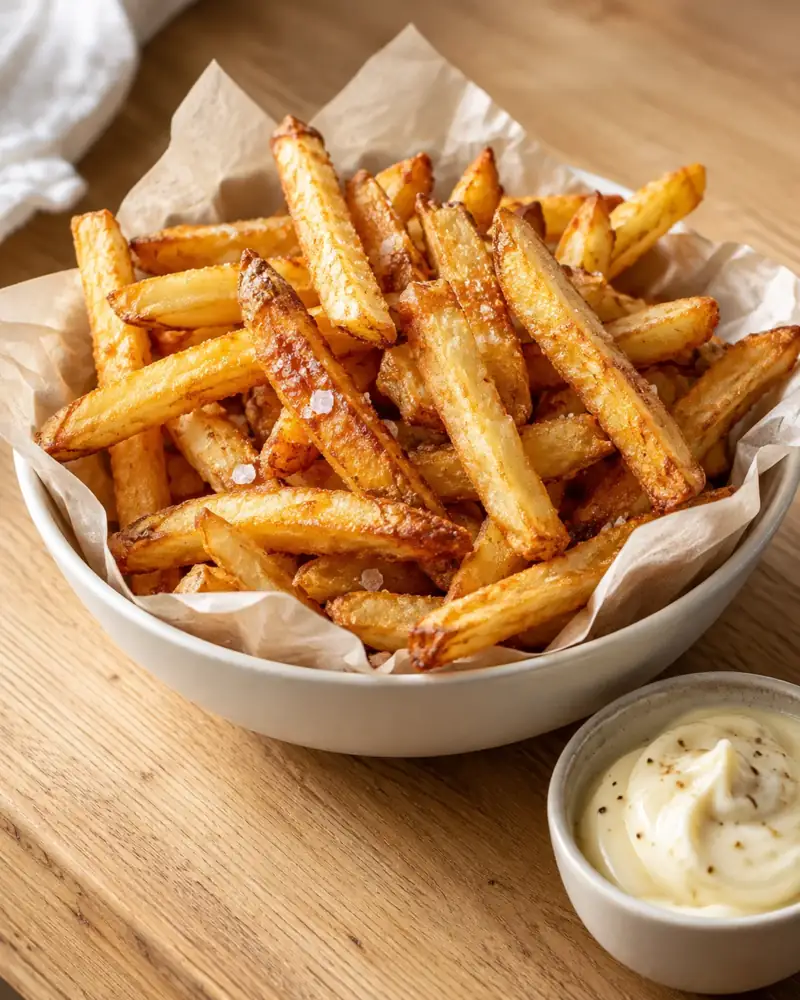
- Serve with French Fries and Béarnaise.
Make ahead and storage
Salt and refrigerate uncovered up to 2 days ahead. Leftover steak is best sliced cold for salads or sandwiches.
Notes
It will smoke: open a window and turn on the extractor. A heavy stainless pan works if you have no cast iron. For a fan oven during the reverse sear, use 100°C (210°F).