Potato Gnocchi with Brown Butter and Sage
Light, tender dumplings made with as little flour as possible
- Serves
- 4
- Hands-on
- Total
- Level
- Some skill
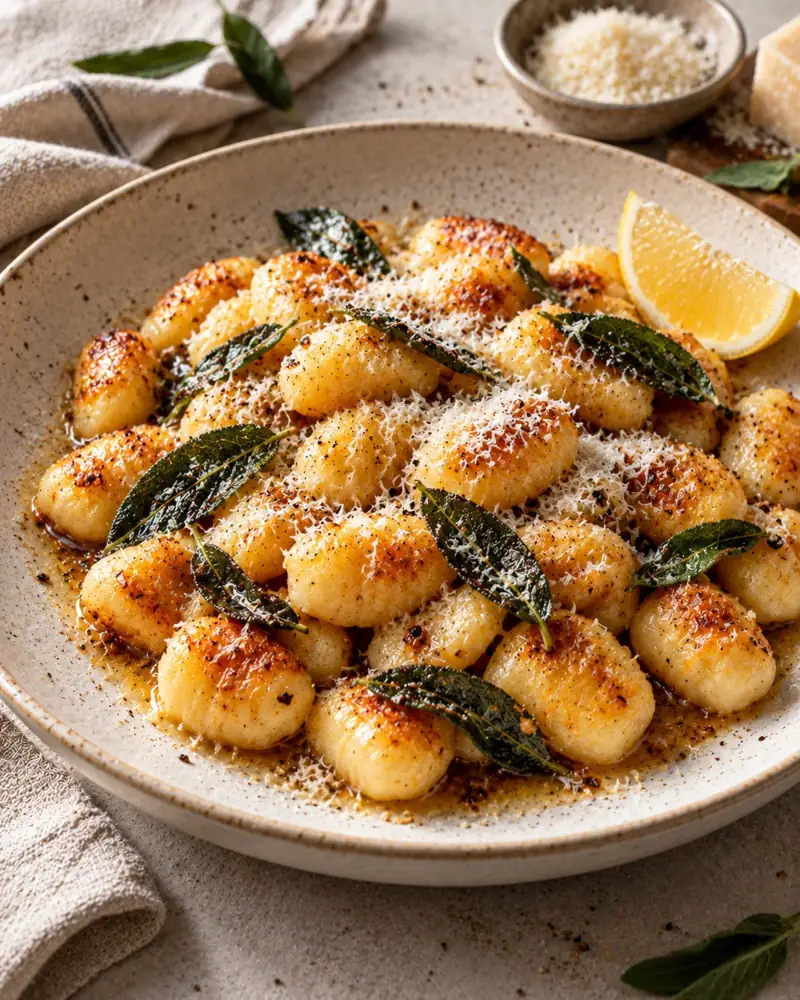
Good gnocchi are pillowy, not dense, and that starts with the potato: baked rather than boiled, so they stay dry and need less flour. Brown butter and crisp sage are the simplest way to show them off.
Ingredients
Gnocchi
- 1 kgfloury potatoes (2¼ lb)russet, Maris Piper or King Edward, similar size
- 1egg yolklarge
- 150 gall-purpose flour (1¼ cups)plus extra for dusting; you may not need it all
- 5 gfine sea salt (¾ tsp)plus 30 g (1½ tbsp) for the cooking water
- 30 gParmigiano Reggiano (1 oz)finely grated; or a vegetarian hard cheese (traditional Parmesan uses animal rennet)
To serve
- 80 gunsalted butter (5½ tbsp)
- 16sage leaves
- 30 gParmigiano Reggiano (1 oz)grated; or a vegetarian hard cheese (traditional Parmesan uses animal rennet)
- black pepper
- ½lemonfor a squeeze (optional)
- Diet
- Vegetarian
- Allergens
- gluten, egg, milk
- Origin
- Italy (northern)
- Season
- Autumn, Winter
Method
- Heat the oven to 200°C (400°F). Prick the potatoes and bake directly on the rack until completely tender, 50–60 minutes.
- While still hot (hold them in a towel), halve and scoop out the flesh, and press it through a ricer or a sieve onto a clean surface. Spread it out and let the steam escape for 5 minutes. Weigh out 600 g; use the rest for something else.
- Sprinkle over the salt and grated Parmigiano, make a well, add the yolk and sift over 120 g of the flour.
- Gently bring it together with a bench scraper or fork, then with your hands, pressing and folding rather than kneading. Stop as soon as it forms a soft, smooth dough that barely sticks; add more of the flour only if it is tacky. Test-boil one piece: if it falls apart, work in another 1–2 tbsp flour.
- Divide into 6. Roll each on a floured surface into a rope 2 cm (¾ in) thick and cut into 2 cm pieces. Roll over a fork or gnocchi board for ridges if you like, and lay them on a floured tray.
- Bring 4 L (4 qt) water to a boil with 30 g (1½ tbsp) salt. Meanwhile melt the butter in a large frying pan over medium heat with the sage. Cook, swirling, until the foam subsides, the butter smells nutty and the solids are hazelnut-brown and the sage is crisp, 3–4 minutes. Take off the heat.
- Cook the gnocchi in batches. Once they float, give them 30 seconds more, then lift them out with a slotted spoon into the butter.
- Toss the gnocchi in the butter over medium heat for 1 minute with a splash of cooking water. Serve with Parmigiano, pepper and a squeeze of lemon.
Why it works
Potato is mostly water and starch. Baking drives off moisture, so the dough needs less flour, and less flour means less gluten and a lighter, more tender dumpling. Working the dough as little as possible keeps it from turning gluey: overworked potato releases starch that makes gnocchi gummy.
Common mistakes
- Boiling the potatoes: they absorb water and need far more flour.
- Kneading like bread: press and fold just until it holds together.
- Letting the riced potato go cold before mixing: it becomes harder to bind. Work while warm.
Variations
- With tomato
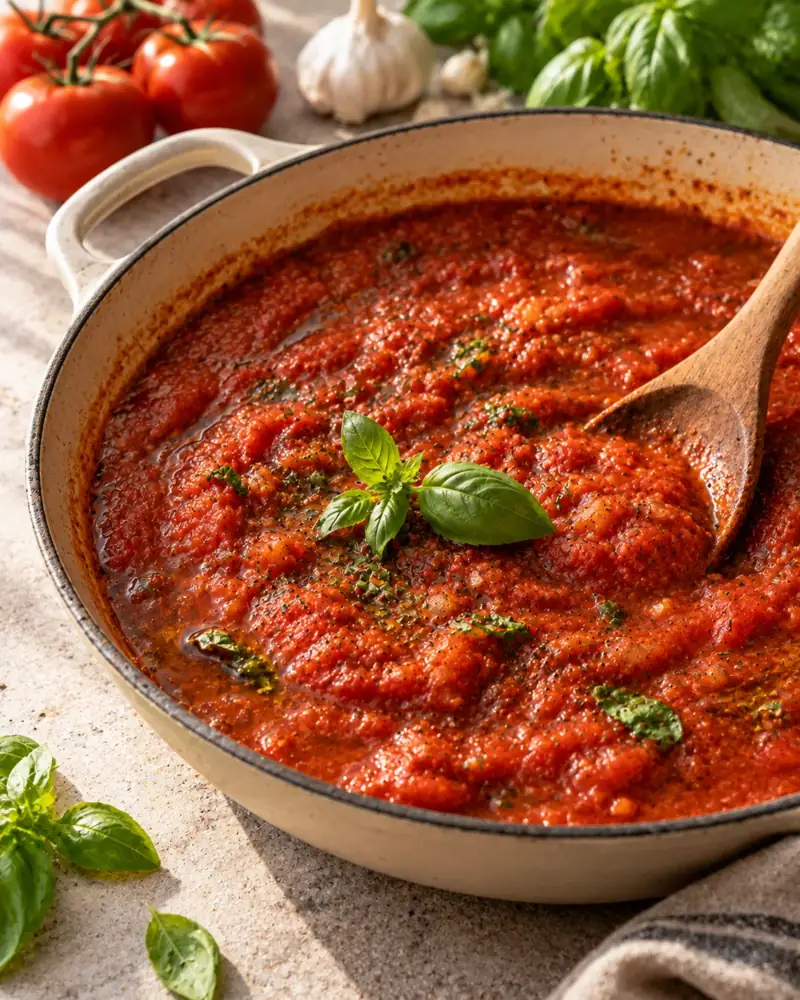
- Toss with 500 ml Tomato Sauce and torn mozzarella instead of brown butter.
- With pesto
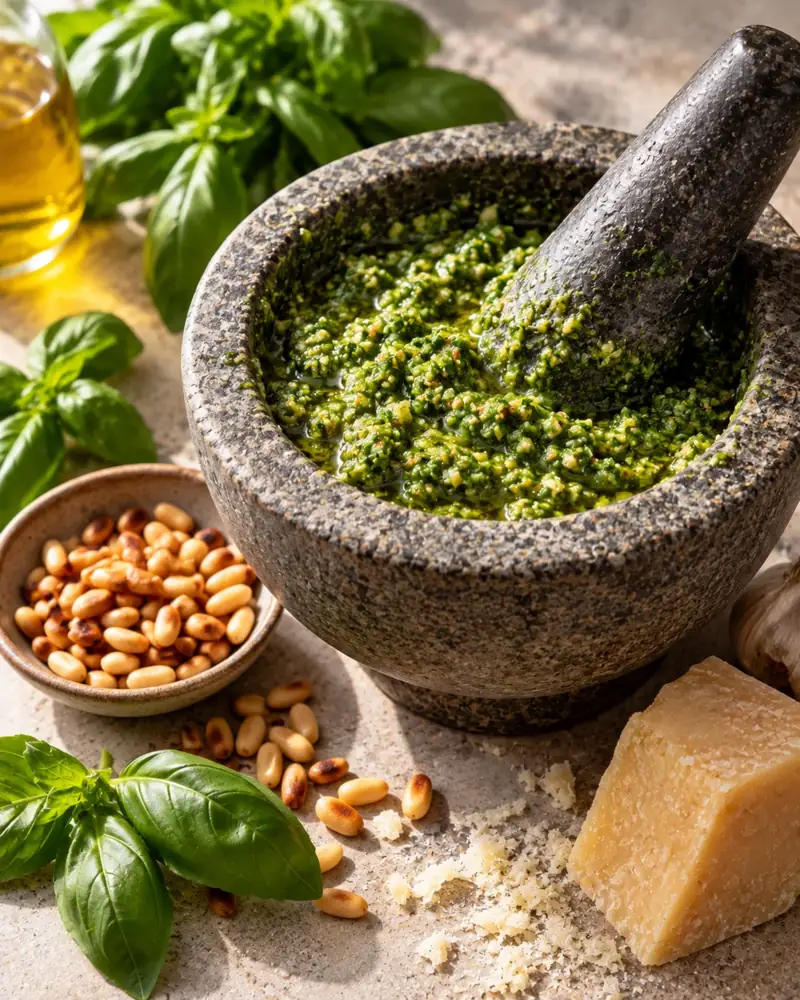
- Toss with 4 tbsp Pesto Genovese and a splash of the cooking water.
Make ahead and storage
Freeze raw gnocchi in a single layer on a floured tray, then bag; keep 2 months and cook from frozen, adding 1–2 minutes. Do not refrigerate raw gnocchi for more than a few hours; they turn sticky.
Notes
Without a ricer, press the potato through a sieve with a spoon; a masher leaves lumps and overworks the potato.