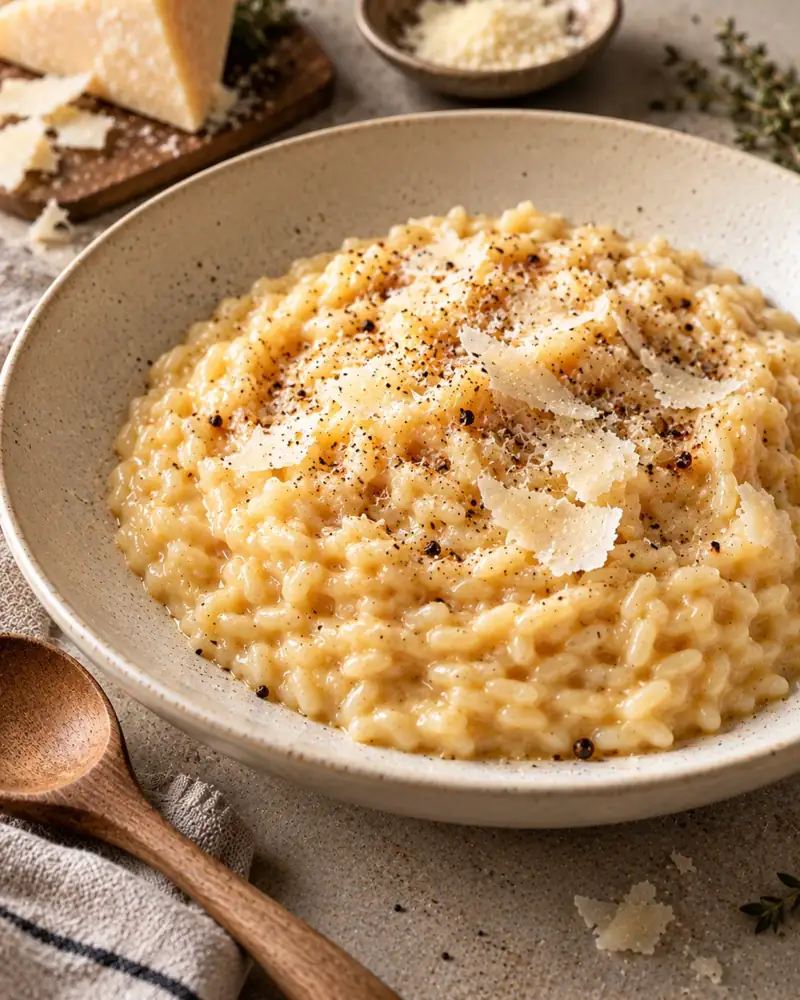
Risotto alla Parmigiana
The master risotto: creamy, flowing, every grain distinct
- Serves
- 4
- Hands-on
- Total
- Level
- Some skill
Learn this plain Parmigiano risotto and you can make any risotto. The rice is toasted, then cooked by adding hot stock gradually and stirring, which releases starch into a creamy sauce while the grains keep a slight bite. It finishes with cold butter and cheese beaten in off the heat.
Ingredients
- 1⅓ lChicken Stock (6 cups)or Vegetable Stock, or good store-bought; you may not use it all
- 2 tbspolive oil
- 1onionsmall, very finely chopped (or 2 shallots)
- 320 grisotto rice (1½ cups)Carnaroli or Arborio
- 120 mldry white wine (½ cup)
- 50 gcold unsalted butter (3½ tbsp)cubed
- 70 gParmigiano Reggiano (2½ oz)finely grated, plus extra to serve
- fine sea saltto taste; how much depends on your stock
- Diet
- Gluten-free
- Allergens
- milk, celery, sulphites
- Origin
- Italy (northern)
Method
- Bring the stock to a simmer in a pan and keep it hot over low heat.
- Heat the oil in a wide heavy pan over medium-low heat. Add the onion with a pinch of salt and cook until soft and translucent but not browned, 5–6 minutes.
- Turn the heat to medium. Add the rice and stir for 2 minutes until the grains are hot, coated with oil and slightly translucent at the edges.
- Pour in the wine and stir until it has almost evaporated, about 1 minute.
- Add a ladle of hot stock (about 150 ml / ⅔ cup) and stir often, keeping it at a lively simmer. When the rice has absorbed most of it and a spoon dragged through leaves a clear trail, add the next ladle. Continue for 16–18 minutes.
- Start tasting at 15 minutes. It is ready when the grains are tender but with a tiny firm center, and the risotto is loose enough to spread slowly when spooned onto a plate.
- Take the pan off the heat. Add a final splash of stock, the cold butter and the Parmigiano. Beat hard with a wooden spoon for 30 seconds until creamy and glossy. Season with salt.
- Cover and rest for 1 minute, then serve on warm, flat plates. It should flow into a wave when you shake the plate.
Why it works
Risotto rice has a high proportion of amylopectin, a starch that washes off the surface and thickens the liquid around it. Gradual additions of stock and frequent stirring rub that starch off the grains, so the risotto makes its own creamy sauce without cream. Beating in cold butter and cheese at the end creates an emulsion, which gives the glossy finish Italians call mantecatura.
Common mistakes
- Cold stock: it shocks the rice and stalls the cooking. Keep it simmering.
- Overcooking until stiff: risotto should flow, all'onda — 'like a wave'.
- Salting early: stock reduces and concentrates. Season at the end.
Variations
- Mushroom
- Soak 15 g dried porcini in 200 ml hot water; fry 300 g sliced mushrooms hard and set aside. Add the chopped porcini with the rice, use their strained liquid as part of the stock, and fold the mushrooms in at the end.
- Lemon and pea
- Add 200 g frozen peas for the last 3 minutes and finish with the zest of 1 lemon and a handful of mint.
- Arancini
- Leftover risotto is the start of Arancini.
Make ahead and storage
Best fresh. Restaurants par-cook it: add stock for only the first 10 minutes, spread the rice on a tray to cool quickly and refrigerate, then finish with hot stock for 7–8 minutes before serving.
Notes
Wine: replace with stock plus 1 tsp lemon juice at the end. Store-bought stock and stock cubes often contain celery; check the label. With vegetable stock and a vegetarian hard cheese, the dish is vegetarian.