Baked Macaroni and Cheese
Creamy underneath, crunchy on top, and properly cheesy
- Serves
- 6
- Hands-on
- Total
- Level
- Easy
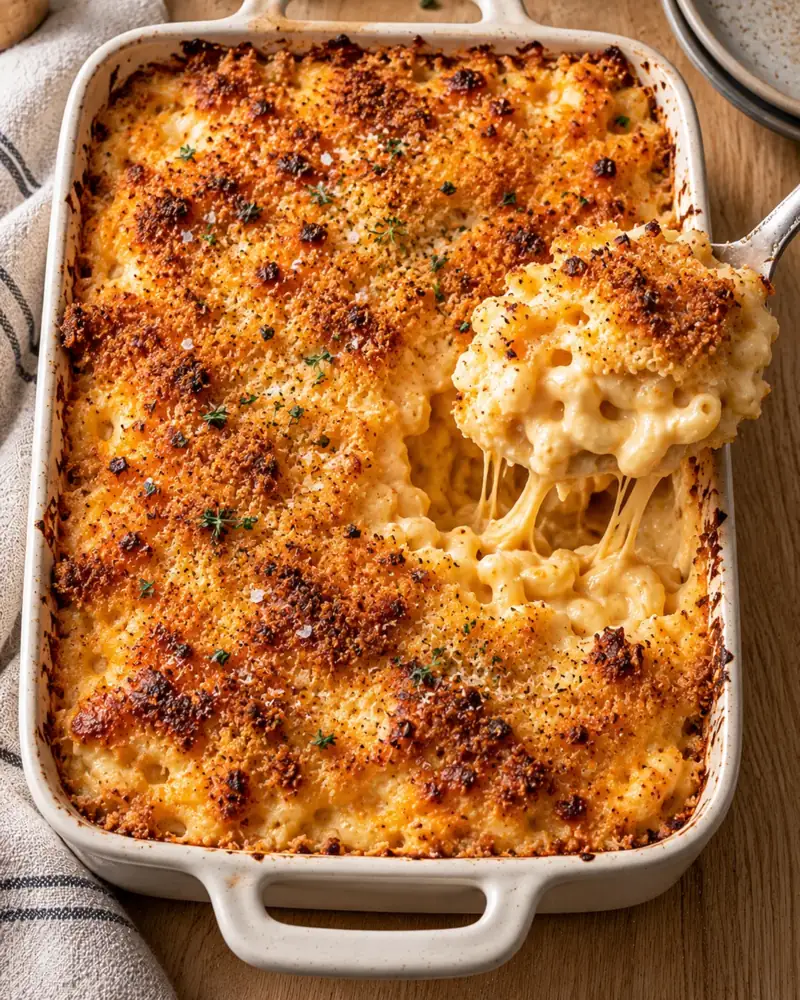
This is the baked kind: a smooth sharp-cheddar sauce that stays creamy in the oven, under a buttery breadcrumb crust. Undercooking the pasta and making the sauce a little loose are what stop it baking into a dry brick.
Ingredients
Pasta and sauce
- 400 gmacaroni or cavatappi (14 oz)
- 60 gunsalted butter (4 tbsp)
- 45 gall-purpose flour (⅓ cup)
- 900 mlwhole milk (3¾ cups)warmed
- 1 tspDijon or English mustard
- ¼ tspcayenne or smoked paprika
- 300 gsharp or mature cheddar (10½ oz)coarsely grated
- 100 gGruyère (3½ oz)coarsely grated, or more cheddar
- 5 gfine sea salt (¾ tsp)plus 40 g (2 tbsp) for the pasta water
- black pepperfreshly ground
Topping
- 60 gpanko or coarse fresh breadcrumbs (1 cup)
- 30 gunsalted butter (2 tbsp)melted
- 30 gParmigiano Reggiano (1 oz)finely grated; or a vegetarian hard cheese (traditional Parmesan uses animal rennet)
- Diet
- Vegetarian
- Allergens
- gluten, milk, mustard
- Origin
- United States
- Season
- Autumn, Winter
Method
- Heat the oven to 200°C (400°F). Butter a 20 × 30 cm (8 × 12 in) baking dish.
- Cook the pasta in 4 L (4 qt) boiling water with 40 g (2 tbsp) salt for 2 minutes less than the packet says. Drain and rinse briefly under cold water to stop the cooking.
- Melt the butter in a large heavy pan over medium heat. Whisk in the flour and cook, whisking, for 2 minutes until it smells nutty but has not browned.
- Pour in the warm milk a third at a time, whisking until smooth after each addition. Simmer, stirring, until it thickens enough to coat the back of a spoon, 5 minutes. This is a looser béchamel than Béchamel (less flour per liter), so it stays creamy after baking.
- Take the pan off the heat. Stir in the mustard, cayenne, salt and pepper, then the cheddar and Gruyère by handfuls until melted and smooth.
- Fold in the pasta. It should look too saucy — the pasta drinks the excess in the oven. Tip into the dish.
- Mix the breadcrumbs, melted butter and Parmigiano and scatter evenly over the top.
- Bake until the top is deep golden and the sauce bubbles at the edges, 20–25 minutes. Rest 5 minutes before serving.
Why it works
Cheese melts smoothly in a flour-thickened sauce because the starch keeps its proteins from clumping and its fat from separating. Taking the sauce off the heat before adding cheese keeps it below the point where it turns grainy. Mustard adds no obvious taste of its own but sharpens the cheese flavor.
Common mistakes
- Using pre-grated cheese: its anti-caking starch makes the sauce gritty. Grate your own.
- Fully cooking the pasta before baking: it turns mushy.
- Too thick a sauce: it sets dry. It should pour slowly.
Variations
- Stovetop
- Skip the baking: fold the fully cooked pasta into the sauce and serve at once with Pangrattato on top.
- With greens
- Fold 150 g wilted spinach or 200 g blanched broccoli florets in with the pasta.
Make ahead and storage
Assemble up to a day ahead (without topping) and refrigerate; add a splash of milk, top and bake 30–35 minutes. Leftovers reheat best with a little milk, covered, at 180°C (350°F).
Notes
Fan oven: 180°C (350°F). Some mustards contain sulphites; check the label if that matters.