Ragù alla Bolognese
A slow, milky, meat-first ragù — the real thing, worth the afternoon
- Serves
- 6
- Hands-on
- Total
- Level
- Some skill
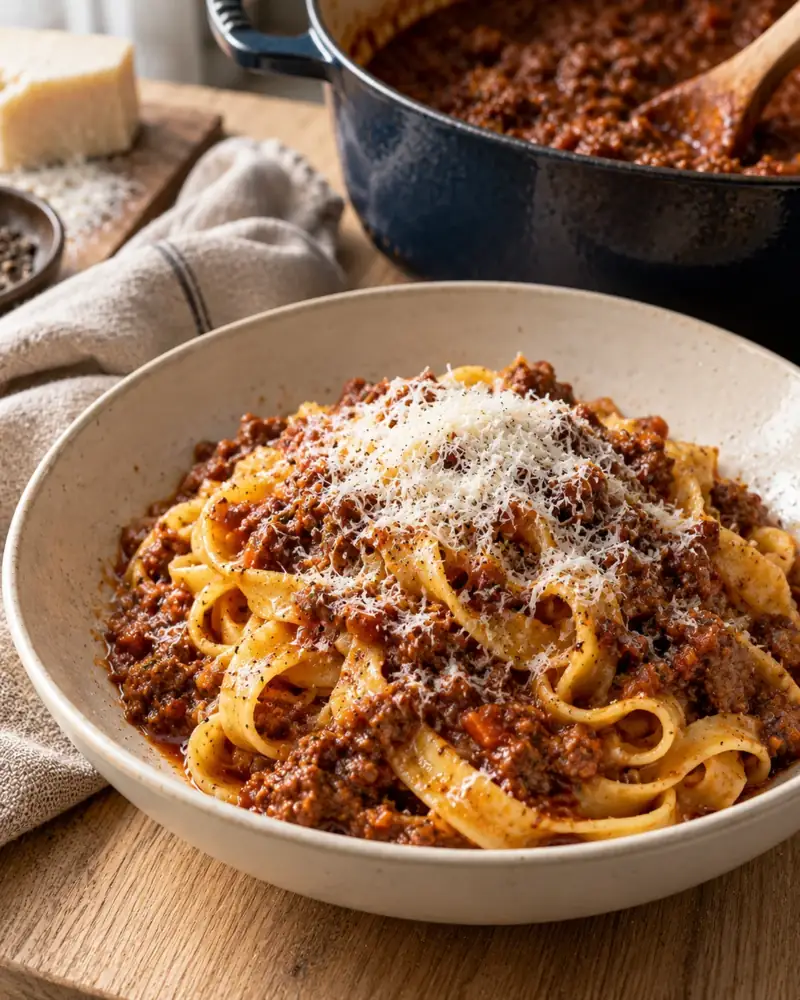
Real Bolognese is mostly meat with just a little tomato, simmered for hours with milk and wine until it turns deep, soft and sweet. This version uses beef and pork for depth, and is served the Bolognese way: with wide egg tagliatelle, not spaghetti.
Ingredients
Ragù
- 2 tbspolive oil
- 30 gunsalted butter (2 tbsp)
- 100 gpancetta (3½ oz)finely chopped
- 1onionmedium, finely diced
- 1carrotmedium, finely diced
- 2celery sticksfinely diced
- 500 gground beef (1 lb 2 oz)about 15–20% fat
- 300 gground pork (10½ oz)
- 200 mldry white wine (¾ cup)
- 250 mlwhole milk (1 cup)
- 2 tbsptomato paste
- 400 gpassata (14 oz)smooth tomato purée
- 250 mlChicken Stock (1 cup)or store-bought low-salt stock or water
- 10 gfine sea salt (1¾ tsp)plus more to taste
- black pepperfreshly ground
- nutmega few gratings
To serve
- 500 gegg tagliatelle (1 lb 2 oz)dried, or fresh from Fresh Egg Pasta
- 30 gunsalted butter (2 tbsp)
- 50 gParmigiano Reggiano (1¾ oz)grated
- Allergens
- gluten, egg, milk, celery, sulphites
- Origin
- Italy (Bologna)
- Season
- Autumn, Winter
Method
- Heat the oil and butter in a large heavy pot over medium heat. Add the pancetta and cook until the fat runs, 4 minutes.
- Add the onion, carrot and celery with a pinch of the salt. Cook gently, stirring, until soft and sweet but not browned, 10–12 minutes.
- Turn the heat to medium-high and add the beef and pork. Break it up and cook until it loses its raw color and the liquid it releases has evaporated and it begins to sizzle and brown in places, 10–12 minutes.
- Pour in the wine and simmer until almost gone, 4–5 minutes.
- Add the milk and a few gratings of nutmeg. Simmer until it has nearly disappeared into the meat, 8–10 minutes.
- Stir in the tomato paste, passata, stock and the rest of the salt. Bring to a bare simmer, partly cover and cook on the lowest heat for 2½–3 hours, stirring every 20–30 minutes and adding a splash of water if it gets dry. It is ready when it is thick, glossy and deep brown-red, with fat pooling at the edges.
- Taste and adjust salt and pepper. Skim off some fat if you like.
- Cook the tagliatelle in 5 L (5 qt) boiling water with 50 g (2½ tbsp) salt until al dente (tender with a slight bite). Drain, reserving a cup of the water.
- Toss the pasta in a warm pan with the butter and about two-thirds of the ragù, loosening with pasta water. Serve topped with more ragù and the Parmigiano.
Why it works
Milk gives the ragù a softer, rounder texture and tempers the acidity of wine and tomato; its sugars and proteins also brown slowly over the long simmer. Hours of gentle heat soften the meat and let the flavors marry into one deep, savory note. Wide egg pasta has the surface area and grip to carry a heavy meat sauce that slides off thin spaghetti.
Common mistakes
- Rushing the browning: wait for the liquid to evaporate so the meat fries rather than boils.
- Too much tomato: this is a meat sauce with tomato, not a tomato sauce with meat.
- Boiling instead of simmering: a hard boil toughens the meat. You want a lazy bubble.
Variations
- Lasagne
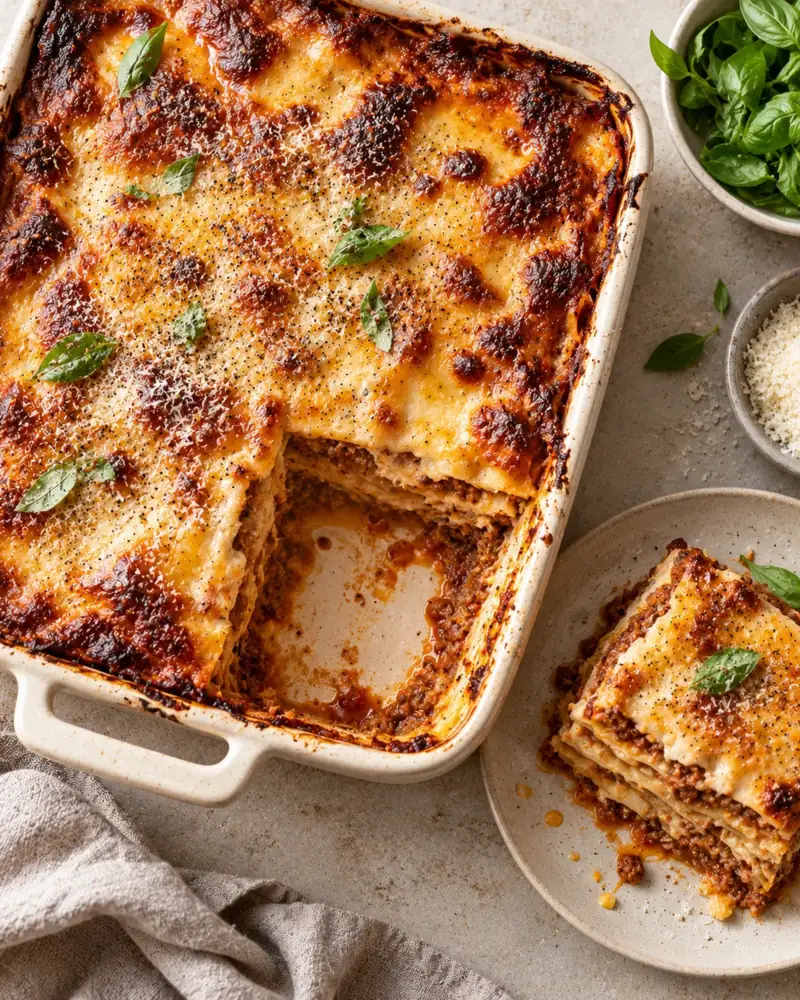
- This ragù is the base for Lasagne alla Bolognese.
- Slow cooker
- After step 5, transfer to a slow cooker with the remaining ingredients and cook on low for 6–8 hours.
Make ahead and storage
Even better the next day. Keeps 4 days in the fridge and 3 months in the freezer. Makes about 1.6 kg (3½ lb), exactly enough for Lasagne alla Bolognese.
Notes
Stock cubes often contain celery; the recipe already contains celery. For no wine, use more stock plus 1 tsp red wine vinegar at the end. Gluten and egg come only from the tagliatelle served with the sauce.