Lasagne alla Bolognese
Layers of ragù, béchamel and pasta, baked until bubbling and crisp-edged
- Serves
- 8
- Hands-on
- Total
- Level
- Project
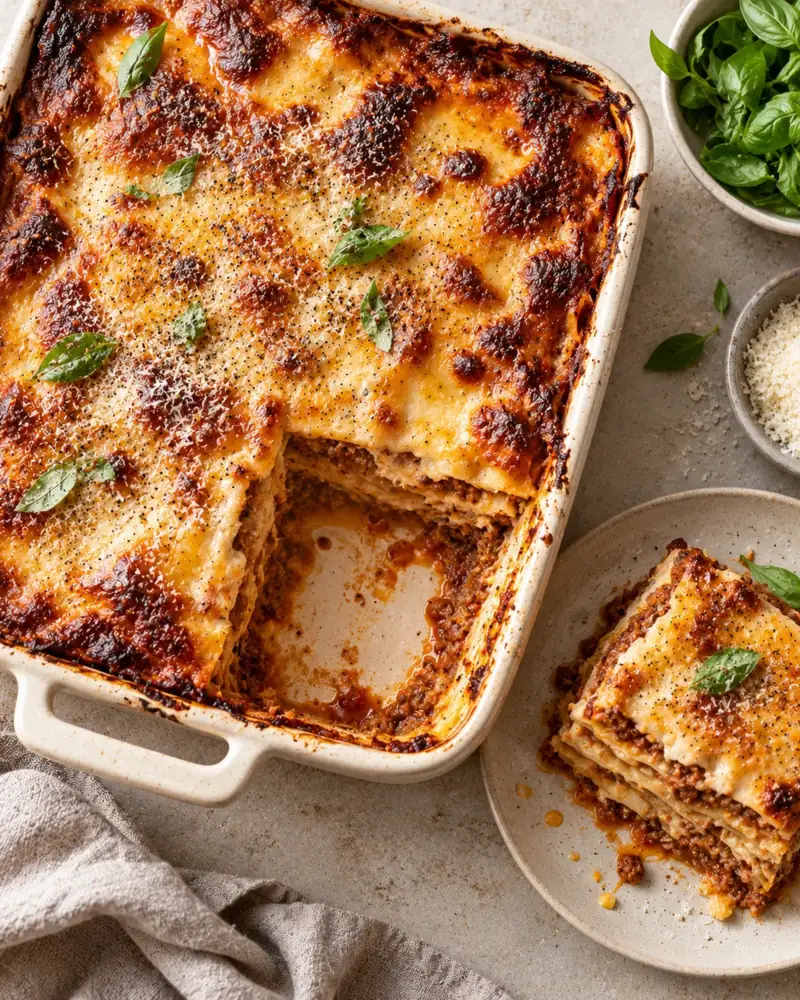
A lasagne built the Emilian way: thin pasta, slow ragù, a light béchamel and Parmigiano — no ricotta, no mozzarella. Lots of thin layers give you a slice that holds its shape and a top that turns golden and crisp at the corners.
Ingredients
- 1batch Ragù alla Bolognese ragùabout 1.6 kg (3½ lb), made through step 7
- 1¼ lBéchamel (5 cups)the base recipe made with 1.2 L milk to the same 60 g butter and 60 g flour, so it is slightly thinner for no-boil sheets; or good store-bought
- 500 glasagne sheets (1 lb 2 oz)dried no-boil, or fresh from Fresh Egg Pasta
- 120 gParmigiano Reggiano (4 oz)grated
- 20 gunsalted butter (1½ tbsp)for the dish and the top
- Allergens
- gluten, egg, milk, celery, sulphites
- Origin
- Italy (Emilia-Romagna)
- Season
- Autumn, Winter
Method
- Make the ragù (about 3¾ hours) and béchamel ahead. Both should be warm or at room temperature, not fridge-cold, when you build.
- Heat the oven to 190°C (375°F). Butter a 23 × 33 cm (9 × 13 in) baking dish.
- If your ragù is very thick, loosen it with a splash of water; dried sheets need moisture to cook. It should be spreadable, like thick porridge.
- Spread a thin layer of béchamel over the base of the dish. Lay over a layer of pasta, trimming to fit with minimal overlap.
- Spread over a thin layer of ragù, then a thin layer of béchamel, then a sprinkle of Parmigiano. Repeat to make 5–6 layers of pasta, finishing with pasta topped with béchamel and a generous layer of Parmigiano. Dot with butter.
- Cover with foil and bake for 25 minutes. Uncover and bake until the top is deep golden, the edges are crisp and the sauce bubbles at the sides, 20–25 minutes more. The center should reach 74°C (165°F).
- Rest for at least 20 minutes before cutting, so the layers set and slices hold their shape.
Why it works
Thin layers mean every bite has the same balance of pasta, meat and sauce, and the structure sets firm as it cools. The béchamel is made thinner than usual because dried pasta absorbs liquid as it bakes; too thick a sauce leaves the pasta tough. Resting lets the starches and proteins firm up, so the slice does not slump.
Common mistakes
- Thick, stiff béchamel and dry ragù: the pasta stays leathery. Keep both loose.
- Cutting straight from the oven: the slice collapses. Rest it.
- Overfilling the dish: it bubbles over. Leave 1 cm (½ in) at the top.
Variations
- Lasagne verde
- Use spinach egg pasta for the true Bolognese version — see the variation in Fresh Egg Pasta.
- Mushroom lasagne
- Replace the ragù with 1 kg mixed mushrooms sautéed hard with garlic and thyme and a splash of Marsala.
Make ahead and storage
Assemble up to 2 days ahead, cover and refrigerate; add 15 minutes to the covered baking time. Freezes well, baked or unbaked, for 3 months; thaw overnight in the fridge before baking.
Notes
Fan oven: 170°C (340°F). Active time does not include making the ragù and béchamel; total time does.