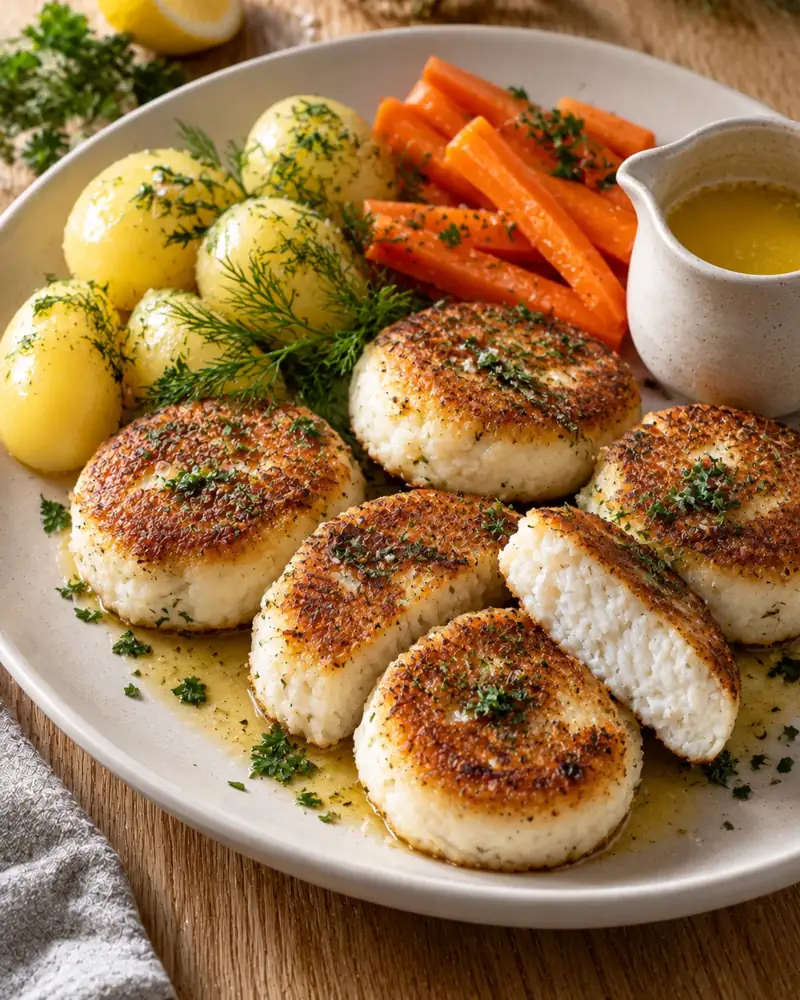
Bergen-Style Fish Cakes
Norway's springy, pale fish cakes made from blitzed raw haddock and milk
- Serves
- 4
- Hands-on
- Total
- Level
- Some skill
Norwegian fiskekaker are nothing like the potato-heavy fish cakes of Britain or the US. Raw white fish is blended with salt until it turns into a sticky paste, then lightened with milk and potato starch, so the cakes come out smooth, bouncy and pale, with a golden crust. In Bergen they're sold warm from fishmongers' counters; at home they're dinner with boiled potatoes, carrots and a little brown sauce or remoulade.
Ingredients
- 600 gskinless haddock, cod or pollock fillet (1⅓ lb)very cold, boneless, in 3 cm chunks
- 9 gfine sea salt (1½ tsp)1.5% of the fish
- 25 gpotato starch (3 tbsp)or cornstarch
- ¼ tspground nutmeg
- ¼ tspground white pepper
- 1eggcold
- 250 mlwhole milk (1 cup)ice-cold
- 1 tbspfinely grated onionoptional; or chives
- 40 gbutter (3 tbsp)for frying, plus 1 tbsp oil
- Diet
- Gluten-free, Pescatarian
- Allergens
- fish, egg, milk
- Origin
- Norway (Bergen)
Method
- Chill the fish chunks in the freezer for 15 minutes so they are very cold but not frozen. Cold keeps the paste smooth.
- Blend the fish and salt in a food processor (or with a stick blender in a tall jug) until it turns into a sticky, stretchy, uniform paste, about 1 minute.
- Add the potato starch, nutmeg, white pepper, egg and onion and pulse to combine.
- With the motor running, add the cold milk a little at a time, letting each addition disappear before adding more. Stop when the mixture is soft, smooth and holds a shape on a spoon, like thick mashed potato. You may not need all the milk.
- Fry a teaspoon of the mixture as a test; taste and adjust the salt or pepper. Chill the mixture 15–30 minutes to firm up.
- Heat half the butter and oil in a large frying pan over medium heat until the butter foams. With a wet spoon, drop in palm-sized cakes, about 60 g each, and flatten to 1.5 cm thick with the back of the spoon.
- Fry until golden brown underneath, 3–4 minutes, then flip and fry the other side for 3–4 minutes. The cakes puff slightly and feel springy; they are done at 71°C (160°F) in the center, the safe point for a mixture bound with raw egg. Keep warm in a low oven while you fry the rest, adding fresh butter for each batch.
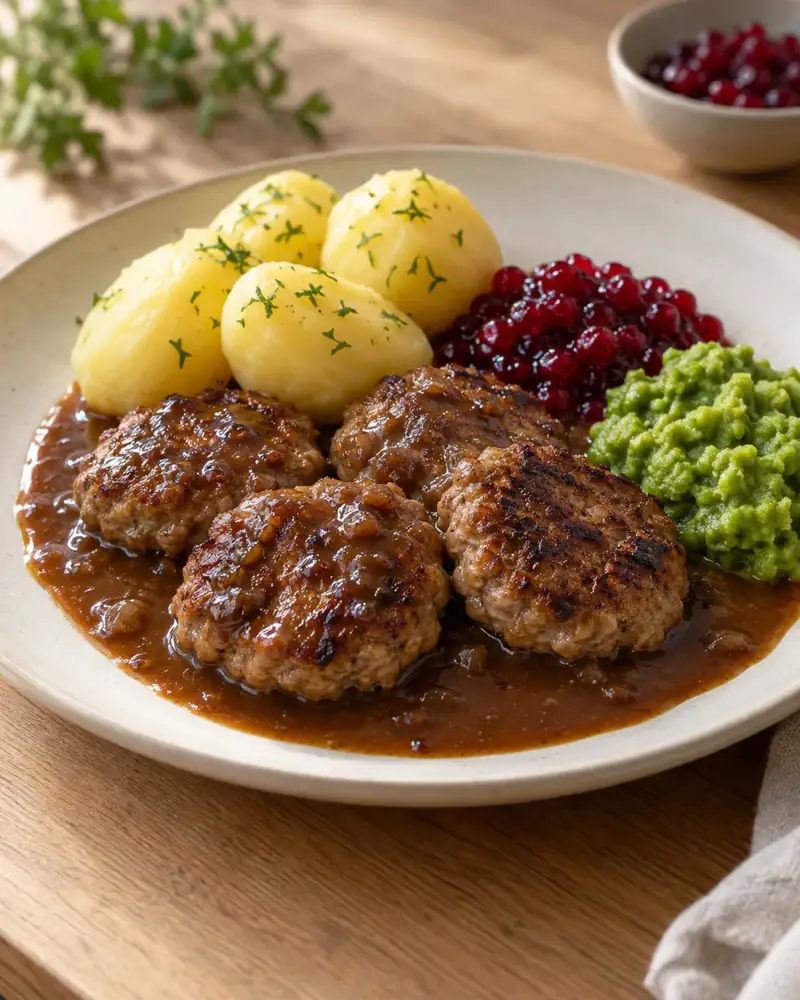
- Serve warm with boiled potatoes, carrots and a little melted butter, brown sauce (made as for Kjøttkaker (Norwegian Meat Patties in Brown Gravy)) or remoulade.
Why it works
Salt dissolves the fish's muscle proteins (myosin) so they unravel and tangle into a sticky gel; that gel traps the milk and sets into a bouncy, sausage-like texture when heated. Keeping everything ice-cold stops the proteins from cooking or turning grainy from the friction of the blade. Potato starch soaks up extra liquid and gives the cakes their tender, slightly springy bite.
Common mistakes
- Adding the milk too fast: the paste splits and turns runny. Add it slowly and stop when it holds its shape.
- Warm fish or a hot blender make a grainy, crumbly cake. Keep everything cold.
- Frying too hot: the crust burns before the center sets. Medium heat and patience.
Variations
- Fiskeboller (fish balls)
- Shape the mixture into walnut-sized balls and poach in barely simmering salted fish stock for 8–10 minutes; serve in a white sauce based on Béchamel made with the stock.
- Fish burgers
- Shape into 4 thicker patties and serve in buns with remoulade and pickled cucumber.
Make ahead and storage
The raw mixture keeps 1 day chilled. Fried cakes keep 3 days in the fridge and freeze well for 2 months; reheat in a pan with a little butter or in a 180°C (350°F) oven for 10 minutes.
Notes
Haddock (hyse) is the Bergen classic because it's sweet and white; any lean white fish works. Avoid oily fish here. A stick blender in a tall jug works if you have no food processor.