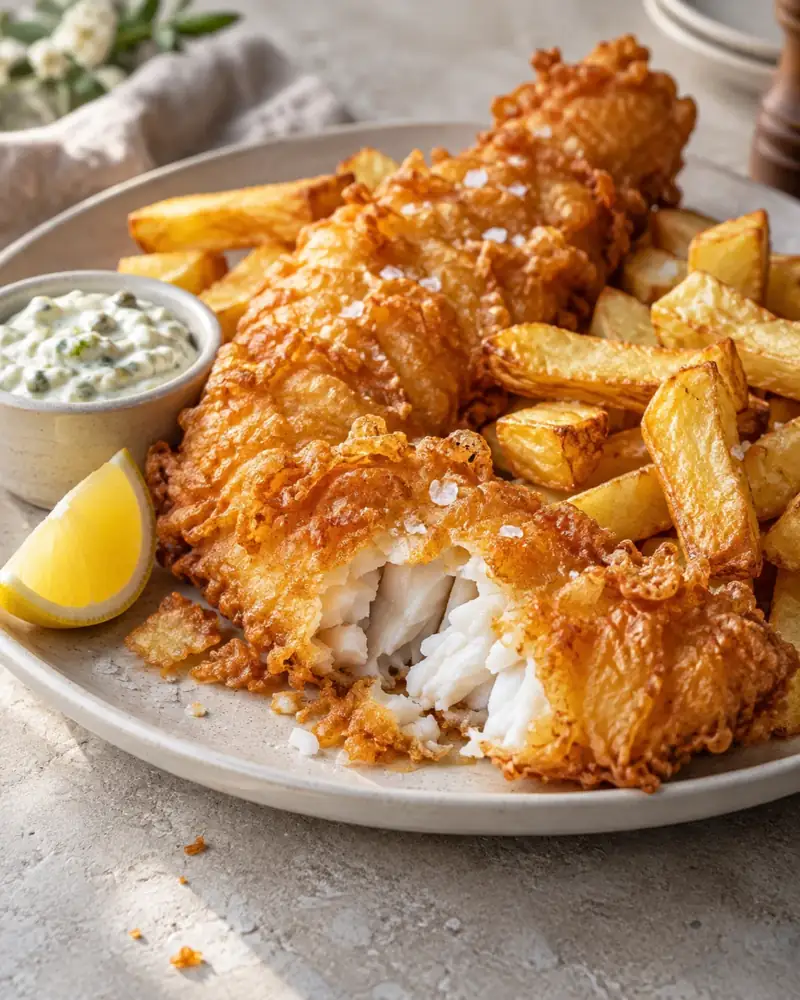
Fish and Chips
Shatter-crisp beer batter, steaming white fish and proper double-fried chips
- Serves
- 4
- Hands-on
- Total
- Level
- Some skill
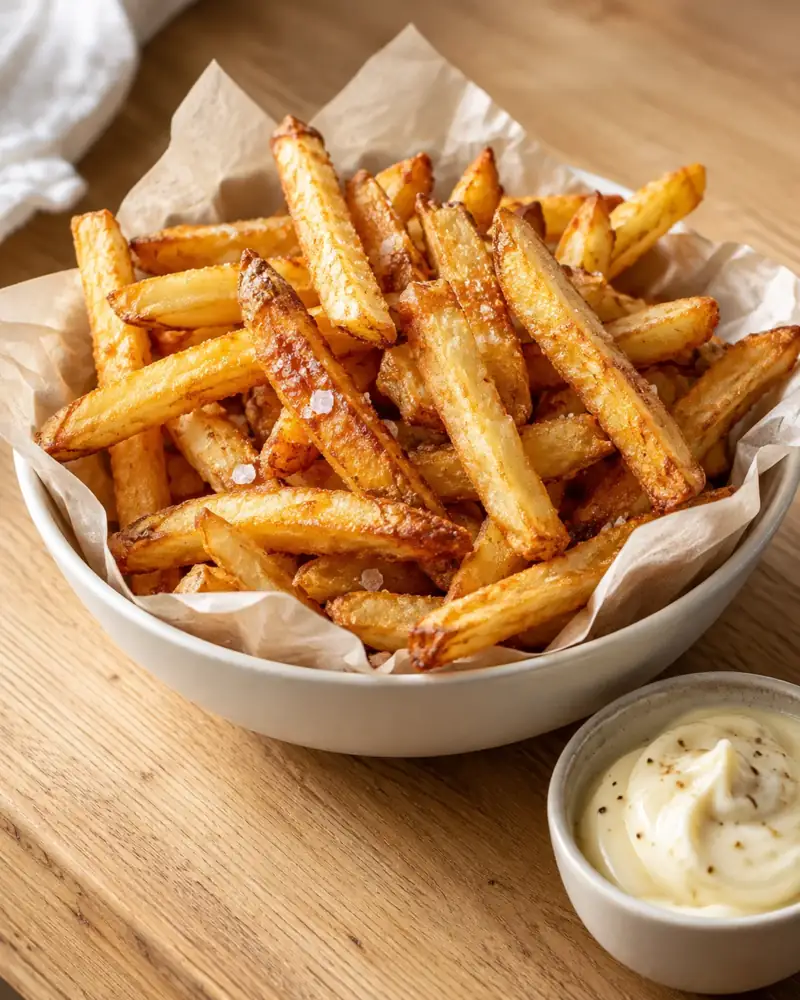
Britain's great takeaway: thick white fish in a batter that crackles, beside fat, fluffy-centered chips. The secrets are ice-cold, bubbly batter, oil at the right temperature and chips fried twice. Have everything ready before the oil goes on.
Ingredients
Chips
- 1 kgfloury potatoes (2¼ lb)Maris Piper, King Edward or russet, peeled, cut in 1.5 cm batons
- fine sea saltfor seasoning
- 2 lneutral oil for deep-frying (2 qt)peanut, sunflower or canola
Fish
- 4thick skinless white fish fillets (6 oz each)about 170 g each: cod, haddock or pollock
- 6 gfine sea salt (1 tsp)
- 30 gall-purpose flour (¼ cup)for dusting
Batter
- 150 gall-purpose flour (1¼ cups)
- 50 gcornstarch (⅓ cup)
- 1 tspbaking powder
- 3 gfine sea salt (½ tsp)
- 300 mlvery cold lager or pale ale (1¼ cups)from the fridge; or sparkling water
To serve
- 1lemonin wedges
- malt vinegaroptional
- 150 mltartar sauceMayonnaise mixed with chopped gherkins, capers, parsley and lemon
- Diet
- Dairy-free, Pescatarian
- Allergens
- fish, gluten, egg, mustard, sulphites
- Origin
- United Kingdom
Method
- Rinse the potato batons in cold water until it runs clear, then soak 15 minutes. Drain and dry thoroughly in a towel.
- Meanwhile, season the fish with the salt and rest it on paper towel in the fridge. Heat the oil in a deep, heavy pot of at least 6 L — it must be no more than one-third full — to 140°C (285°F).
- Blanch the chips in 3 batches until soft right through but still pale, 5–7 minutes per batch. Lift out onto a rack. Rest at least 10 minutes (or up to 2 hours).
- Heat the oven to 120°C (250°F) with a rack set over a sheet pan. Raise the oil to 190°C (375°F).
- Make the batter only now: whisk the flour, cornstarch, baking powder and salt, then whisk in the cold beer until just smooth, like heavy cream. A few lumps are fine.
- Pat the fish dry and dust it in flour, shaking off the excess. Dip a fillet in the batter, let the excess drip off, then lower it away from you into the oil, holding the end for 3 seconds so it floats rather than sticks. Fry 2 pieces at a time.
- Fry until deep golden and crisp, turning once, 5–7 minutes. The fish is done at 60°C (140°F) in the center and flakes in big, moist plates. Drain on the rack in the oven.
- Let the oil come back to 190°C (375°F). Fry the chips in 2 batches until deep golden and crisp, 3–4 minutes. Drain, toss with salt immediately.
- Serve straight away with lemon, vinegar and tartar sauce.
Why it works
Cold, carbonated batter hits hot oil and the gas expands fast, making a light, bubbly crust; cornstarch adds crunch because it has no gluten to turn bready. Chips are blanched at low heat to cook the inside to fluff and form a thin skin, then fried hot so that skin dries into a crisp shell. The batter shields the fish, which steams in its own moisture inside.
Common mistakes
- Oil too cool: batter soaks up grease and goes soft. Use a thermometer and let the oil recover between batches.
- Making the batter early: it loses its bubbles and the gluten develops. Mix it right before frying.
- Overfilling the pot. Oil rises and foams when food goes in; keep the pot no more than one-third full and never leave it unattended.
Variations
- Gluten-free batter
- Use rice flour in place of all-purpose flour and gluten-free beer or sparkling water; dust the fish in rice flour.
- Mushy peas
- Simmer 300 g frozen peas with a knob of butter and a splash of water for 4 minutes, then mash with mint and salt.
Make ahead and storage
Blanch the chips up to 2 hours ahead. Batter must be made at the last minute. Let the oil cool completely, strain and reuse it once or twice.
Notes
Keep a lid and a fire blanket nearby; never pour water on burning oil. For more on chips, see French Fries. Sulphites come from the beer; use sparkling water to avoid them. Egg and mustard only from the tartar sauce. Add peanut if using peanut oil.