Moules Marinières
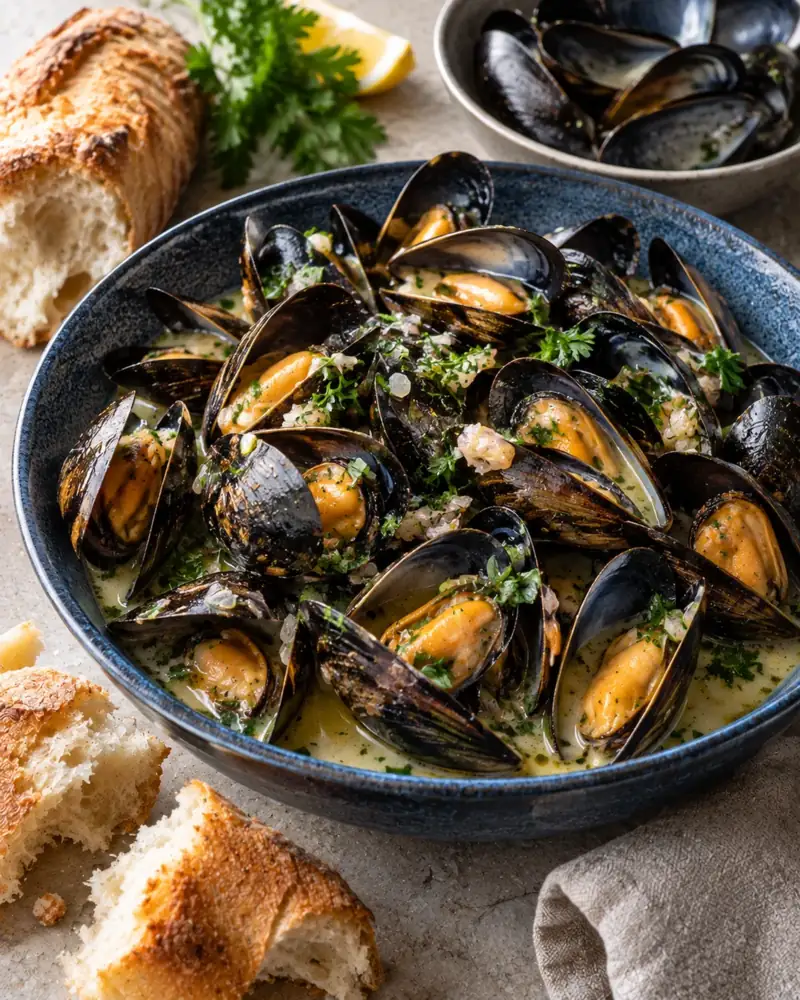
Mussels steamed open in white wine, shallots and butter in five minutes
- Serves
- 4
- Hands-on
- Total
- Level
- Easy
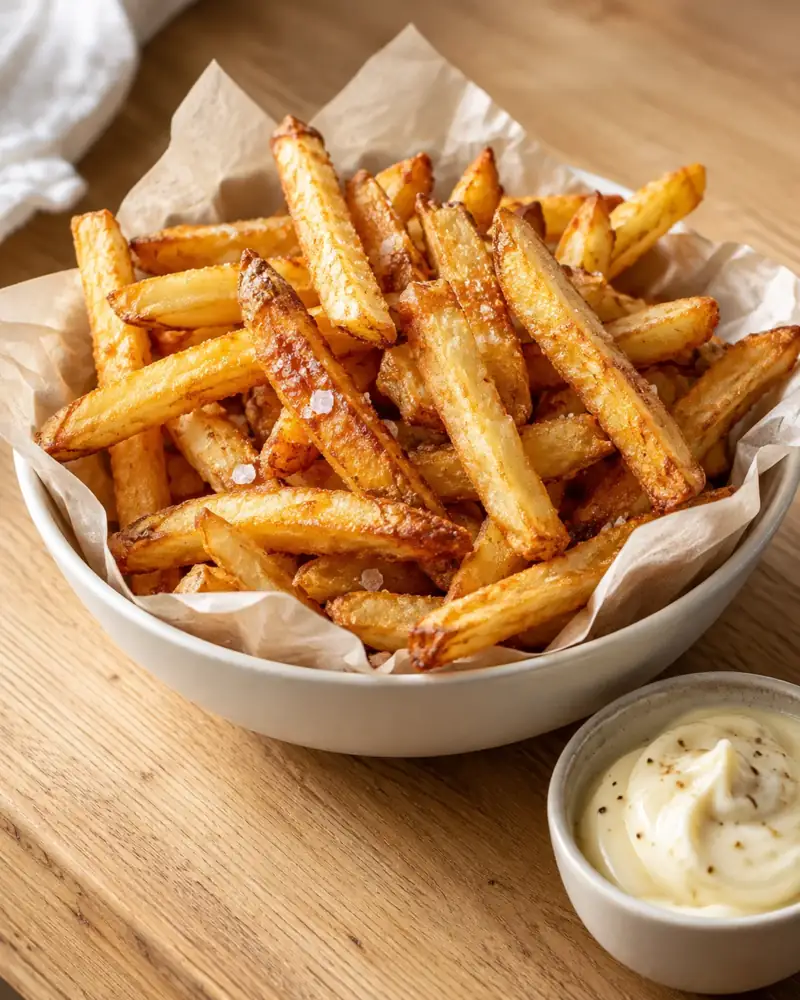
Mussels are one of the fastest, cheapest and most sustainable seafoods there is, and this is the version every bistro makes: steamed open in wine with shallots and garlic, then finished with butter and parsley. The broth at the bottom of the pot is the point — have bread or fries ready for it.
Ingredients
- 2 kglive mussels (4½ lb)rope-grown, cleaned (see step 1)
- 40 gunsalted butter (3 tbsp)divided
- 2shallotsfinely chopped
- 3 clovesgarlicfinely chopped
- 2 sprigsthyme
- 1bay leaf
- 250 mldry white wine (1 cup)Muscadet or similar
- 3 tbspheavy creamoptional
- 1 bunchflat-leaf parsleychopped
- freshly ground black pepper
- crusty bread or French Friesto serve
- Diet
- Pescatarian
- Allergens
- molluscs, milk, sulphites, gluten
- Origin
- France and Belgium
- Season
- Autumn, Winter, Spring
Method
- Rinse the mussels in a colander under cold running water. Pull off any hairy beards by tugging them toward the hinge. Tap any open mussels sharply on the counter: discard any that don't close within a minute, and any with cracked shells.
- Melt half the butter in a large, wide pot (at least 6 L) with a lid over medium heat. Cook the shallots, garlic, thyme and bay until soft and translucent but not browned, 3–4 minutes.
- Turn the heat to high, pour in the wine and bring to a rolling boil for 1 minute.
- Tip in the mussels, cover tightly and cook, shaking the pot every minute, until the shells have opened, 3–5 minutes. Peek after 3 minutes; stop as soon as nearly all are open. Opened mussels are cooked — their meat is plump, orange or cream colored, and has reached well over 70°C (158°F).
- Lift the mussels into warm bowls with a slotted spoon, discarding any that stayed firmly shut.
- Add the cream (if using), remaining butter and most of the parsley to the broth and boil for 30 seconds. Taste — mussels are salty, so it rarely needs salt — and add pepper. Pour over the mussels, leaving the last spoonful (which can hold grit) in the pot. Scatter with the rest of the parsley.
Why it works
Mussels are steamed rather than boiled: the small amount of boiling wine fills the closed pot with steam that cooks them fast and evenly, and as they open they release their own briny juice, which becomes most of the broth. Live mussels close when tapped because the muscle that holds the shell shut is still working; a dead mussel can't, and should be discarded.
Common mistakes
- Overcooking: mussels shrink and toughen in seconds. Take them off the heat as soon as they open.
- Overfilling the pot so the top layer never steams. Use a big pot or cook in two batches.
- Salting the broth before tasting. Mussel liquor is already salty.
Variations
- Thai-style
- Swap wine and butter for 1 can coconut milk, 1 tbsp red curry paste, lemongrass, a splash of fish sauce and lime; finish with cilantro.
- Moules à la bière
- Use a Belgian wheat beer instead of the wine; serve with fries and mayonnaise.
Make ahead and storage
Store live mussels in the fridge in a bowl covered with a damp towel (never in water or sealed plastic) and cook within 1–2 days. Cooked mussels don't reheat well; pick out leftovers and use in a pasta.
Notes
Most farmed mussels are sold already debearded and nearly clean. Serve 500 g per person as a main, 250 g as a starter. Gluten only from the bread served with it.