Sole Meunière
Floured sole browned in butter, finished with lemon and parsley
- Serves
- 4
- Hands-on
- Total
- Level
- Some skill
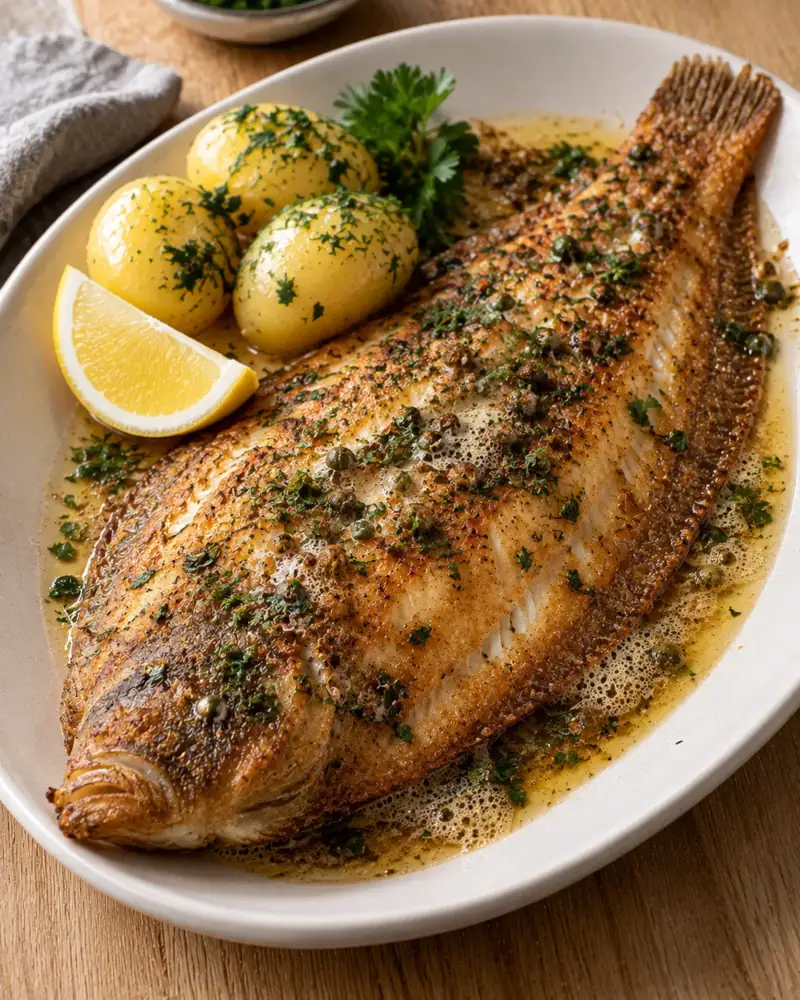
The French brasserie classic: a whole flat fish dusted in flour, fried in butter and finished with nut-brown butter, lemon and parsley. It's four ingredients and a few minutes of cooking per fish, which is why the technique matters — butter cut with oil so it doesn't burn while frying, and a second, fresh brown butter for the sauce.
Ingredients
- 4whole Dover sole, skinned and trimmed (about 12 oz each)about 350 g each; or 4 lemon sole or plaice, or 4 thick fillets (150 g each)
- 7 gfine sea salt (1¼ tsp)
- 40 gall-purpose flour (⅓ cup)
- 2 tbspneutral oil
- 130 gunsalted butter (9 tbsp)divided: 40 g for frying, 90 g for the sauce, cold, in cubes
- 1lemonjuice of half, the rest in wedges
- 2 tbspchopped flat-leaf parsley
- freshly ground white or black pepper
- Diet
- Pescatarian
- Allergens
- fish, gluten, milk
- Origin
- France
Method
- Heat the oven to 100°C (210°F) and put in four plates to warm.
- Pat the fish very dry. Season both sides with salt and pepper. Spread the flour on a plate and dredge the fish (turn it in the flour to coat), pressing lightly, then shake off all the excess so only a thin dusting remains.
- Heat 1 tbsp oil and 20 g butter in a large frying pan over medium-high heat (two whole sole fit one large pan; use two pans or cook in two batches). When the butter stops foaming, lay in two fish, presentation side (the side the dark skin came off) down.
- Cook without moving until golden brown underneath, 3–4 minutes for a whole Dover sole (2 minutes for thin fillets). Turn with a wide spatula and cook the other side 3–4 minutes.
- Check at the backbone: the flesh should be white, just opaque and pull away from the bone, about 55°C (131°F). Transfer to the warm plates in the oven, then cook the other two fish in the remaining oil and 20 g butter.
- Wipe out the pan. Return it to medium heat and add the 90 g cold butter. Swirl until it foams, then turns hazelnut brown and smells nutty, 2–3 minutes.
- Take the pan off the heat. Add the lemon juice (it will sputter) and the parsley, swirl and pour immediately over the fish. Serve with lemon wedges and boiled potatoes.
Why it works
A whisper of flour dries the surface and browns quickly itself, so the fish gets a golden crust before its delicate flesh overcooks. Adding oil dilutes the butter's milk solids, so fewer of them scorch during frying. The sauce is a separate beurre noisette: milk solids browning in fresh butter make the nutty flavor, and lemon juice stops the browning and balances the richness.
Common mistakes
- Too much flour turns gluey. Shake it off until only a light veil remains.
- Using the frying butter for the sauce: it carries burnt specks and bitter flour. Always start fresh.
- Over-browning the sauce — brown, not black. Pull it off the heat as soon as it smells of hazelnuts.
Variations
- Amandine
- Toast 40 g sliced almonds in the brown butter before adding the lemon. Add tree nuts to the allergens.
- Grenobloise
- Add 1 tbsp capers and small cubes of peeled lemon segments to the brown butter.
Make ahead and storage
Best cooked and eaten at once.
Notes
Ask the fishmonger to remove the dark skin and trim the fins of whole sole. Dover sole is expensive; lemon sole, plaice, flounder or dab are cheaper and very good (they cook in about half the time). To serve a whole sole, slide a knife down the backbone and lift the fillets off.