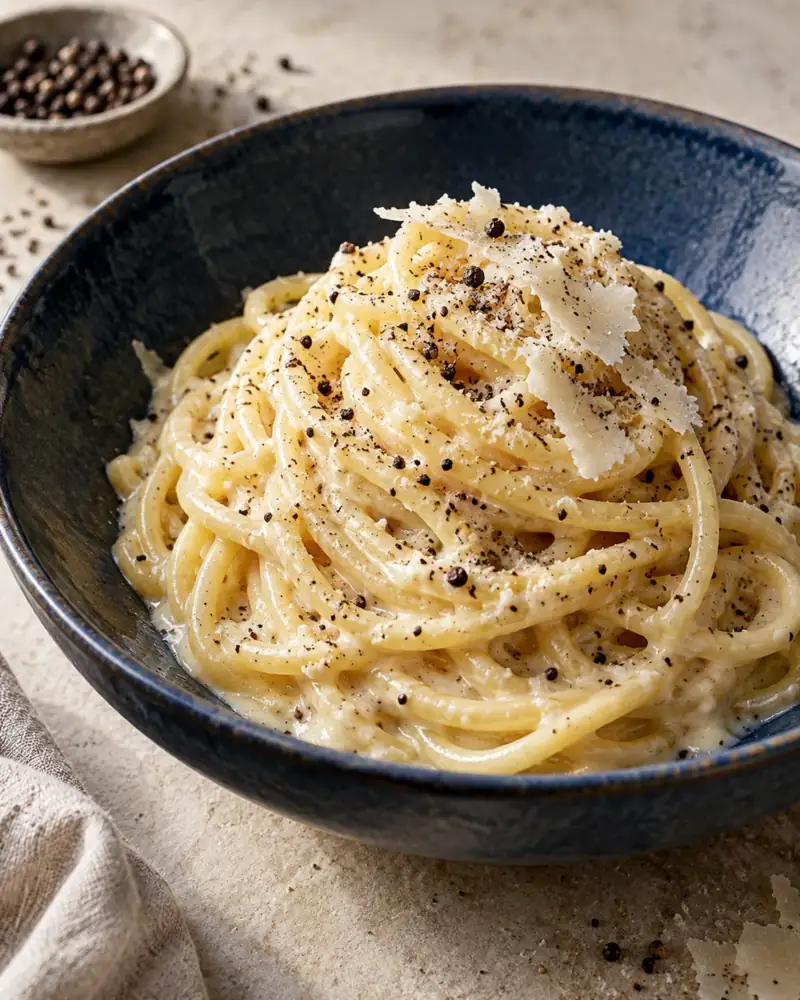
Cacio e Pepe
Cheese, pepper, pasta water — and the method that makes them a sauce
- Serves
- 4
- Hands-on
- Total
- Level
- Some skill
Three ingredients, one technique. The trick is to make the cheese sauce in a bowl with warm, not boiling, pasta water, so the Pecorino melts into a smooth cream instead of seizing into strings.
Ingredients
- 400 gtonnarelli or spaghetti (14 oz)a thick spaghetti is best
- 160 gPecorino Romano (5½ oz)very finely grated, at room temperature; or a vegetarian hard cheese (traditional Pecorino uses animal rennet)
- 2 tspblack peppercornsplus extra to finish
- 20 gfine sea salt (1 tbsp)for the pasta water
- Diet
- Vegetarian
- Allergens
- gluten, milk
- Origin
- Italy (Rome)
Method
- Bring just 2.5 L (2½ qt) water to a boil in a wide pot with 20 g (1 tbsp) salt. Less water means starchier water, which is what holds the sauce together.
- Toast the peppercorns in a dry large frying pan over medium heat until fragrant, about 1 minute, then crush them coarsely in a mortar or under a heavy pan. Return half to the frying pan.
- Put the grated Pecorino in a bowl.
- Cook the pasta until 2 minutes short of the packet time, stirring often so it does not stick in the small amount of water.
- Ladle 200 ml (¾ cup) pasta water into the frying pan with the pepper and let it bubble for 30 seconds.
- Take another 150 ml (⅔ cup) pasta water and let it cool for 1 minute — it should be hot, around 70°C (160°F), not boiling. Pour it gradually onto the cheese while whisking with a fork, until you have a thick, smooth, pourable paste.
- Lift the pasta into the frying pan and toss over medium heat for 1–2 minutes until most of the water is absorbed and the pasta is al dente (tender, with a slight bite at the center).
- Take the pan off the heat and wait 30 seconds. Add the cheese cream and toss vigorously, adding more pasta water a spoonful at a time, until the sauce is creamy and clings to every strand.
- Serve immediately with the rest of the crushed pepper.
Why it works
Pecorino's proteins tighten and squeeze out their fat when they hit liquid above about 75°C (167°F), which is why cheese dumped into a hot pan turns into clumps. Pre-mixing it with cooler pasta water lets the starch coat the proteins first, forming a stable emulsion before it ever meets the hot pasta. Cooking the pasta in less water concentrates that starch.
Common mistakes
- Grating the cheese coarsely: it melts unevenly and clumps. Use the finest holes or a microplane.
- Adding the cheese over the heat: always toss off the heat.
- Letting the finished dish sit: the sauce tightens within minutes. Have bowls and people ready.
Variations
- Half and half
- Use 100 g Pecorino and 60 g Parmigiano for a milder, nuttier sauce that is a little more forgiving.
Notes
If the sauce clumps, add a splash of warm pasta water and toss off the heat; small clumps usually melt back in.