Spaghetti Carbonara
Rome's four-ingredient classic, glossy and never scrambled
- Serves
- 4
- Hands-on
- Total
- Level
- Easy
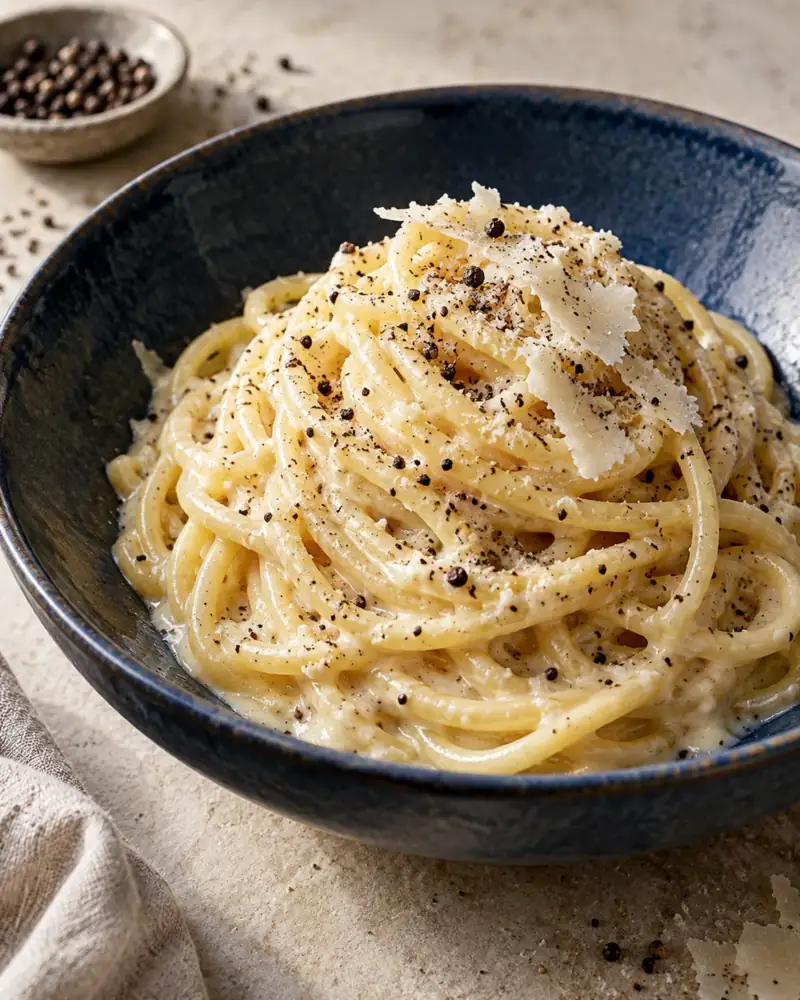
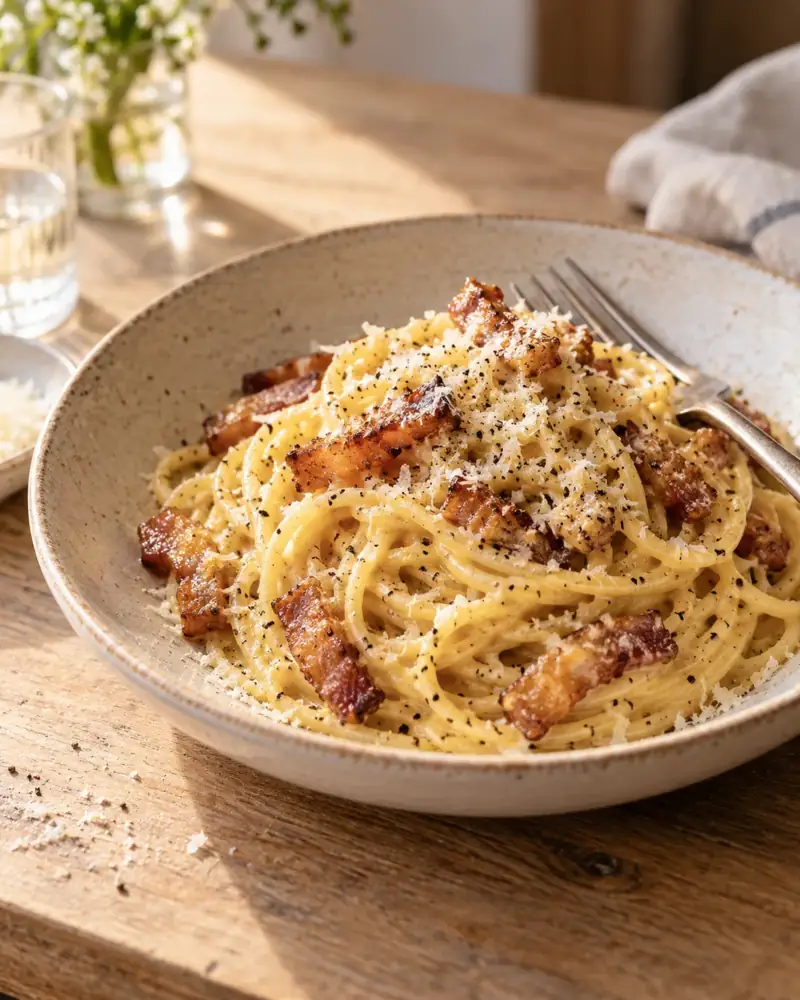
Carbonara is cured pork, eggs, Pecorino and black pepper, bound with starchy pasta water into a sauce that should coat each strand like warm custard. This version uses a mix of yolks and whole eggs for richness without heaviness, and finishes the sauce off the heat so it thickens instead of curdling.
Ingredients
- 400 gspaghetti (14 oz)or rigatoni
- 150 gguanciale (5 oz)or thick-cut pancetta, cut in 1 cm (½ in) strips
- 4egg yolkslarge
- 2whole eggslarge
- 60 gPecorino Romano (2 oz)finely grated, plus extra to serve
- 20 gParmigiano Reggiano (¾ oz)finely grated
- 2 tspblack peppercornsfreshly and coarsely ground
- 30 gfine sea salt (1½ tbsp)for the pasta water
- Allergens
- gluten, egg, milk
- Origin
- Italy (Rome)
Method
- Bring 4 L (4 qt) water to a boil and add 30 g (1½ tbsp) salt. Use a little less salt than usual: the cheese and pork bring plenty.
- In a bowl, whisk the yolks, whole eggs, both cheeses and most of the pepper into a thick paste. Leave it near the stove so it loses its fridge chill.
- Put the guanciale in a large, cold frying pan and set it over medium-low heat. Render, stirring now and then, until the fat has run and the strips are golden and crisp at the edges but still a little chewy inside.
- Turn off the heat under the pork. Spoon out about half the fat if there is more than 3 tbsp; keep the rest in the pan.
- Cook the spaghetti until 1 minute short of the packet time; it should still have a firm, chalky thread at the center.
- Scoop out 250 ml (1 cup) of the pasta water. Whisk 3 tbsp of it into the egg mixture to loosen and warm it.
- Lift the pasta straight into the pork pan with tongs and toss for 30 seconds to coat it in fat. The pan should be hot but off the heat.
- Wait 30 seconds, then pour in the egg mixture and toss hard and fast, adding pasta water a splash at a time, until the sauce turns creamy, glossy and just thick enough to cling. If it stays runny, set the pan over the lowest heat for a few seconds while tossing, then pull it off again.
- Serve at once in warm bowls with the remaining pepper and more Pecorino.
Why it works
Egg proteins begin to set around 65°C (150°F) and turn grainy above 75°C (167°F); taking the pan off the heat keeps the sauce inside that narrow window. Starch from the pasta water coats the egg proteins and stops them clumping, while the rendered fat and cheese emulsify into a stable, glossy sauce. Extra yolks add richness and lower the risk of scrambling, since yolk sets more gently than white.
Common mistakes
- Adding the eggs to a pan that is still on high heat: you get scrambled egg on noodles. Kill the heat and let the pan settle first.
- Draining the pasta in a colander and losing the starchy water: you need it to build the emulsion.
- Using cream to make it 'safe': it dulls the flavor and is not needed once you control the heat.
Variations
- Carbonara with zucchini
- Fry 2 small zucchini, cut in matchsticks, in the pork fat until golden, then proceed. Good for a summer weeknight.
- Vegetarian
- Skip the pork; fry 1 sliced garlic clove in 4 tbsp olive oil and add an extra 20 g Parmigiano for savoriness.
Make ahead and storage
Best eaten the moment it is made; it does not reheat well.
Notes
If you cannot find guanciale, use pancetta; streaky bacon works but adds smoke that changes the dish. Grate the cheese on the finest holes so it melts instantly. The eggs are only gently cooked (about 65–70°C) and not fully pasteurized; for pregnant, elderly or immune-compromised guests use pasteurized eggs.