Gravlax with Mustard-Dill Sauce
Salmon cured in salt, sugar and dill for three days — the Nordic way
- Serves
- 4
- Hands-on
- Total
- Level
- Some skill
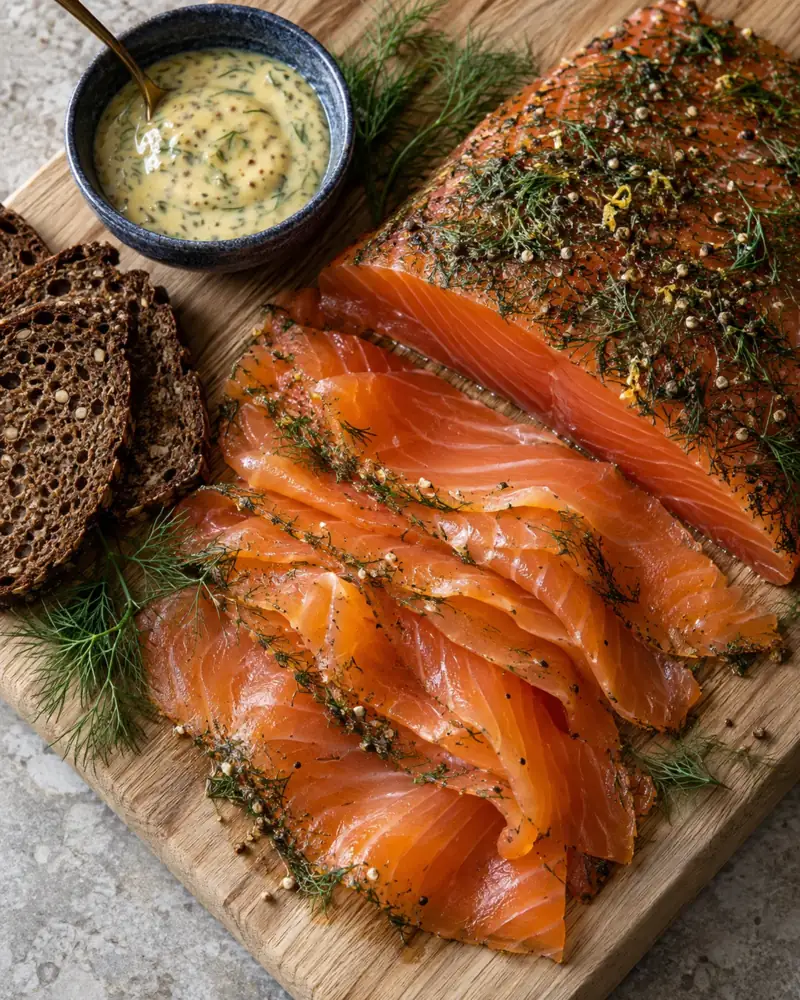
Gravlax is raw salmon cured under a blanket of salt, sugar and dill until it turns dense, glossy and sliceable. The name means "buried salmon": fishermen once fermented it in the ground, but the modern version is a clean cure in the fridge. Serve it thinly sliced with the sweet mustard sauce Scandinavians call gravlaxsås.
Ingredients
Cure
- 1 kgvery fresh salmon fillet, skin on (2¼ lb)center cut, pin-boned, previously frozen — see safety note
- 70 gcoarse sea salt or kosher salt (¼ cup)not iodized; weigh it — kosher salt brands differ hugely by volume
- 70 gsugar (⅓ cup)
- 1 tbspwhite peppercornscoarsely crushed; black works too
- 1 bunchdillabout 60 g, stalks and fronds, roughly chopped
- 2 tbspaquavit or vodkaoptional
Mustard-dill sauce
- 3 tbspSwedish or Dijon mustarda mildly sweet one is traditional
- 1 tbspsugar
- 1 tbspwhite wine vinegar
- 100 mlneutral oil (scant ½ cup)
- 3 tbspfinely chopped dill
- 1 pinchfine sea salt
- Diet
- Gluten-free, Dairy-free, Pescatarian
- Allergens
- fish, mustard, sulphites
- Origin
- Sweden and Norway
Method
- Safety first: if your salmon has not been frozen, freeze it at −20°C (−4°F) or colder for at least 24 hours (most home freezers run nearer −18°C, so give it 7 days to be cautious), then thaw overnight in the fridge. This kills any parasites.
- Cut the fillet crosswise into two equal pieces. Pat dry. Run your fingers over the flesh to find any pin bones and pull them out with tweezers.
- Mix the salt, sugar and crushed pepper. Sprinkle a quarter of the mix on a piece of plastic wrap in a dish just large enough to hold the fish.
- Lay one piece skin side down on it. Rub half the remaining cure over its flesh, sprinkle with the aquavit if using, and pile on the chopped dill. Rub the rest of the cure on the second piece and lay it flesh side down on top, thick end over thin end, like a sandwich.
- Wrap tightly in plastic. Put the parcel in a dish, set a small board on top and weigh it down with 1–2 kg (cans work).
- Refrigerate for 72 hours, turning the parcel every 12 hours and spooning the brine that collects back over the fish. It is ready when the flesh is firm right through and deep translucent orange, with no soft raw patch in the thickest part.
- For the sauce, whisk the mustard, sugar, vinegar and salt, then whisk in the oil in a thin stream until thick and glossy. Stir in the dill. Rest 30 minutes for the flavors to settle.
- Unwrap the fish, scrape off the dill and cure, and pat dry. Slice very thinly on a long diagonal toward the skin with your longest, sharpest knife, leaving the skin behind.
- Serve the slices with the sauce, rye bread or boiled new potatoes, and more dill.
Why it works
Salt draws water out of the fish and dissolves into it, tightening the proteins so the flesh turns firm and translucent without heat; sugar balances the saltiness and holds moisture so the result is supple, not leathery. Weighting presses out excess liquid and makes the texture even. A three-day cure seasons a thick fillet all the way through; thinner pieces need less.
Common mistakes
- Skipping the freezing step with fresh-off-the-boat salmon. Wild and unfrozen fish can carry parasites; freezing makes it safe.
- Using iodized table salt, which tastes harsh. Use coarse sea or kosher salt.
- Slicing thick. Gravlax should be nearly see-through; chill it well first so the knife glides.
Variations
- Beet gravlax
- Add 1 large raw beet, coarsely grated, to the dill layer for a vivid magenta edge and earthy sweetness.
- Citrus and fennel
- Swap half the dill for the zest of 2 lemons and 1 tsp crushed fennel seed.
Make ahead and storage
Cured, unsliced gravlax keeps 5 days in the fridge, well wrapped. Slice as needed. It freezes for 1 month (slice it while half-thawed). The sauce keeps 1 week chilled.
Notes
SAFETY: this fish is never cooked, so no internal temperature applies — safety comes from quality and freezing. Buy the freshest salmon you can (bright, firm, sea-smell only) and always freeze it at −20°C (−4°F) for at least 24 hours first unless sold as previously frozen. Most farmed Atlantic salmon is low-risk, but freezing is still the rule. Cured raw fish carries a Listeria risk and is best avoided during pregnancy and by young children, older adults and anyone with a weakened immune system. Keep it at or below 4°C (39°F).