Crisp-Skinned Seared Salmon
Glass-crisp skin, a barely set coral center, ten minutes in one pan
- Serves
- 4
- Hands-on
- Total
- Level
- Easy
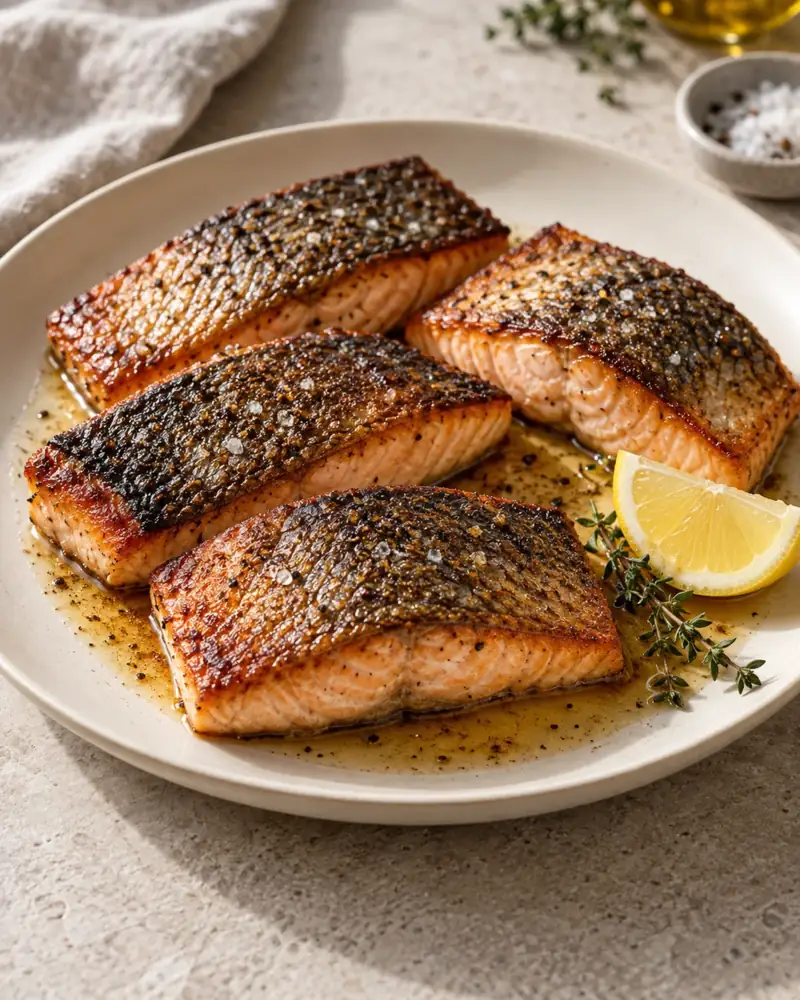
Salmon cooked almost entirely on its skin, so the skin turns brittle like a cracker while the flesh above it warms gently. A short butter baste at the end seasons the top and brings it to a rosy, just-flaking center.
Ingredients
- 4skin-on salmon fillets (6 oz each)about 170 g each, center-cut, 2.5–3 cm thick, scaled and pin-boned
- 7 gfine sea salt (1¼ tsp)
- 1 tbspneutral oilsunflower or canola
- 30 gunsalted butter (2 tbsp)
- 2 sprigsthymeor 1 crushed garlic clove
- ½lemoncut into wedges
- freshly ground black pepper
- Diet
- Gluten-free, Pescatarian
- Allergens
- fish, milk
Method
- Take the salmon out of the fridge 15 minutes before cooking. Pat it very dry on both sides with paper towel, pressing hard on the skin.
- Run the back of a knife firmly along the skin, from tail to head, to push out moisture, then pat dry again. Season the flesh side and the skin with the salt and some pepper.
- Heat the oil in a large stainless or cast-iron frying pan over medium-high heat until it shimmers and moves like water, about 2 minutes.
- Lay the fillets in skin side down, laying each one away from you. Press each fillet flat with a spatula for 15 seconds so the skin doesn't curl.
- Lower the heat to medium and leave them alone. Cook until the opaque band has climbed about two-thirds of the way up the side and the skin releases easily, 5–7 minutes.
- Flip the fillets. Add the butter and thyme. When the butter foams, tilt the pan and spoon the butter over the fish for 1–2 minutes.
- Check with a thermometer in the thickest part: pull at 48–50°C (118–122°F) for a moist, slightly translucent center, or 52–54°C (126–129°F) if you like it flaking all the way through. Without a thermometer, the center should be just turning opaque when you peek with a knife tip.
- Move the salmon to plates skin side up so the skin stays crisp. Rest 2 minutes; the center climbs another 1–2°C. Serve with lemon wedges and a spoonful of the pan butter around, not over, the skin.
Why it works
Skin is mostly water, protein and fat; driving the water off with dry towels, a knife scrape and steady contact with hot metal lets the fat render and the proteins brown into a rigid, crisp sheet. The skin also insulates the flesh, so cooking mostly from one side gives you a gradient from well-browned below to barely set above. Salmon's muscle proteins tighten and push out white albumin above about 55°C, so stopping just short keeps it silky.
Common mistakes
- Moving the fish too early: the skin sticks until it has crisped, then releases on its own. Wait.
- A crowded or cold pan steams the skin. Use a pan big enough to leave 2 cm between fillets, or cook in two batches.
- Overcooking: white beads of albumin on the surface mean it went too far. Pull earlier next time.
Variations
- With salsa verde
- Skip the butter baste and spoon Salsa Verde beside the fish for a sharp, herby contrast.
- Skinless fillets
- Sear the presentation side 2–3 minutes until golden, flip, and finish 2–4 minutes over medium-low.
Make ahead and storage
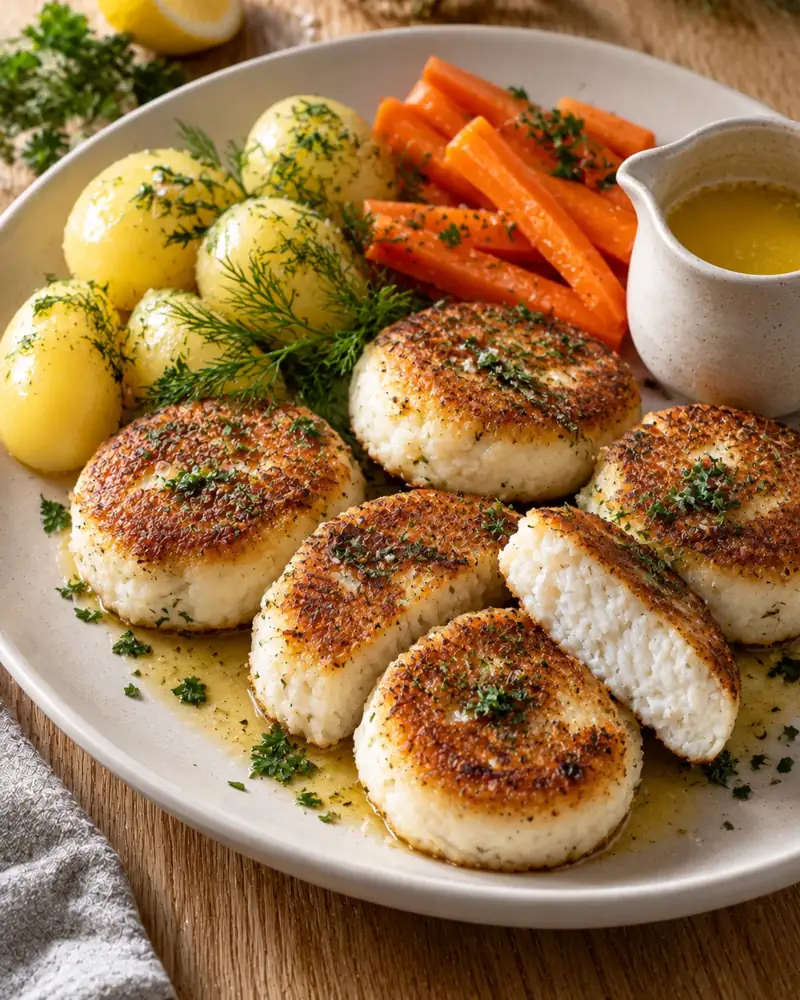
Best cooked to order. Leftovers keep 2 days in the fridge and are good cold, flaked into salads or Bergen-Style Fish Cakes-style patties.
Notes
A nonstick pan works but browns less. Trout fillets cook the same way in about two-thirds of the time.