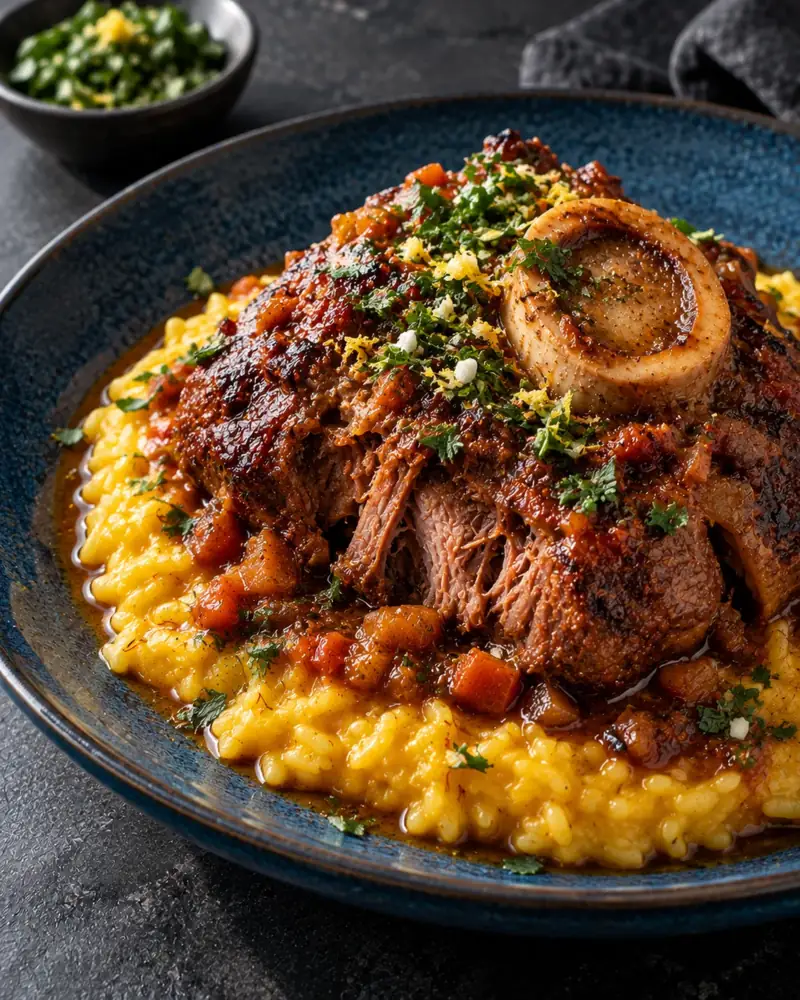
Osso Buco alla Milanese with Gremolata
Veal shanks braised until the marrow melts, finished with lemon and parsley
- Serves
- 4
- Hands-on
- Total
- Level
- Some skill
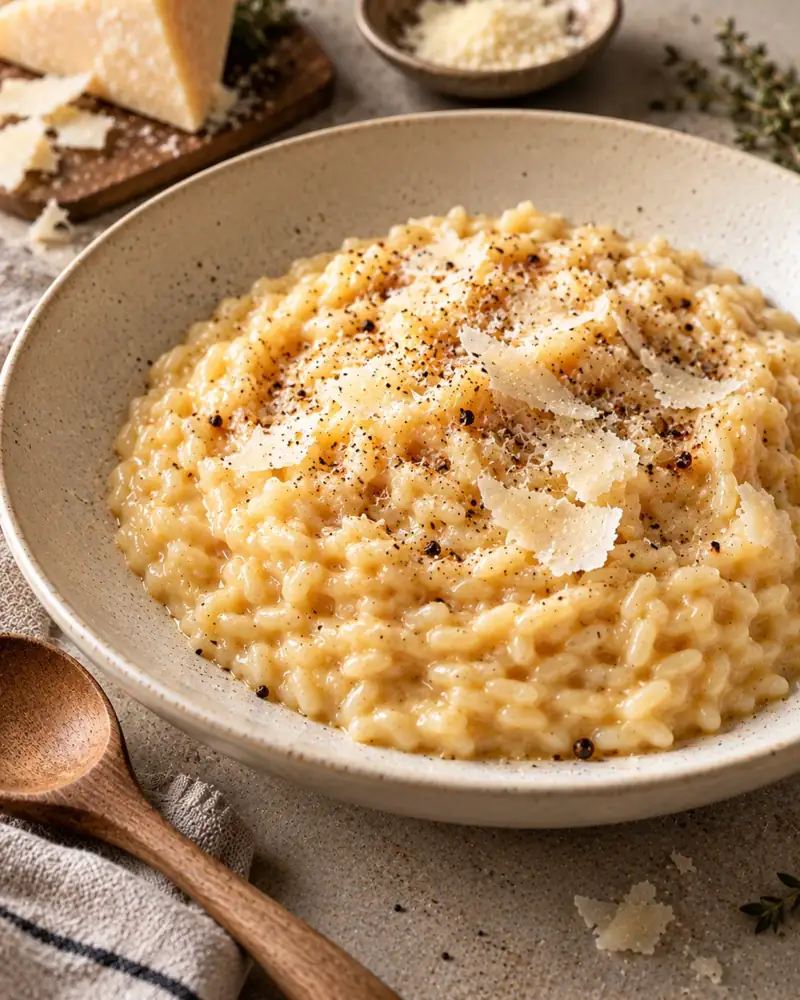
Osso buco means "bone with a hole": cross-cut veal shank with a ring of marrow in the center. The Milanese version is braised slowly in white wine, stock and a little tomato until the meat is spoon-soft, then showered with gremolata — lemon zest, garlic and parsley — to wake it up. It's traditionally served with saffron risotto (Risotto alla Parmigiana).
Ingredients
Braise
- 4veal shanks, cross-cut 4 cm thick (about 10 oz each)about 300 g each
- 8 gfine sea salt (1⅓ tsp)divided
- freshly ground black pepper
- 30 gall-purpose flour (¼ cup)for dusting
- 2 tbspolive oil
- 30 gunsalted butter (2 tbsp)
- 1onionfinely chopped
- 1carrotfinely chopped
- 1celery stickfinely chopped
- 2 clovesgarlicchopped
- 1 tbsptomato paste
- 200 mldry white wine (¾ cup + 1 tbsp)
- 400 mlchicken or veal stock (1⅔ cups)Chicken Stock or store-bought
- 1bay leaf
- 1strip of lemon peel
Gremolata
- 1lemonfinely grated zest
- 1 clovegarlicvery finely chopped
- 3 tbspfinely chopped flat-leaf parsley
- Allergens
- gluten, milk, sulphites, celery
- Origin
- Italy (Milan)
- Season
- Autumn, Winter
Method
- Heat the oven to 160°C (325°F). Tie a piece of string around the circumference of each shank to keep the meat on the bone. Season with 6 g salt and pepper and dust lightly with flour, shaking off the excess.
- Heat the oil in a wide, heavy casserole that fits the shanks in one layer over medium-high heat. Brown the shanks well on both flat sides, 4–5 minutes per side. Set aside.
- Lower the heat to medium. Add the butter, onion, carrot and celery and cook until soft, 8–10 minutes. Add the garlic and tomato paste and cook 1 minute.
- Add the wine and boil until reduced by half, scraping the bottom, 3 minutes. Add the stock, bay, lemon peel and remaining 2 g salt.
- Return the shanks in a single layer, marrow side up; the liquid should come two-thirds of the way up.
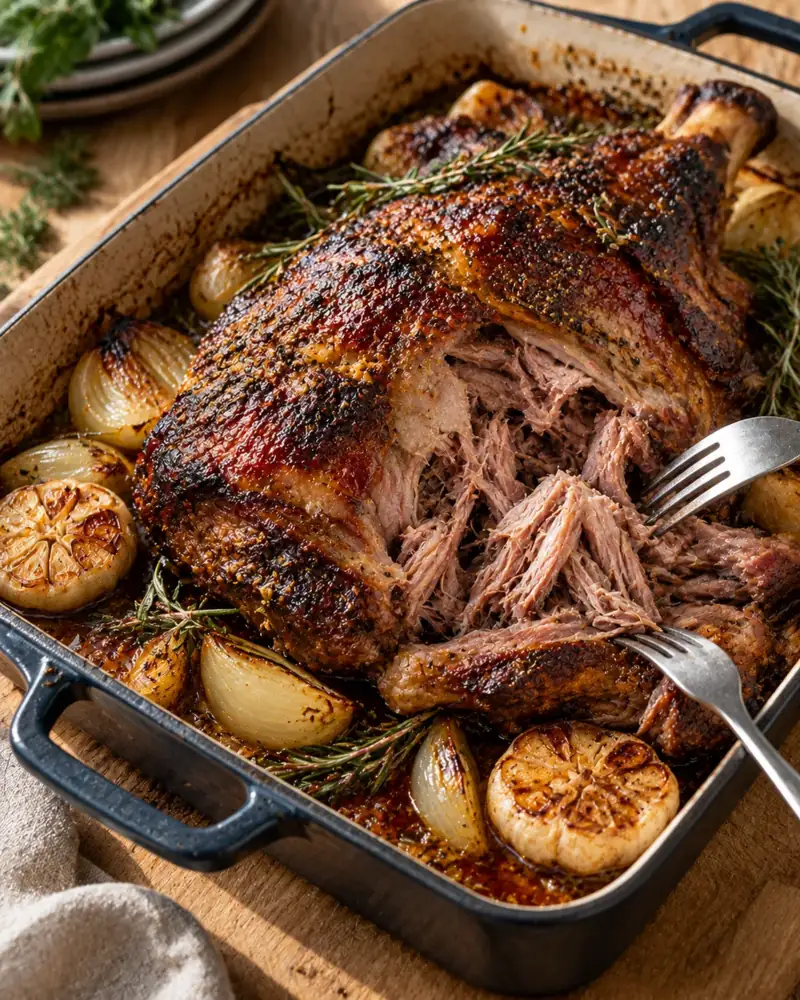
- Bring to a simmer, cover and braise in the oven until the meat is very tender and pulling from the bone, 1¾–2¼ hours. Turn once halfway. The meat will be about 90°C (195°F) — far above the 63°C (145°F) safety point; tenderness is the target.
- Mix the gremolata ingredients.
- Lift out the shanks and snip off the string. If the sauce is thin, boil it uncovered for a few minutes until it coats a spoon. Taste for salt. Spoon over the shanks and scatter with gremolata. Serve with saffron risotto or polenta — and a small spoon for the marrow.
Why it works
Shank is the most collagen-rich cut of the leg: slow braising converts that collagen to gelatin, making the meat silky and the sauce naturally glossy. Tying the shanks stops the meat falling off the bone as it softens. The raw gremolata adds sharp, fresh aromatics that cut through the richness of the marrow and sauce.
Common mistakes
- Shanks that are too thin, which fall apart. Ask for 4 cm thick cuts from the hind leg.
- Submerging them completely; the tops stew instead of browning. Liquid two-thirds up.
- Cooking the gremolata. It goes on raw at the end.
Variations
- Beef or pork shank
- Cross-cut beef shin takes 3 hours; pork shank 2½ hours.
- In bianco
- Leave out the tomato paste for the older, paler Milanese version.
Make ahead and storage
Braise up to 2 days ahead and reheat gently; make the gremolata fresh. Freezes for 3 months.
Notes
Use stock instead of wine for alcohol-free (and drop sulphites).